Saudi data centers are growing fast, and power planning is becoming a core design decision, not an afterthought. One sector snapshot puts Saudi Arabia at 467 MW operational in Q1 2026 versus a 1.5 GW national target for 2030. That same source also warns that “MW” is often misunderstood: IT load is power delivered to compute, while gross facility power includes cooling and losses and typically runs 20–50% higher. In this context, behind-the-meter strategies are increasingly discussed alongside regulated grid supply and long-term renewable PPAs, especially because the same analysis notes there is no published grid-connection queue and that connection agreements must address minimum-capacity commitments and baseload assumptions.
This is where behind-the-meter power for data centers in Saudi Arabia becomes a practical scheduling and risk tool, not just an energy preference. One Gulf-focused bankability note argues teams should start with the service date and work backward through energisation, integrated systems testing, commissioning, permits, licences, connection studies, land, and fuel. It also stresses that a behind-the-meter plant needs a written role: it may bridge a delayed grid connection, serve as permanent prime power, cover a limited initial phase, add resilience behind a firm grid supply, reduce peaks, or support renewable integration. The same source highlights a common failure mode: equipment can arrive while a site still lacks permission to operate it, leaving a technically complete plant commercially unusable because the customer contract assumes a different availability or price profile.
Gas, Solar, and Storage: What “Behind the Meter” Can Actually Do
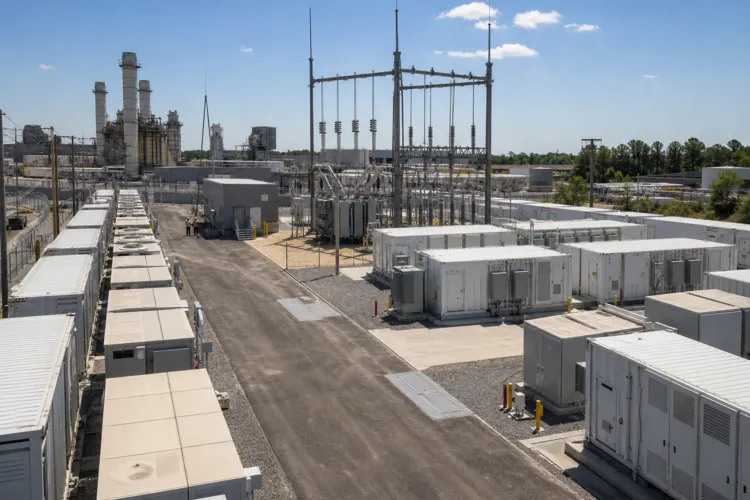
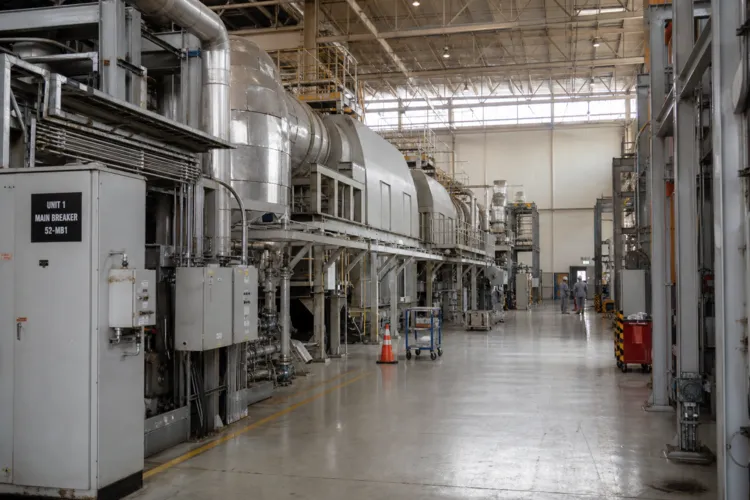
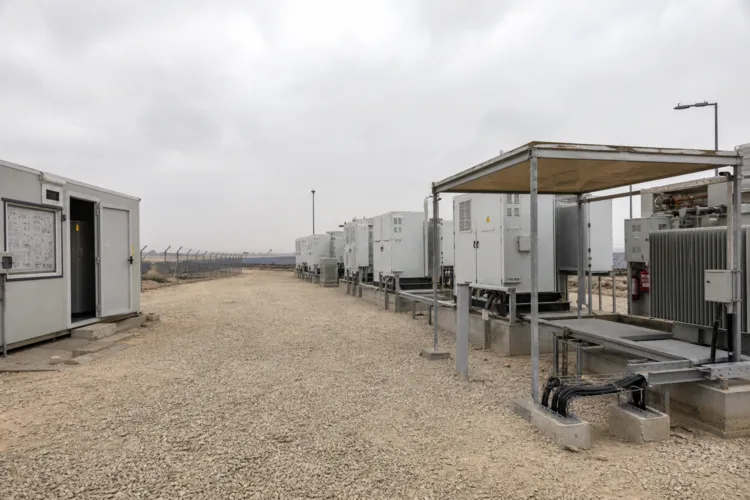
Gas-led behind-the-meter generation is often positioned as the simplest way to secure controllable capacity on compressed timelines. A global market research summary describes containerized, modular gas turbine packages that can be deployable within 12–18 months, and notes modern turbine designs can support rapid start-stop cycling to follow changing compute demand. But batteries and solar-plus-storage are increasingly central in Saudi commercial deployment models. In Saudi Arabia’s behind-the-meter stationary battery storage market, solar-plus-storage pairing is described as the dominant model, with over 60% of new behind-the-meter battery systems installed alongside rooftop or ground-mounted solar PV to optimize self-consumption and reduce demand charges.
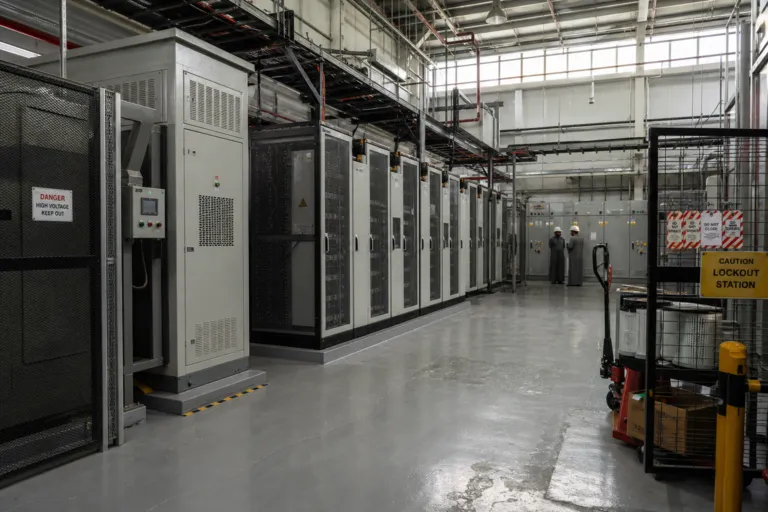
For data centers specifically, the Saudi storage outlook expects reliability-driven buyers to accelerate adoption. It states that demand from data centers and healthcare facilities for high-reliability backup power is rising, and these sectors are expected to represent 20–25% of commercial storage deployments by 2030, driven by uptime requirements and diesel substitution. The same report projects the overall Saudi behind-the-meter stationary battery storage market could grow from an estimated USD 180–250 million in 2026 to over USD 1.2–1.8 billion by 2035. It also forecasts system prices for complete behind-the-meter installations declining from USD 450–650/kWh in 2026 to USD 280–400/kWh by 2035, while noting that over 70% of battery cells and power conversion equipment are currently imported, mainly from China, South Korea, and the United States.
These behind-the-meter choices are also shaped by the local data-center power ecosystem and availability targets. Mordor Intelligence estimates the Saudi Arabia data center power market at USD 246.63 million in 2025, rising to USD 286.6 million in 2026, and forecast to reach USD 607.28 million by 2031 at a 16.21% CAGR over 2026–2031. It also says Tier IV designs are gaining traction because AI workloads require 99.995% availability, and that high-density racks above 30 kW are pushing operators toward modular 1.25 MW UPS frames. Taken together, the Saudi story is not one single “best” fuel. It is a portfolio question: gas for firm capacity, solar-plus-storage for peak and energy management, and batteries for ride-through, backup, and controllability behind the meter.
How is behind-the-meter power for data centers in Saudi Arabia being used in practice?
What do Saudi sources say about solar-plus-storage behind the meter?
How large is Saudi Arabia’s behind-the-meter stationary battery storage market expected to become?
What reliability and density targets are influencing Saudi data center power design?
Why do “MW” claims for data centers need careful interpretation in Saudi Arabia?
Talk to us for your needs in:
-
Energy Efficiency Strategy & Feasibility
-
Renewable Energy Strategy & Investment Advisory
-
Digital Energy & Smart Grid Strategy
-
Market Entry Strategy
-
Sustainability & Impact Strategy
-
Energy Project Governance & PMO Advisory
-
Energy Market Research
-
Energy Stakeholder & Customer Research
-
Energy Market Intelligence
-
Energy Feasibility & Investment Assessment
-
Energy Sector Benchmarking & Performance Strategy