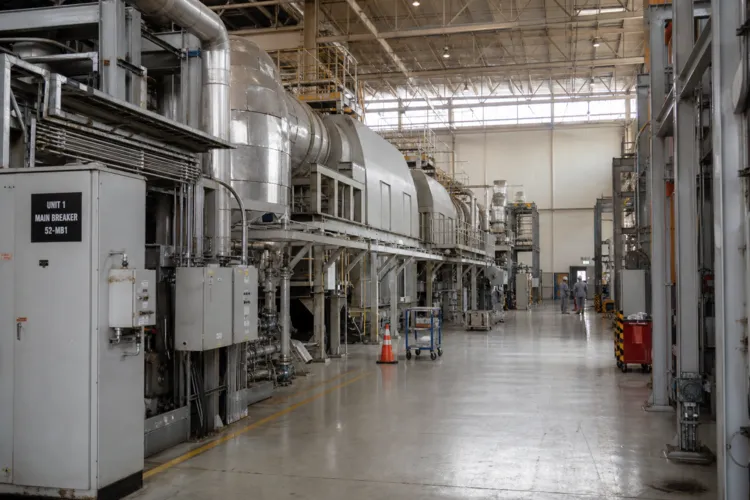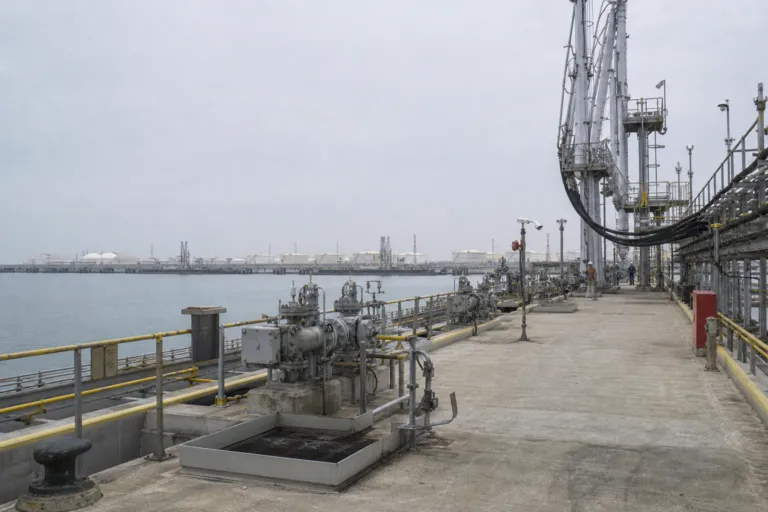
Saudi Arabia’s East–West Crude Oil Pipeline, widely called the Petroline, runs from the Abqaiq oil field and processing areas in the Eastern Province across the peninsula to Yanbu on the Red Sea. Wikipedia describes it as 1,201 kilometres long, built in the 1980s during the Iran–Iraq War so exports could bypass the tanker war risk around the Strait of Hormuz. In 2026, this corridor became central again as the strait was largely closed after fighting began in February, and Saudi crude increasingly moved overland to reach Red Sea tankers from Yanbu.
The system’s “expansion” story in the current cycle is tied to configuration and stated capacity. Wikipedia says Aramco’s East–West network consists of two pipes: one 142 centimetres in diameter and another 122 centimetres in diameter that was originally built for natural gas liquids. The combined capacity was listed as 5 million barrels per day in 2018. Wikipedia also reports that, in 2026, the second pipeline was converted from natural gas liquids to crude, lifting the system’s stated capacity to 7 million barrels per day. That capacity figure also appears in Al Jazeera’s description of the line’s maximum.
Yanbu Makes the Route Real, but Ports and Refineries Set the Ceiling
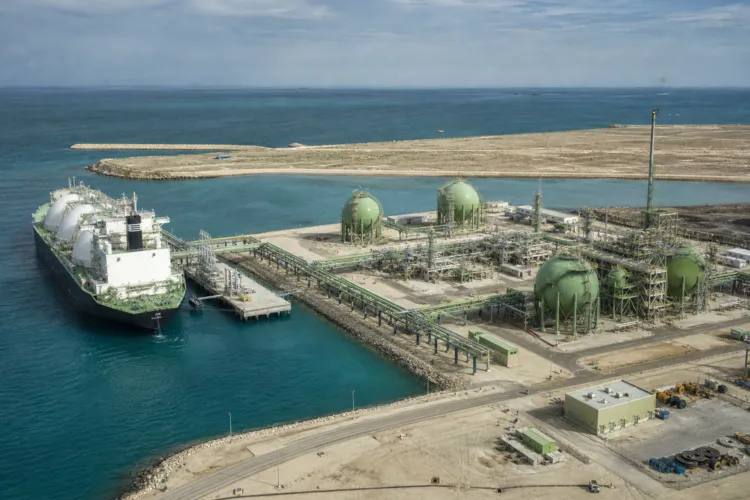
Yanbu is where the pipeline turns into an export route, and the sources stress that the port end can be the binding constraint. Wikipedia states that, at Yanbu, the line supplies crude to three refineries and export facilities, with up to 1 million barrels per day supplied to the refineries. It also notes that exports through King Fahd Industrial Port have included about 1.1–1.4 million barrels per day of Arab Light crude, alongside a stated loading limit of 3 million barrels per day. Wikipedia adds that Yanbu North and Yanbu South have a nominal combined loading capacity of about 4.5 million barrels per day and a tested capacity of about 4 million barrels per day, while Vortexa estimated that loading capacity could fall to about 3 million barrels per day under wartime conditions.
A separate mechanical explainer from Vision2030.ai puts the same issue in arithmetic terms. It says the Petroline is rated at 7 million barrels per day and reached that figure in March 2026, but that Yanbu’s berths take about 4.5 million barrels per day “on paper,” closer to 4 million in sustained practice. The explainer also says roughly 1.9 million barrels per day of delivered crude is consumed by west-coast refineries before any ship loading, which can leave 600,000 to 1.1 million barrels per day arriving at the coast with nowhere to load when the line is run flat out. This is why the east west pipeline saudi arabia story is not only about pipeline throughput, but also about refinery intake and berth capacity at Yanbu.
Operational shocks in 2026 highlighted both the value and fragility of the Red Sea corridor. Wikipedia says the pipeline was converted to full capacity on 11 March 2026 during the 2026 Iran war and closure of the Strait of Hormuz to non-Iranian vessels, and that the amount of oil transferred using the Bab-el-Mandeb strait rose by 21% versus February 2026, all bound to Asia. It also reports a 9 April drone attack that reduced throughput by 700,000 barrels per day, with full capacity restored three days later. In September, Al Jazeera reported drones struck the line and Saudi Arabia suspended operations as a precaution, describing the pipeline as carrying roughly 4 to 5 million barrels per day and noting repair estimates ranging from five to six weeks to sooner.
Recent loading and trade signals show how flows can swing even when nameplate capacity stays the same. Anadolu Agency cites Vortexa estimates that Yanbu loadings rose to approximately 3.7 million barrels per day in early September from 3.2 million barrels per day in August, while cautioning that tanker-tracking data can remain below the pipeline’s theoretical maximum. Al Jazeera, citing Kpler, said flows were about two million barrels per day in August, with higher transfers of roughly 4–5 million barrels per day during the first five months of the conflict. After the September shutdown, HouseofSaud.com reported Red Sea exports at 2.5 million barrels per day and reiterated Reuters reporting that the line carries up to 7 million barrels per day, with about 5 million barrels per day available for export.

What is Saudi Arabia’s East–West (Petroline) pipeline route to Yanbu?
What changed in 2026 that increased the pipeline’s stated capacity?
How much can Yanbu load compared with pipeline capacity?
During 2026, how did attacks affect East–West pipeline operations?
Why does the East-West pipeline story in Saudi Arabia depend on refineries as well as exports?
Talk to us for your needs in:
-
Energy Efficiency Strategy & Feasibility
-
Renewable Energy Strategy & Investment Advisory
-
Digital Energy & Smart Grid Strategy
-
Market Entry Strategy
-
Sustainability & Impact Strategy
-
Energy Project Governance & PMO Advisory
-
Energy Market Research
-
Energy Stakeholder & Customer Research
-
Energy Market Intelligence
-
Energy Feasibility & Investment Assessment
-
Energy Sector Benchmarking & Performance Strategy