In Saudi Arabia, renewable procurement under the National Renewable Energy Program (NREP) is built around auction-based tenders and long-term contracts run through the Saudi Power Procurement Company (SPPC). Projects are typically developed as Independent Power Producer (IPP) agreements backed by 25-year power purchase agreements (PPAs) with SPPC. This matters because it sets one clear buyer and one repeatable contract approach, instead of bespoke negotiations each time. In practice, that standardization is designed to translate Vision 2030 and the Saudi Green Initiative goals into bankable projects with clearer risk allocation across repeated rounds. The model is often described as a four-counterparty architecture including the Public Investment Fund (PIF) as a strategic capital sponsor, PIF-owned developer Badeel, ACWA Power as a principal IPP developer and operator, and SPPC as the central PPA counterparty.
As the program scales, the tender-and-signing totals show how the same PPA structure is repeated across many projects. Separate reporting states SPPC has launched tenders for more than 43 GW and signed PPAs for over 38 GW, including an update that specifies 38.7 GW signed out of 43.2 GW launched. Another guide states that by early 2026, SPPC had signed PPAs covering more than 47.7 GW of renewable capacity with a mix of regional and international developers. By the end of 2025, Saudi Arabia had tendered approximately 64 GW of cumulative renewable energy capacity through NREP and predecessor mechanisms, with 20.6 GW tendered during 2025 alone. Within delivery milestones, Round 7 coverage also reports 10.2 GW already connected to the national grid, projected to rise to 12.7 GW by the end of 2025.
How NREP Rounds Turn Auctions Into Bankable Contracts
NREP rounds package multiple projects into a defined tender scope and move bidders through qualification and award steps led by SPPC. Round 7 is specified as 5.3 GW total, combining 3.1 GW of solar PV and 2.2 GW of wind, across four solar PV projects and two wind projects. Earlier rounds show similar repeatability: as of January 2026, NREP had run six completed auction rounds awarding cumulative capacity in excess of 30 GW, with Round 6 alone awarding 4.5 GW across five projects in October 2025. The same framework has coincided with low tariffs reported in successive rounds, including a solar bid of USD 0.0129 per kilowatt-hour cited for the 2-GW Al-Sadawi plant, alongside a wind levelised cost of electricity record reported in October 2025. Within this context, the “SPPC principal buyer Saudi Arabia” topic is less about a single project and more about a standardized contracting role repeated across many tenders.
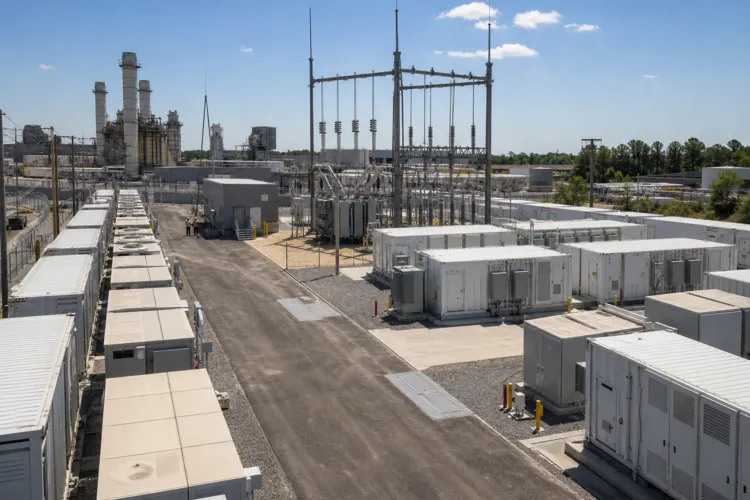
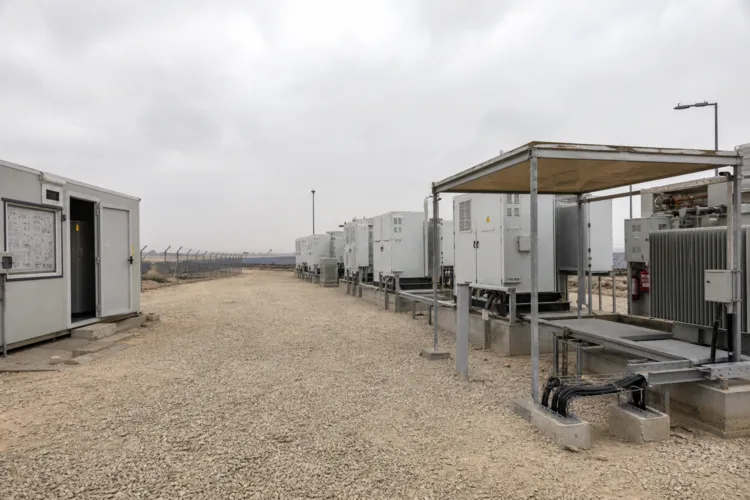
SPPC’s principal-buyer role also extends beyond generation into standalone storage procurement structured as long-term grid contracts. Saudi Arabia has awarded four standalone battery projects totaling 2 GW of power and 8 GWh of energy capacity, where each 500 MW project will discharge at full output for four hours and operate under a 15-year Storage Services Agreement. One report adds that SPPC, acting as principal buyer, finalized four storage service agreements for an initial batch of Battery Energy Storage System (BESS) ventures representing total investment exceeding SAR 4.35 billion (USD 1.16 billion). For the next stage, SPPC has qualified 27 applicants for a second group comprising six further 500 MW / 2,000 MWh projects, described as another 3 GW / 12 GWh. In these structures, developers finance, construct, own, and operate the assets under a build-own-operate approach, while SPPC purchases availability and operational capability over the contract term.
This centralized procurement approach sits alongside broader investment and build-out signals across Saudi Arabia’s power sector. A U.S. Department of Commerce country guide states the Saudi government pledged to generate 50% of the country’s electricity from renewable sources by 2030, and that the Ministry of Energy’s spending on power and renewable energy projects is expected to reach USD 293 billion by 2030. It also cites a Mordor Intelligence forecast that the Saudi Arabia power generation market is expected to grow from 87.81 GW in 2024 to 116.41 GW by 2029 at a 5.80% CAGR. At the utility level, the guide reports Saudi Electricity Company (SEC) capex of USD 10.9 billion in 2023, a 51.8% increase from 2022, and USD 16 billion deployed in 2024, a 43.8% increase on the previous year. Together, these figures frame why long-term contracts with a central buyer like SPPC can be positioned as a mechanism to support large volumes of build-out while keeping procurement terms consistent.
What does it mean that SPPC is the principal buyer in Saudi Arabia’s power procurement model?
How are NREP renewable projects contracted in Saudi Arabia?
How much capacity is included in NREP Round 7?
What has SPPC contracted for standalone battery storage in Saudi Arabia?
What broader targets and spending figures are associated with Saudi Arabia’s power and renewables build-out?
Talk to us for your needs in:
-
Energy Efficiency Strategy & Feasibility
-
Renewable Energy Strategy & Investment Advisory
-
Digital Energy & Smart Grid Strategy
-
Market Entry Strategy
-
Sustainability & Impact Strategy
-
Energy Project Governance & PMO Advisory
-
Energy Market Research
-
Energy Stakeholder & Customer Research
-
Energy Market Intelligence
-
Energy Feasibility & Investment Assessment
-
Energy Sector Benchmarking & Performance Strategy