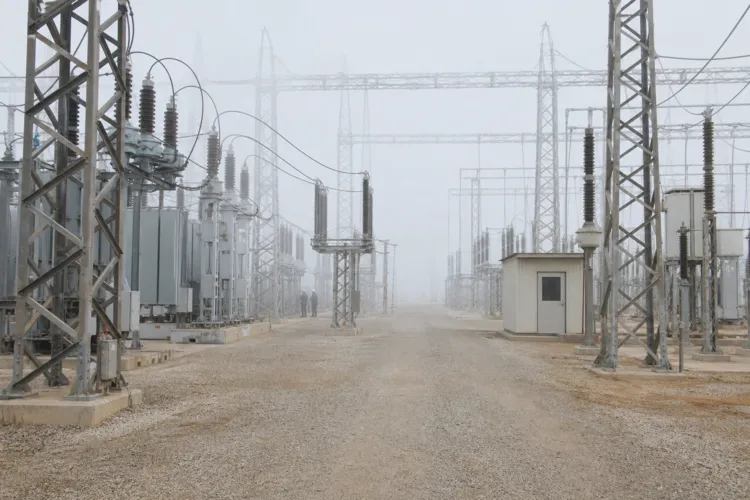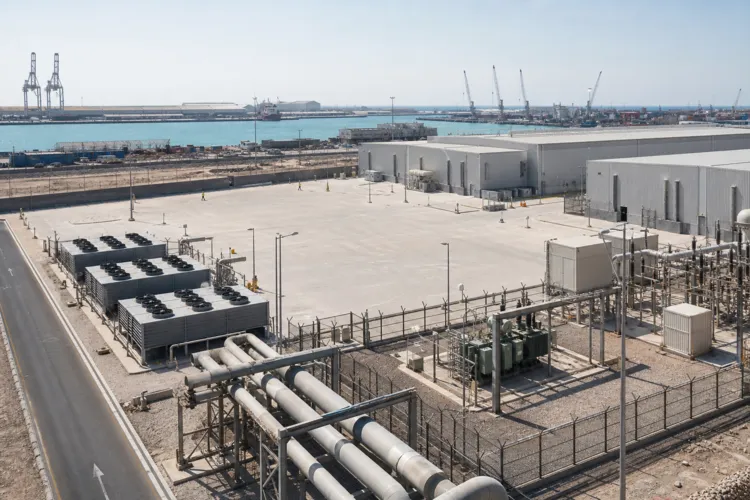
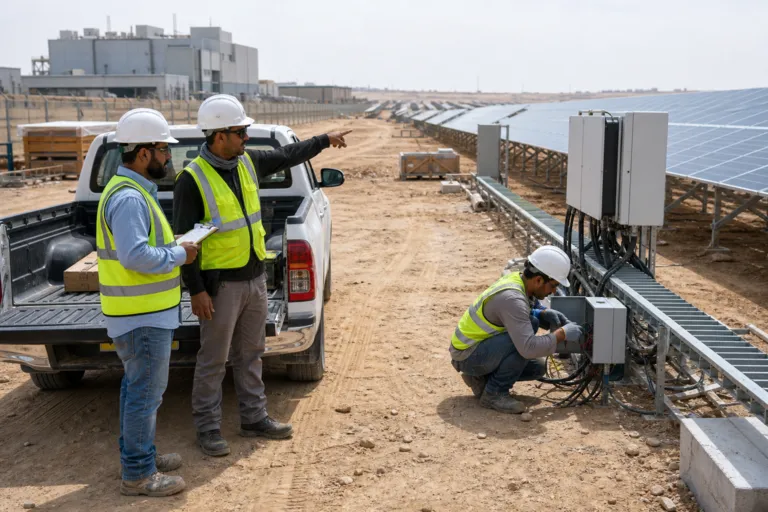
The sudair solar pv plant is a landmark utility-scale project in Saudi Arabia. Official project information describes it as the Kingdom’s largest solar power plant, with a total capacity of 1,500 MW and an investment amount of US $924 million. It is located in Sudair Industrial City, around the capital Riyadh. For energy teams, it is a useful case study because it shows what happens when a solar project is designed at mega scale, then delivered into real-world operation.
Its reported impact is also clear and easy to explain. A renewable energy guide states that, at 1.5 GW, Sudair supplies enough electricity to power approximately 185,000 homes while offsetting 2.9 million tonnes of CO2 emissions annually. A peer-reviewed paper repeats the same two outcomes: 185,000 homes and 2.9 million tons of emissions offset each year. These are the numbers that make the project understandable to the public and useful for policy storytelling.
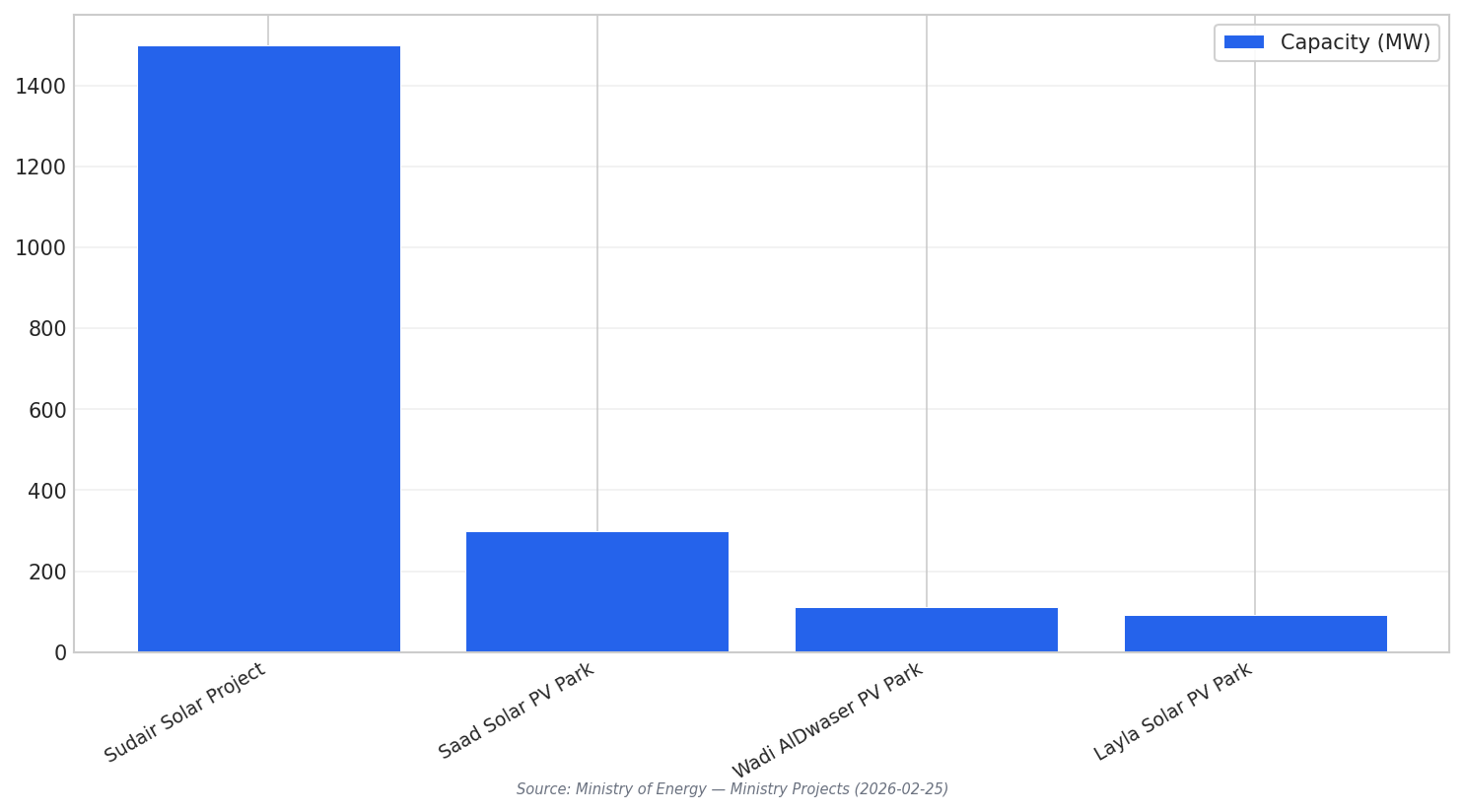
To see why Sudair matters, compare it with other named solar PV projects in the Ministry of Energy project list. The same source lists Saad Solar PV Park at 300 MW and Wadi AlDwaser PV Park at 112 MW. It also lists Layla Solar PV Park at 91 MW. Put next to these projects, a 1,500 MW plant looks less like a normal build and more like a system-level move.
Lessons From a 1.5 GW Build: What the Case Study Teaches
Lesson one is that scale changes the conversation. A 1,500 MW plant is not only about adding solar panels. It is also about proving that large renewable capacity can be placed near major demand centers, since Sudair sits near Riyadh. This supports a practical idea: project location can be as important as project size when the goal is grid-relevant output.
Lesson two is that results should be communicated in human terms, not only megawatts. “Powering 185,000 homes” and “offsetting 2.9 million tonnes of CO2 annually” are outcomes that non-experts can follow. For future projects, these outcome metrics can help align public support, investor interest, and long-term planning.
Lesson three is that Sudair is best understood inside a national acceleration story. One market outlook says Saudi Arabia’s project pipeline totals 58.7 GW, with 10.2 GW already installed across 14 grid-connected plants, 28.5 GW under development, and 13.5 GW under tender. A renewable energy guide adds that grid-connected renewable capacity has reached 12.3 GW, up from virtually zero in 2020, and that by early 2026 SPPC had signed PPAs covering more than 47.7 GW of renewable capacity. In this context, the sudair solar pv plant is a clear signal of speed, not a one-off exception.
Where is the sudair solar pv plant located?
How large is the Sudair project and how much was invested?
What are the reported benefits in homes powered and emissions offset?
How does Sudair compare with other Ministry-listed PV projects?
Talk to us for your needs in:
-
Energy Efficiency Strategy & Feasibility
-
Renewable Energy Strategy & Investment Advisory
-
Digital Energy & Smart Grid Strategy
-
Market Entry Strategy
-
Sustainability & Impact Strategy
-
Energy Project Governance & PMO Advisory
-
Energy Market Research
-
Energy Stakeholder & Customer Research
-
Energy Market Intelligence
-
Energy Feasibility & Investment Assessment
-
Energy Sector Benchmarking & Performance Strategy