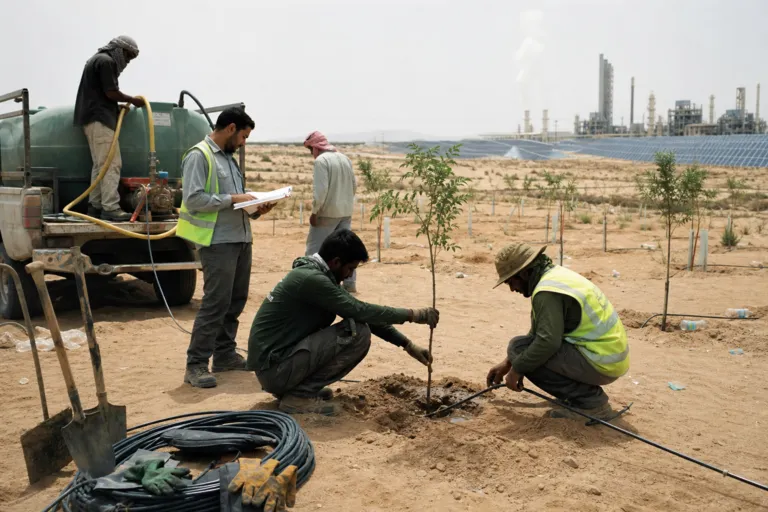
Saudi Arabia is trying to change a land shaped by sand. Nearly 95% of the country is desert. Through the Saudi Green Initiative (SGI), launched in 2021 under the patronage of Crown Prince and Prime Minister Mohammed bin Salman, the Kingdom set a bold pledge: plant 10 billion trees. The initiative also links tree planting to land restoration, ecosystem recovery, and long-term resilience.
Public updates show measurable steps. By July 2025, Saudi Arabia reported planting more than 151 million trees and rehabilitating around 500,000 hectares of land. Another milestone was announced in 2026: the restoration of the first 1 million hectares of degraded land under SGI. The National Greening Program leads these efforts as the executive arm of SGI, overseeing targets that include rehabilitating 40 million hectares and planting 10 billion trees through 155 initiatives across 11 operational zones.
For climate impact, SGI-linked projects also report carbon results. Arab News said the restoration projects achieved cumulative carbon sequestration exceeding 2.2 million tons of carbon dioxide. A separate policy analysis also describes annual sequestration from afforestation projects at 3 million tonnes of CO2 per year, alongside other emissions measures.
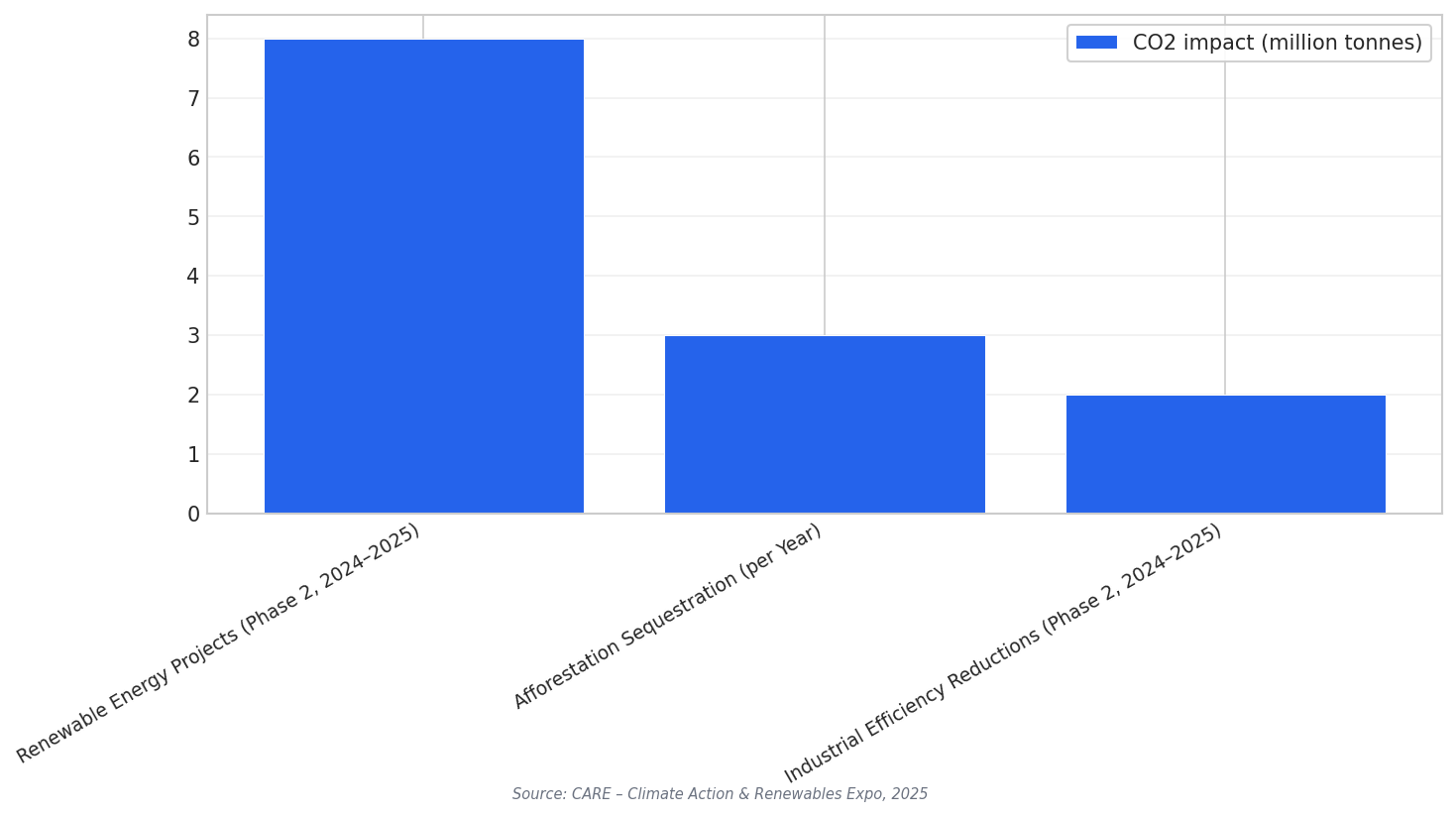
The context matters because the physical challenge is extreme. Saudi Arabia includes the Rub’ al Khali, described as the largest continuous sand desert on Earth, covering roughly 650,000 square kilometres. With low rainfall and limited arable land, planting at scale is hard. Still, the 10 billion tree pledge is framed as land rehabilitation on about 74.8 million hectares, aimed at reversing decades of desertification.
Carbon Offsets And 2026–2027 Emissions Roadmap
In 2026 planning, SGI is tied to a broader emissions roadmap. A 2025–2030 policy analysis says Phase 3 (2026–2027) incorporates new technology. It lists clean transport systems, smart city initiatives, and facilities for capturing and storing carbon. It also says Phase 3 is expected to make 15% of the way towards the goal of reducing carbon emissions by 20 million tonnes.
Some outcomes are also described beyond carbon. Arab News reported improved air quality contributing to a nearly 50% reduction in dust storms across the Kingdom in 2025 compared with historical averages. The same update said the projects created more than 68,000 jobs in rangeland management, nurseries, and environmental services. These details show SGI is being presented as both an environmental program and a delivery system for broader Vision 2030 goals.
What is the main goal in this saudi green initiative 2026 update?
How many trees have been planted under the Saudi Green Initiative so far?
What carbon results have been reported from restoration work?
What does the 2026–2027 phase include in the policy roadmap?
Talk to us for your needs in:
-
Energy Efficiency Strategy & Feasibility
-
Renewable Energy Strategy & Investment Advisory
-
Digital Energy & Smart Grid Strategy
-
Market Entry Strategy
-
Sustainability & Impact Strategy
-
Energy Project Governance & PMO Advisory
-
Energy Market Research
-
Energy Stakeholder & Customer Research
-
Energy Market Intelligence
-
Energy Feasibility & Investment Assessment
-
Energy Sector Benchmarking & Performance Strategy