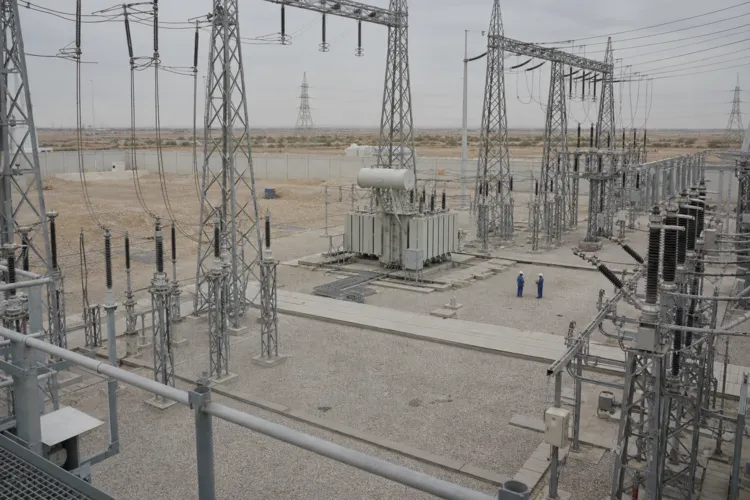
Regional power interconnection is entering a sharper spotlight ahead of 2026, as the GCC Interconnection Authority’s cross-border ambitions expand in the public conversation to include new power links toward Iraq and Jordan. In practical terms, the story is not only about wires and substations. It is also about execution discipline across multiple jurisdictions. Research commentary about the GCC context highlights how distributed regulatory authority and inflation can compound delays and inflate costs in other regions, such as the U.S. or EU. That contrast frames why delivery speed, coordination, and procurement choices matter when the gcc interconnection grid expansion agenda is discussed.
The timing also overlaps with a much larger investment cycle. A Strategy& view of the region describes a GCC infrastructure and industrial pipeline of $2 trillion, and estimates that about $1.5 trillion in GCC mega projects will be in the planning phase over the next decade. That scale creates opportunities, but also pressure to manage procurement well. The same analysis argues that, when capital project procurement is managed effectively, it can significantly shift more spending to local content. For interconnection projects, that emphasis points to how contracts are structured, who is qualified, and whether delivery systems can keep pace with the pipeline.
Why Iraq’s Reliability Reality Raises the Stakes
Iraq’s grid situation makes the reliability case for cross-border power links feel immediate. A Forbes analysis notes that after the 2003 U.S. invasion, Iraq’s power infrastructure was severely damaged, with transmission lines destroyed, substations looted, and generation plants bombed. It adds that the government has since spent an estimated $100 billion on generation, transmission, and distribution projects, yet blackouts remain a daily reality. The same piece argues the persistent blackout problem is not a failure of technology, but a collapse of coordination, governance, and trust. That diagnosis matters because it implies interconnection benefits depend on operational alignment, not only physical connection.
Next to that, the wider Gulf power system context continues to evolve, with the UAE offering a snapshot of how capacity planning can be described in public reporting. pv magazine, citing GlobalData figures, expects UAE gas-fired capacity to expand from 44.4 GW in 2025 to nearly 46 GW by 2035, while nuclear capacity is forecast to remain stable at approximately 5.3 GW. Those figures are UAE-specific, not a proxy for Iraq or Jordan. Still, they illustrate that the region’s dispatchable backbone remains central in official forecasts, which shapes how interconnectors may be valued for flexibility, resilience, and balancing across different systems.
In that setting, the gcc interconnection grid expansion theme in 2026 can be read as part of a broader effort to turn regional constraints into catalysts, a framing echoed in research discussing how the GCC transforms limitations into innovation drivers. But the same wider commentary also warns, by comparison with other regions, that inflation and fragmented authority can slow complex infrastructure delivery. For new power links toward Iraq and Jordan, the implication is simple. The engineering is only one layer. Procurement, permitting timelines, and institutional coordination determine whether interconnection capacity translates into fewer outages and more predictable power flows.
What is the gcc interconnection grid expansion in this 2026 context?
Why is Iraq central to the urgency around new power links?
What numbers show the scale of the GCC’s wider infrastructure push?
What power-capacity figures are reported for the UAE that help frame regional planning?
What risks can delay or inflate the cost of major grid projects?
Talk to us for your needs in:
-
Energy Efficiency Strategy & Feasibility
-
Renewable Energy Strategy & Investment Advisory
-
Digital Energy & Smart Grid Strategy
-
Market Entry Strategy
-
Sustainability & Impact Strategy
-
Energy Project Governance & PMO Advisory
-
Energy Market Research
-
Energy Stakeholder & Customer Research
-
Energy Market Intelligence
-
Energy Feasibility & Investment Assessment
-
Energy Sector Benchmarking & Performance Strategy