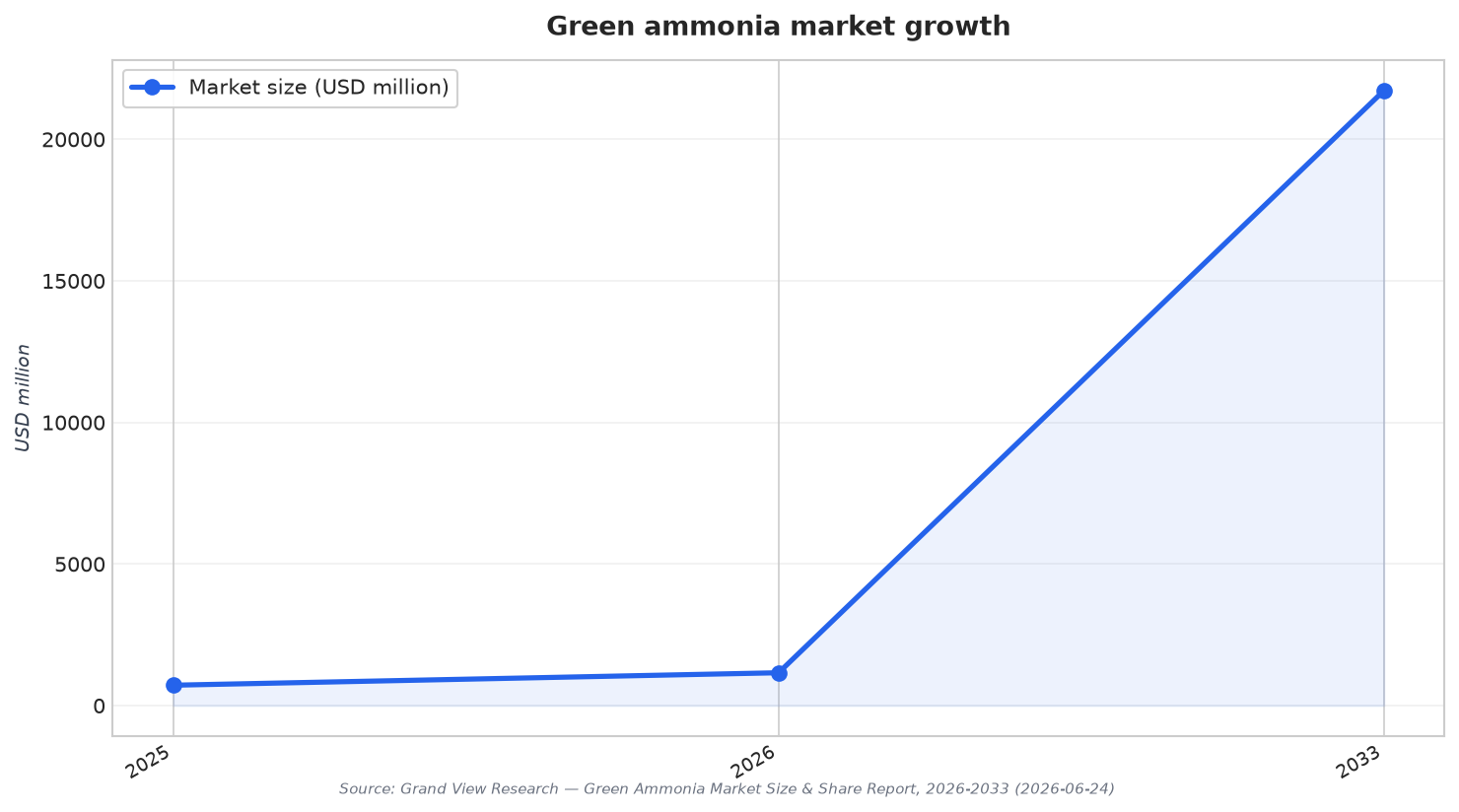
Green ammonia is increasingly positioned as a shipping fuel and hydrogen carrier, but its success depends on ports, bunkering systems, and export logistics that can operate safely and repeatedly. Global market signals show why supply-chain execution is becoming central. One source values the global green ammonia market at USD 515.28 million in 2025 and projects 63.80% CAGR from 2025 to 2034, while another estimates USD 720.0 million in 2025, rising to USD 1,160.0 million in 2026 and USD 21,720.0 million by 2033 at 52.0% CAGR. Transportation already held 30.7% revenue share in 2025 in that second view, reflecting a demand pull from marine fuel adoption and long-distance energy transport.
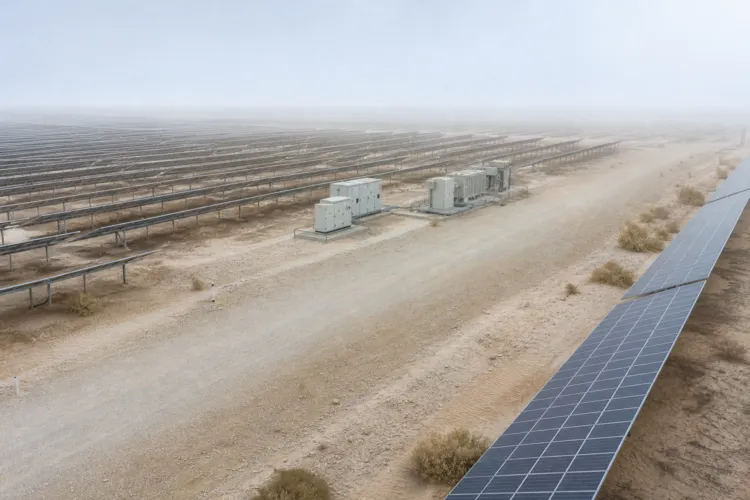
For green ammonia shipping from Saudi Arabia, the export logic starts upstream with green hydrogen and renewable power economics, because those inputs shape the delivered product cost that ports and buyers will tolerate. Inkwood Research values the Saudi Arabia green hydrogen market at $202.55 million in 2026 and expects it to reach $3,429.19 million by 2034, with 42.42% CAGR. It also cites solar irradiation exceeding 2,500 kWh per square meter annually in optimal locations and notes solar prices below $0.015 per kWh in recent auctions, per KACARE. Those figures support a narrative of competitive renewable electricity feeding electrolysis, with ammonia synthesis enabling bulk seaborne export when pipelines are not the chosen channel.
Bunkering and Port Readiness: Safety Rules Drive Design Choices
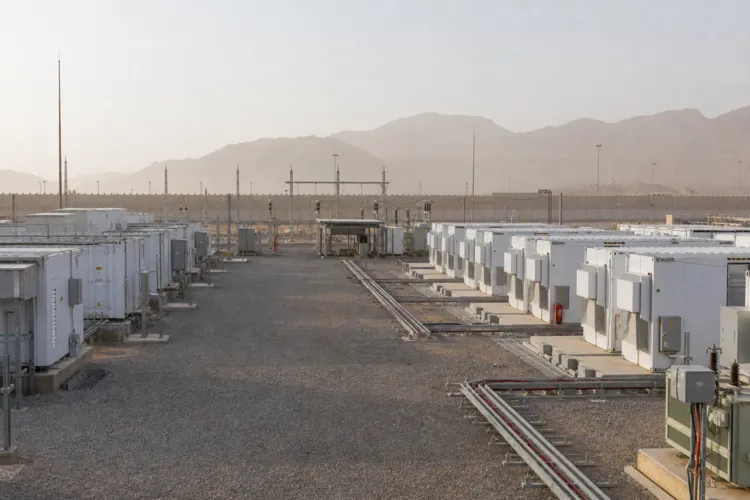
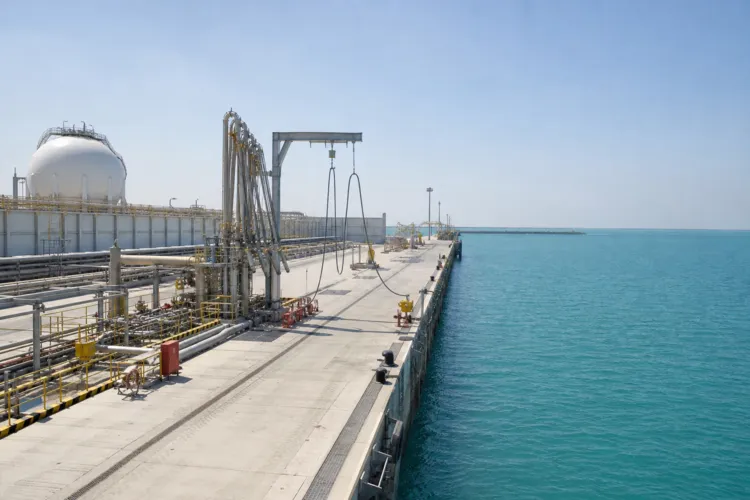
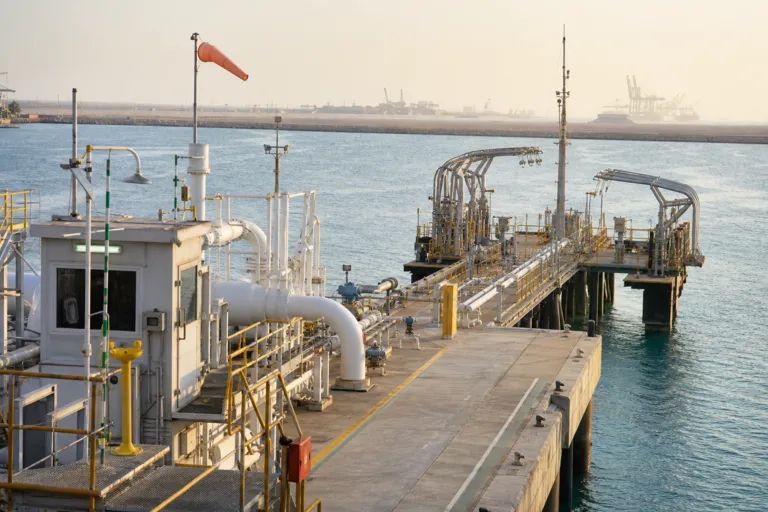
Ammonia bunkering is a port engineering and safety problem before it is a volume problem. Fortune Business Insights cites the Global Maritime Forum (2024) saying over 20 ports globally are in various stages of ammonia bunkering readiness assessment, showing the industry is mapping infrastructure needs beyond pilots. Safety thresholds are explicit in Mordor Intelligence’s green ammonia coverage: ammonia becomes lethal at 300 ppm, and DNV’s 2024 bunkering guide calls for double containment piping, real-time vapor monitoring, and exclusion zones. The same source states these requirements can drive retrofit costs to USD 50–80 million per berth at existing LNG terminals. For Saudi export ports, that implies early decisions on where to concentrate bunkering and how to separate routine cargo handling from controlled fueling operations.
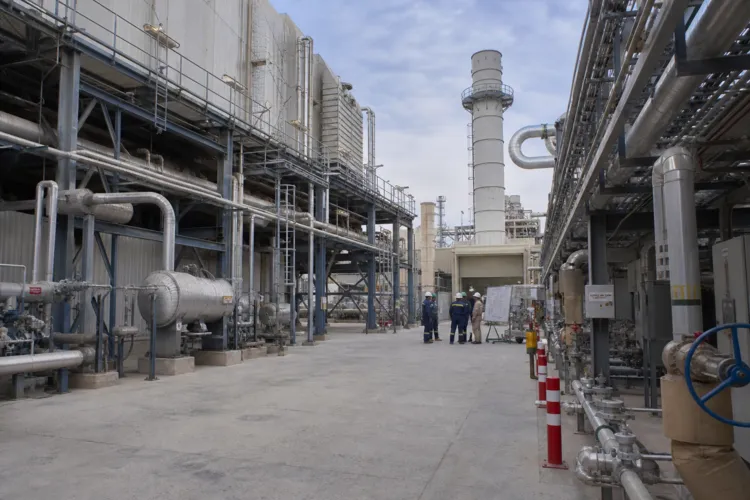
Export logistics also hinge on how ammonia is traded and moved today. Mordor Intelligence’s ammonia market report says the total ammonia market was 193.69 million tons in 2025, with liquid grades leading at 91.28% of volume in 2025. That matters because shipping and terminals already align with pressurized, liquid ammonia flows, even as new low-carbon supply grows. The same report highlights structural change: producers replacing natural-gas feedstock with low-carbon hydrogen, utilities trialing ammonia co-firing, and shippers selecting ammonia as an energy-dense hydrogen carrier. It also provides a performance context for energy density, stating ammonia stores 4.3 MWh per cubic meter at ambient conditions, framing why it is discussed for deep-sea operations without cryogenic systems.
Demand-side pull strengthens the case for export corridors linking Saudi production to overseas bunkering and industrial hubs. Mordor Intelligence’s green ammonia market estimate puts the market at 0.49 million tons in 2026, growing at 82.47% CAGR to 9.85 million tons by 2031, and it notes the International Maritime Organization’s revised greenhouse-gas strategy is pressuring shipowners toward zero-carbon vessels this decade. As shipping options scale, ports need standardized procedures, while exporters need long-term offtake and partnership models. Grand View Research points to partnerships and supply-chain investments, and it cites a specific example outside Saudi Arabia: an August 2025 L&T Energy GreenTech and ITOCHU partnership for a 300 KTPA green ammonia project in Kandla, Gujarat, aimed at supplying low-carbon ammonia for maritime bunkering in Singapore. That kind of export-to-bunkering linkage is the template Saudi logistics planners will be measured against.
What makes green ammonia relevant to shipping and bunkering logistics?
What safety requirements can shape ammonia bunkering at ports?
How does Saudi Arabia’s green hydrogen outlook connect to green ammonia exports?
What do current ammonia trade patterns imply for export logistics?
What is a practical way to think about green ammonia shipping from Saudi Arabia in the near term?
Talk to us for your needs in:
-
Energy Efficiency Strategy & Feasibility
-
Renewable Energy Strategy & Investment Advisory
-
Digital Energy & Smart Grid Strategy
-
Market Entry Strategy
-
Sustainability & Impact Strategy
-
Energy Project Governance & PMO Advisory
-
Energy Market Research
-
Energy Stakeholder & Customer Research
-
Energy Market Intelligence
-
Energy Feasibility & Investment Assessment
-
Energy Sector Benchmarking & Performance Strategy