Saudi Arabia’s renewable buildout is moving quickly, and local content is becoming part of how projects are planned, priced, and delivered. Vision 2030 includes a requirement that renewables supply half of the Kingdom’s electricity by decade-end, which is accelerating procurement. Under the National Renewable Energy Program (NREP), 21 projects totaling 19 GW have been awarded, and seven of these plants, equal to 4.1 GW, were operating by late 2024. Grid-connected renewables reached 6.5 GW in 2024 and were scheduled to rise to 12.7 GW in 2025. Against that scale-up, localization is increasingly tied to supply-chain readiness and delivery speed.
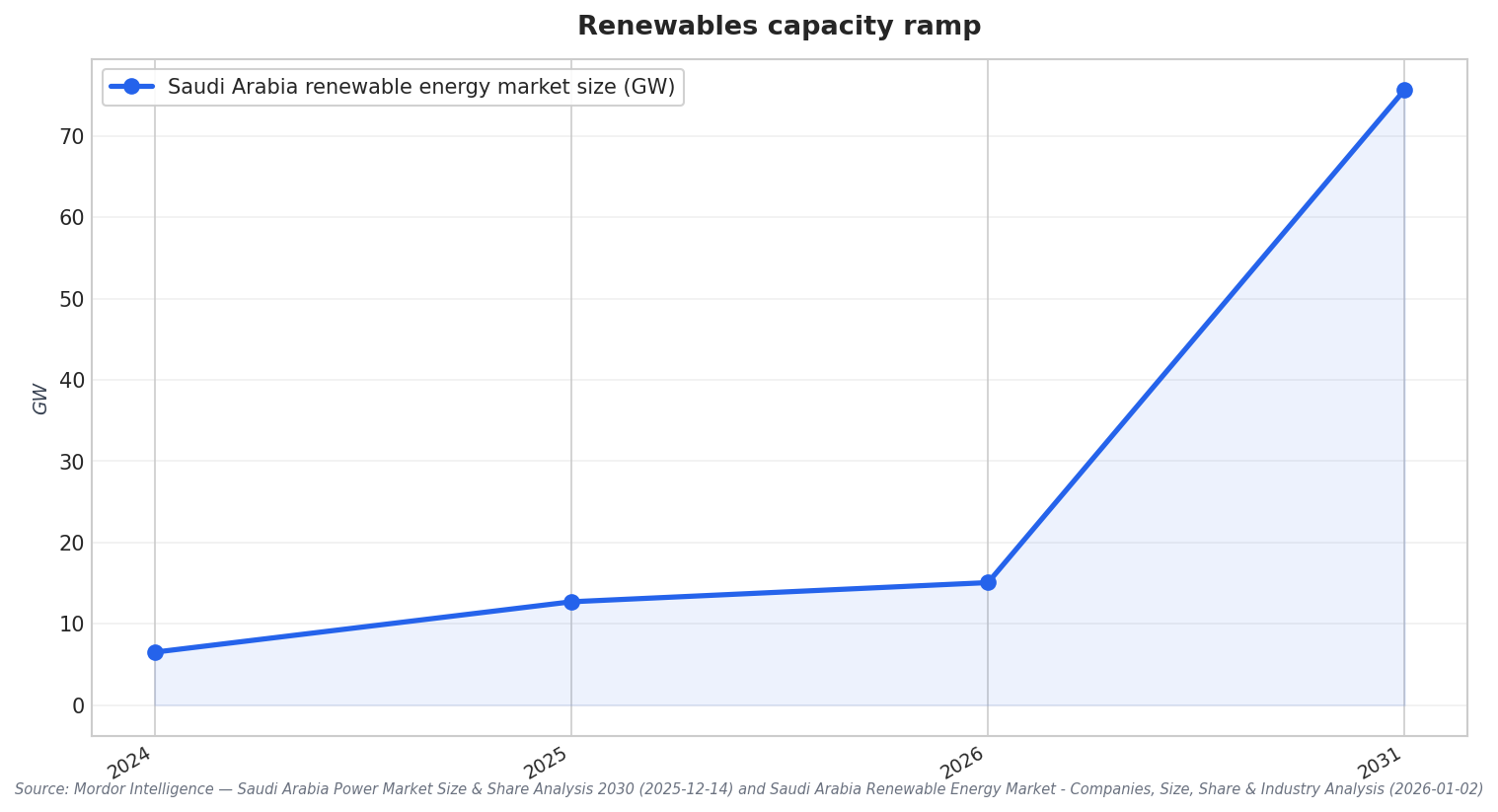
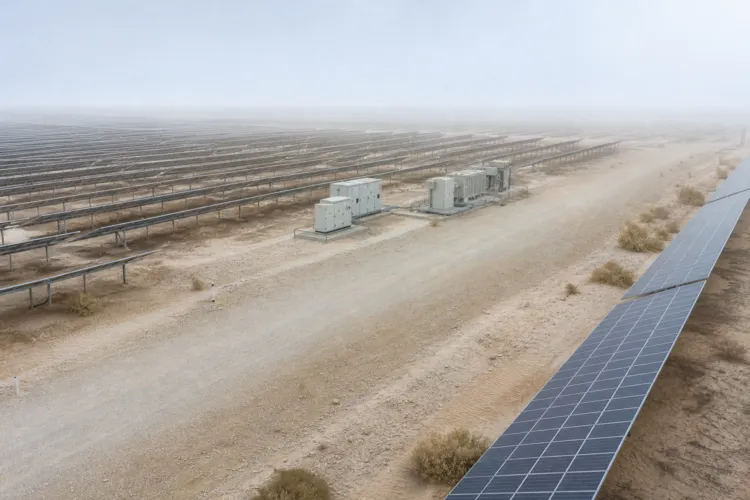
Market estimates also underline how fast the segment is expanding. Mordor Intelligence estimates Saudi Arabia’s renewable energy market size at 10.90 GW in 2025 and 15.06 GW in 2026, with projections reaching 75.68 GW by 2031 and a 38.12% CAGR over 2026–2031. Solar dominates the mix with a 93.15% share in 2025, while wind is projected to advance at an 81.7% CAGR through 2031. Those trajectories put pressure on procurement and local delivery capacity, especially as utilities held a 59.85% share in 2025 and commercial and industrial users are projected to expand at a 43.2% CAGR through 2031.
Local-Content Mandates Are Shaping the Supply Chain
Localization is not only a policy theme; it is being translated into thresholds and industrial decisions. Mordor Intelligence reports that local-content thresholds now exceed 35%, which is catalyzing the production of modules, inverters, and wind turbines inside the Kingdom. The same report points to an NREP procurement pipeline of 130 GW that, together with local-content mandates, anchors supply-chain investments and accelerates manufacturing localization. Company actions mirror that direction. In November 2025, First Solar (US) unveiled plans to expand manufacturing operations in Saudi Arabia to produce solar panels locally, aligning with the government’s push for local content in renewable energy projects.
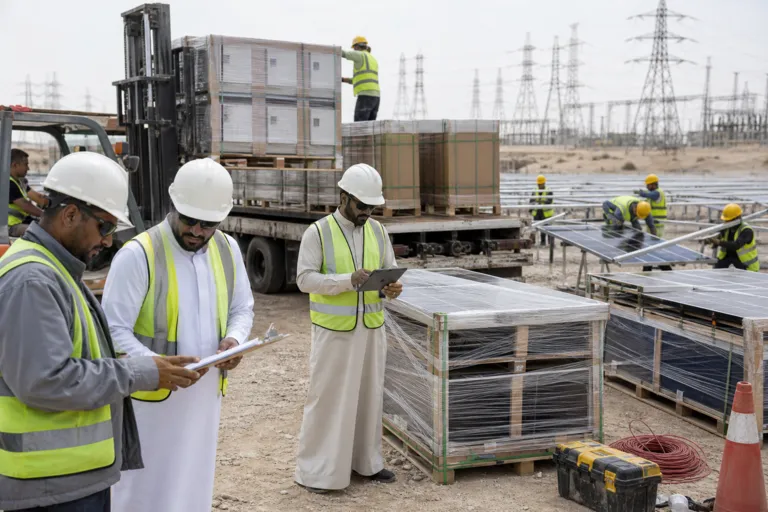
Localization also shows up in project execution, employment, and operations. A ScienceDirect review notes opportunities across construction, operations and maintenance, R&D, and manufacturing, particularly for solar panels and wind turbine components. It cites the Sakaka plant generating 1,200 jobs during peak construction, while localized supply chains aim to boost employment in regions like Al Jouf and Rafha. The same source states Saudi Arabia has committed $293 billion in investments for both conventional and renewable energy projects by 2030, and it highlights that the country is prioritizing localization of the energy sector by promoting R&D and manufacturing to support job creation and economic diversification.
Grid capability and digital tools are also part of the localization story because they influence what can be built, where, and how reliably it can run. Mordor Intelligence’s power market analysis cites a USD 20 billion modernization plan anchored in HVDC links and smart meters to integrate the fast-growing renewable fleet. ScienceDirect adds that the Kingdom plans to install 10 million smart meters by 2025 and reports 1.5 Mt CO₂ in emissions reduction already achieved through energy efficiency programs. Together, these programs support renewable integration while creating demand for in-country execution capacity, from field services to software, alongside the broader push for renewable energy localization in Saudi Arabia.
What is driving renewable energy localization in Saudi Arabia?
How much renewable capacity has Saudi Arabia awarded and brought online under NREP?
Which technologies dominate Saudi Arabia’s renewable market mix today?
What examples show localization reaching manufacturing and jobs?
What grid and efficiency programs support scaling renewables alongside local supply chains?
Talk to us for your needs in:
-
Energy Efficiency Strategy & Feasibility
-
Renewable Energy Strategy & Investment Advisory
-
Digital Energy & Smart Grid Strategy
-
Market Entry Strategy
-
Sustainability & Impact Strategy
-
Energy Project Governance & PMO Advisory
-
Energy Market Research
-
Energy Stakeholder & Customer Research
-
Energy Market Intelligence
-
Energy Feasibility & Investment Assessment
-
Energy Sector Benchmarking & Performance Strategy