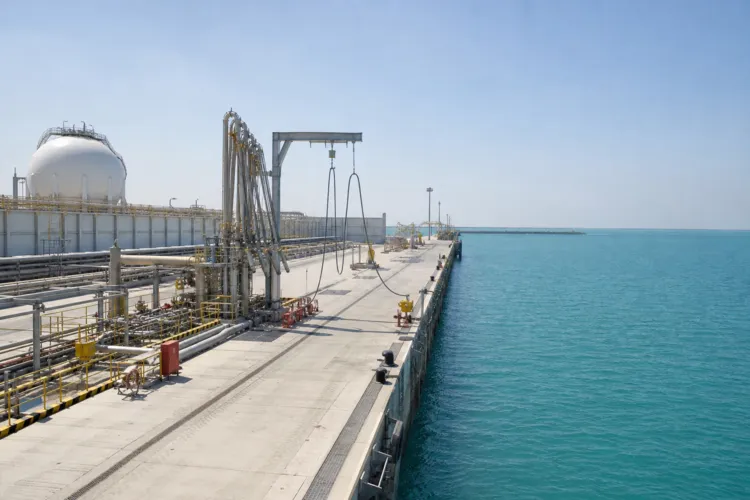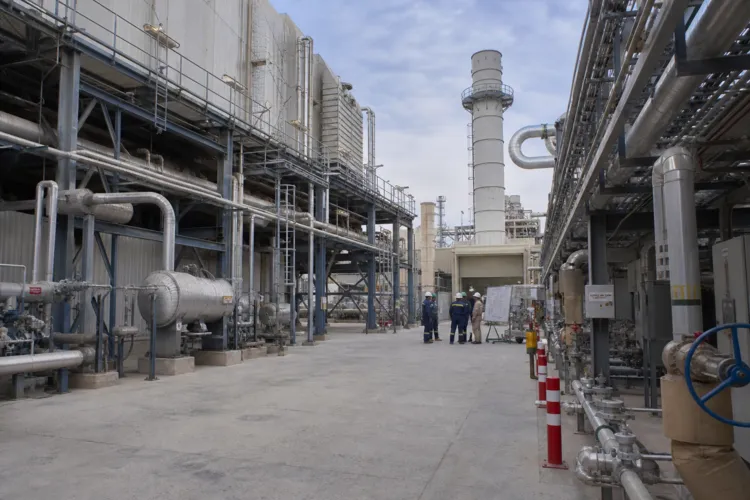

The clean-energy story around the Public Investment Fund is tightening in 2026, not because the narrative is shrinking, but because strategy discipline is coming to the foreground. AGBI reports that PIF governor Yasir Al Rumayyan said in October the fund was in the final stages of approving a revised investment strategy for 2026–2030. The same report says the plan is still a test draft that could be reshaped after investor feedback, with a fuller version expected in the spring. That matters for how the pif energy investment portfolio is understood: it is being presented to markets while funding for giga-projects tightens.
One reason the portfolio feels more “mapped” in 2026 is the fund’s explicit push to bring in partners. As the PIF Private Sector Forum opened in Riyadh, AGBI said the fund and its 120 portfolio companies would pitch opportunities to investors and suppliers, and organisers expected the forum to yield more than 100 memoranda of understanding. The same piece also flags a potential internal constraint: the roughly $1 trillion sovereign wealth fund is likely to cut capital spending by up to 15%, according to a person familiar with its finances. If that plays out, the portfolio’s clean-energy bets may be judged not just by ambition, but by bankability and co-investor appetite.
Where the “Clean” Signals Are Most Explicit
Publicly stated finance commitments provide the clearest numeric anchor for PIF’s clean positioning. FinTech Magazine reports that PIF’s sustainable finance includes US$19.4bn committed to green projects as of mid-2024. The same source says PIF introduced the world’s first 100-year green bond and maintains a comprehensive Green Finance Framework supporting investments in renewable energy and sustainable infrastructure. It also reports that PIF had assets exceeding US$1tn by 2025. Those figures do not break down the energy book line-by-line, but they frame how large the fund is and that a measurable pool of capital has been committed to green projects.
Deal commentary from PitchBook adds context on what “clean-energy bets” look like in today’s market, even when the deals are not PIF’s. PitchBook’s Q3 2025 Global Real Assets Report says energy security is a positive driver for both fossil fuels and renewables, and Carlyle believes non-fossil fuels, including renewables and nuclear, will be in higher demand when security is critical because they are mostly local and not traded. PitchBook also notes investors are moving beyond standalone wind or solar and focusing more on integrated systems combining generation with storage, electrification, and grid flexibility. For readers mapping the pif energy investment portfolio, this explains why storage and grid flexibility themes keep showing up in energy-security narratives.
Finally, PIF’s energy-transition exposure also runs through the supply chain lens, including critical minerals. AGBI reports that PIF plans to spin off Manara Minerals, a joint venture with Saudi Arabian Mining Company (Maaden), to move beyond being only an investment vehicle and build more technical capability. Manara was established in 2023 to invest in critical minerals abroad; Maaden holds a 51% share, and PIF owns 67% of Maaden. The same report notes Manara announced in July 2023 the acquisition of a 10% stake in Vale Base Metals. This is not a power-generation asset, but it links the fund’s broader portfolio structure to materials that support electrification and energy infrastructure.
Put together, the 2026 picture is a portfolio that is being “stress-tested” in public: strategy drafts are being validated with investors, partnerships are being solicited through a forum expected to generate more than 100 MoUs, and capital intensity may be moderated by a possible up-to-15% capex cut. At the same time, PIF’s disclosed green commitment of US$19.4bn (mid-2024) and its green finance architecture, plus its majority position in Maaden and the planned Manara Minerals spinoff, offer concrete signposts. Mapping the pif energy investment portfolio in 2026 therefore means watching not only what PIF funds, but how it structures financing, co-investment, and upstream capability around the energy transition.
What is the pif energy investment portfolio in 2026 focused on, based on public disclosures?
How much has PIF committed to green projects?
What strategy change did PIF signal for 2026–2030?
Is PIF expected to reduce capital spending?
How does Manara Minerals connect to the energy transition theme?
Talk to us for your needs in:
-
Energy Efficiency Strategy & Feasibility
-
Renewable Energy Strategy & Investment Advisory
-
Digital Energy & Smart Grid Strategy
-
Market Entry Strategy
-
Sustainability & Impact Strategy
-
Energy Project Governance & PMO Advisory
-
Energy Market Research
-
Energy Stakeholder & Customer Research
-
Energy Market Intelligence
-
Energy Feasibility & Investment Assessment
-
Energy Sector Benchmarking & Performance Strategy