Saudi Arabia is repeatedly positioned in the sources as a future-facing supplier in a market that is moving quickly. One global outlook expects the blue ammonia market to reach USD 22.12 million in 2025 and USD 33.44 million by 2032, with a CAGR of 5.3%. Another projects a much larger trajectory, with a 2025 valuation of USD 4.25 Billion and an expected USD 458.74 Billion by 2034, at a CAGR of 55.26%. A third estimate values the market at USD 577.03 Mn in 2025 and predicts USD 51,101.52 Mn by 2035 at a 56.7% CAGR. These ranges differ, but they share a single theme: supply chains, certification, and carbon capture-linked projects are shaping momentum.
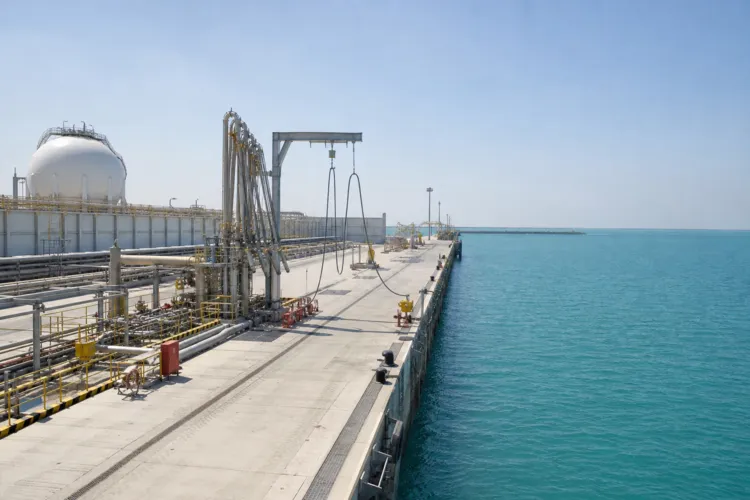
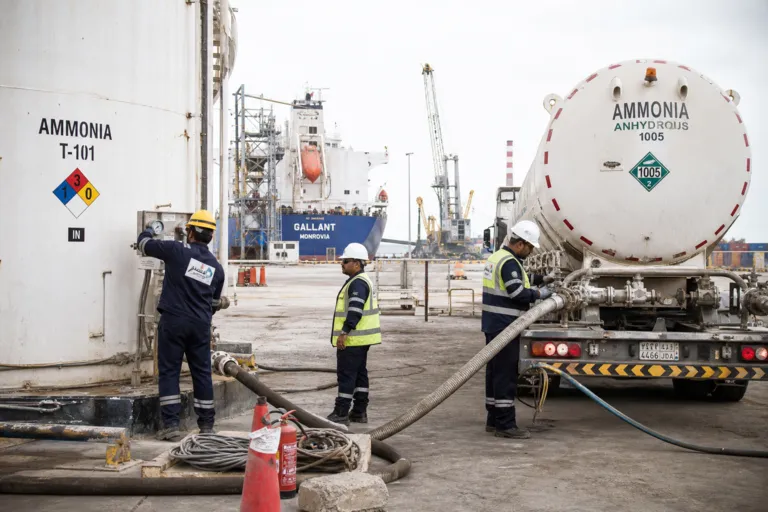
In that context, Saudi-linked shipments show up as concrete milestones. In 2021, Saudi Aramco, in collaboration with SABIC, shipped its inaugural blue ammonia cargo to Japan, described as a critical milestone in the global energy transition. SABIC-focused statistics also state that in 2020, SABIC and Saudi Aramco completed the world’s first shipment of low-carbon ammonia. Separately, a DataM Intelligence release adds an early use-case detail, saying Japan, in partnership with Saudi Aramco and SABIC, imported 40 tons of blue ammonia for co-firing in power plants. Together, those references anchor the export narrative around Japan as an early destination in the sources.
What the Sources Actually Say About Partnerships and Export Readiness
The sources also point to steps taken to expand export capability rather than only celebrating first cargoes. In August 2023, Saudi Aramco expanded its partnership with SABIC to enhance blue ammonia export capabilities, sending large shipments to Japan, according to one market report. That same report frames the broader competitive landscape by naming key players, including Saudi Aramco and SABIC, alongside companies such as Mitsubishi Corporation, CF Industries Holdings Inc., and others. Another market overview adds that the Middle East, particularly Saudi Arabia and the UAE, is becoming a significant exporter by leveraging low-cost natural gas reserves and decarbonization plans, while identifying Asia-Pacific—especially Japan and South Korea—as an emerging demand center.
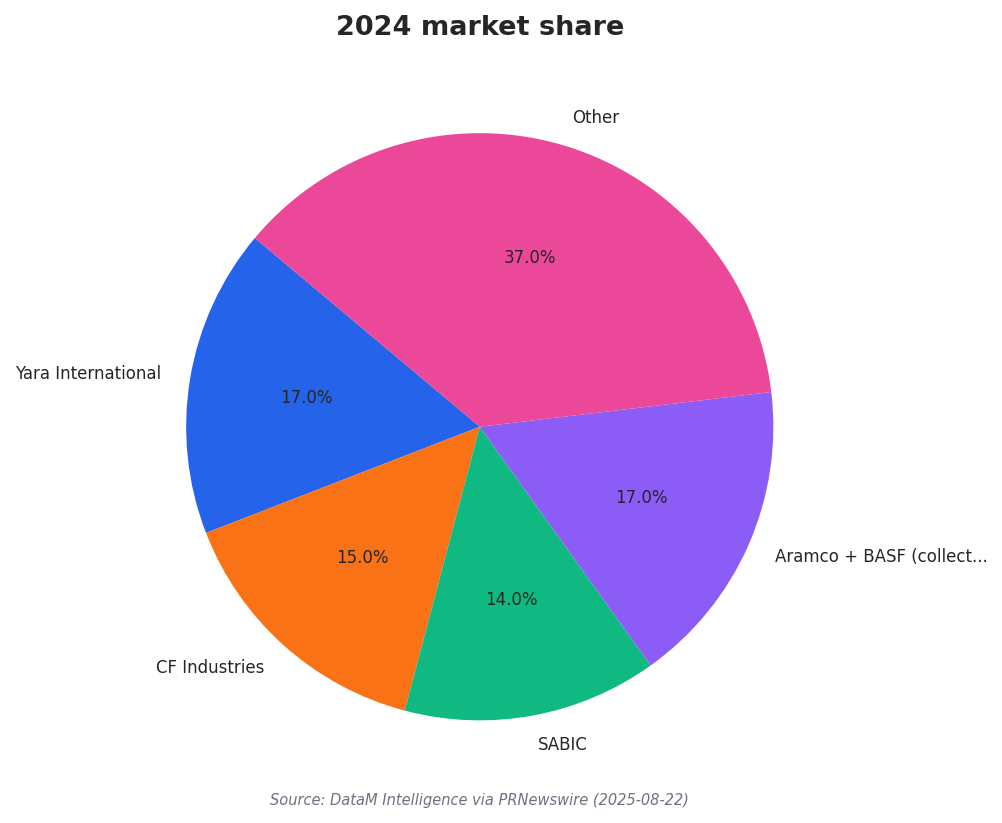
Industry share data in the sources also helps explain why partnerships matter for competitiveness. A DataM Intelligence release states that in 2024, Yara International ASA held 17% of the blue ammonia market, followed by CF Industries Holdings, Inc. with 15% and SABIC with 14%. It also states that Saudi Arabian Oil Co. (Aramco) and BASF SE collectively captured 17%, while other companies accounted for 37%. Those figures do not break down by country shipments, but they suggest a crowded field where scale, infrastructure, and certification readiness can influence who wins long-term supply contracts in import-dependent markets.
For readers tracking saudi blue ammonia exports, the most grounded takeaway from the sources is that Saudi-linked activity is repeatedly tied to Japan and to collaboration between Aramco and SABIC. Outside Saudi Arabia, the sources also show how policy and investment elsewhere can shape competition. For example, the United States is described as offering significant tax incentives for CCS projects under the Inflation Reduction Act (IRA), and the same DataM Intelligence release cites a US$ 200 million plant in Louisiana that aims to meet domestic and export demands. These comparisons matter because they illustrate why Saudi exporters must pair supply with durable offtake demand and credible low-carbon infrastructure to stay competitive.
What export milestones do the sources cite for Saudi Arabia’s blue ammonia?
Which markets are highlighted as demand centers for imported blue ammonia?
What did the sources say about Aramco and SABIC actions to strengthen exports?
How concentrated is the blue ammonia market, according to the sources?
Why do the sources mention the United States in a discussion of export competitiveness?
Talk to us for your needs in:
-
Energy Efficiency Strategy & Feasibility
-
Renewable Energy Strategy & Investment Advisory
-
Digital Energy & Smart Grid Strategy
-
Market Entry Strategy
-
Sustainability & Impact Strategy
-
Energy Project Governance & PMO Advisory
-
Energy Market Research
-
Energy Stakeholder & Customer Research
-
Energy Market Intelligence
-
Energy Feasibility & Investment Assessment
-
Energy Sector Benchmarking & Performance Strategy