
If you are searching for saudi building code 601 energy efficiency guidance, you likely want two things. You want a clean compliance workflow. And you want fewer surprises at authority review and handover. The sources provided do not include the text of SBC 601 or SBC 602, so this article does not restate requirements. Instead, it focuses on how to structure compliance work for developers and MEP engineers using only the concrete signals in the sources: more policy-driven energy requirements, tighter electrification constraints in updated codes, and the growing expectation that projects document performance through clearer pathways and targets.
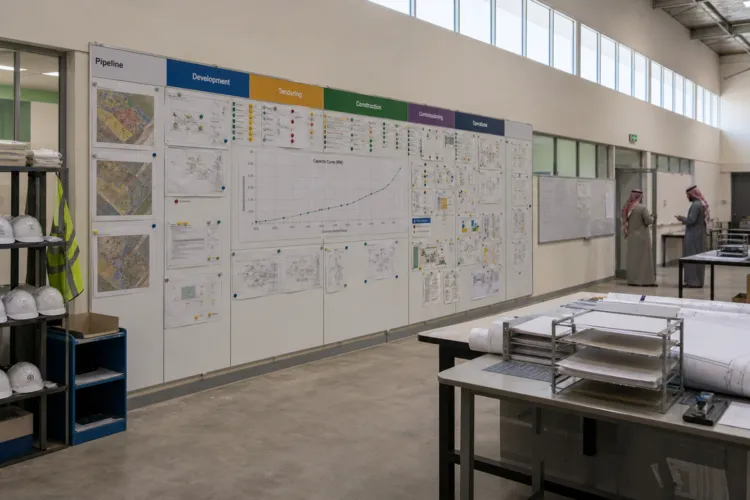
Start by treating SBC 601-602 compliance as a documentation project, not only a design task. Global sustainability policy is described as “evolving,” with a call to “align with global standards,” “anticipate regulatory risks,” and stay “agile” in a changing energy landscape, according to an LRQA guide highlighted by edie. Translate that into a local project routine. Create an energy compliance register. Assign owners across architecture, electrical, mechanical, and commissioning. Lock a deliverable list early, then update it at each design gate so you can prove decisions were made intentionally rather than reactively.
What MEP Teams Should Lock Down Early (So Compliance Stays Predictable)
Use early-stage coordination to avoid late redesign. Multiple sources show a policy direction toward fabric-first energy efficiency and rooftop solar expectations in new housing standards, with a stated requirement to install solar panels equivalent in size to at least 40% of the building’s floor area, with flexibility where that is not possible and for homes with heavy shade. While those sources describe the UK Future Homes Standard, they still provide a practical lens: when energy rules tighten, roof, structure, shading, and electrical single-line decisions become compliance-critical. For Saudi project teams working under SBC 601-602, align roof load allowances, plant layout, risers, and metering strategy early so later changes do not break the energy narrative.
Expect electrification constraints and controls requirements to become more specific. New York City’s 2025 energy code updates are described as adding restrictions on electric resistance backup heating, capping capacity at 25% of total design load and permitting use only when temperatures drop below 17F. The same source describes demand response requirements for commercial water heating and lighting, plus movement toward performance-based compliance pathways with “predicted energy use targets,” including eligibility language tied to buildings over 25,000 square feet. Do not assume these exact thresholds apply to Saudi codes. Use them as a warning: future reviews may scrutinize backup heat sizing, control sequences, and evidence that systems are designed around measurable targets.
Developers also need to plan for supply chain readiness when energy requirements rise. One source notes that GameChange Solar expanded manufacturing capacity in Saudi Arabia to 6 GW annually, doubling its volume, with completion expected by September 2025. This does not prove a local mandate, but it does signal market activity that can support higher solar uptake when projects choose it or are required to provide it. From a compliance management perspective, add a procurement checkpoint: confirm lead times, certifications, and interface responsibilities for any energy-related packages so your SBC 601-602 documentation does not conflict with what is actually deliverable on site.
Finally, build a business case that survives real-world feasibility checks. A Construction News opinion piece describes the tension between policy aspiration and financial feasibility, and argues for practical alignment between policy and economics, mentioning ideas like enhanced capital allowances, VAT relief tied to measurable EPC improvement, and fast-track planning for sustainability-led refurbishment. Even though this is UK-focused and not SBC-specific, the operational lesson is universal. For SBC 601-602 projects, keep a decision log that connects energy-efficiency choices to measurable outcomes and approved budgets, so teams can defend scope, avoid value-engineering that undermines compliance, and maintain a coherent submission story.
What is the best first step for saudi building code 601 energy efficiency compliance planning?
How should MEP engineers reduce late-stage compliance risk on SBC 601-602 projects?
Do the sources provide the actual SBC 601-602 requirement text or numeric targets?
What technical trend should teams watch that could influence future reviews of energy designs?
Talk to us for your needs in:
-
Energy Efficiency Strategy & Feasibility
-
Renewable Energy Strategy & Investment Advisory
-
Digital Energy & Smart Grid Strategy
-
Market Entry Strategy
-
Sustainability & Impact Strategy
-
Energy Project Governance & PMO Advisory
-
Energy Market Research
-
Energy Stakeholder & Customer Research
-
Energy Market Intelligence
-
Energy Feasibility & Investment Assessment
-
Energy Sector Benchmarking & Performance Strategy