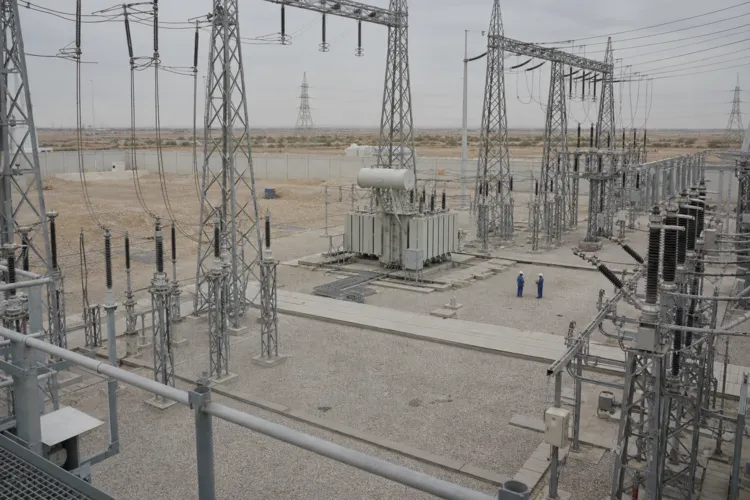
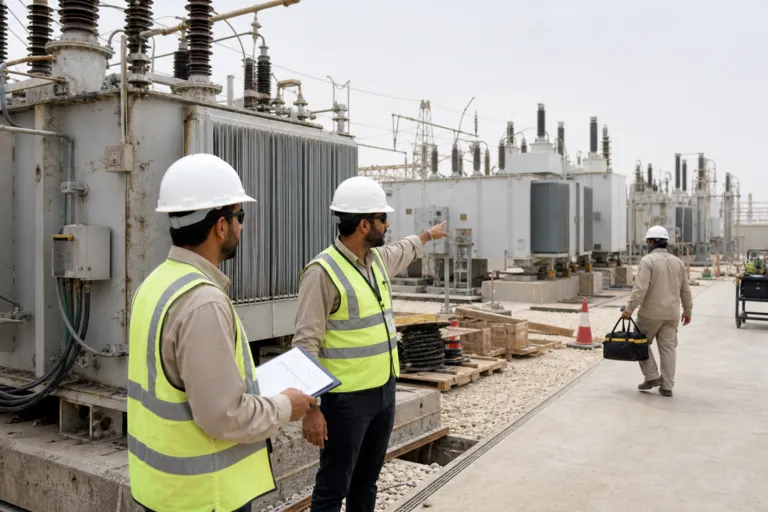
Saudi Arabia’s renewable buildout is often discussed in terms of generation capacity and project pipelines. But the less visible constraint is the hardware that connects new plants and new loads to the grid: substations, high-voltage transformers, and the instrument transformers used for protection and metering. As of 2026, Saudi Arabia’s interconnected power system includes installed generation capacity exceeding 80 GW and a transmission network of over 70,000 circuit-kilometers at 110 kV and above. In this context, the pace of substation additions and equipment replacement becomes a gating item for how fast new renewable zones and giga-project load centers can be energized.
Market forecasts underline how central these assets have become. One forecast projects the Saudi Arabia transformer market will grow from USD 62.5 billion in 2025 to USD 96.8 billion by 2031, at a CAGR of 7.5%. Drivers cited include grid upgrades, renewable integration, and electrification programs, alongside replacement demand for distribution transformers nearing end-of-life in Saudi Arabia. Supply-chain tightening for electrical steel, copper, and insulation materials is also influencing lead times and pricing stability in the Kingdom. That combination—rising demand plus tighter inputs—sets the stage for delays that show up not at the solar or wind site, but at the interconnection substation.
Where the Bottleneck Forms: Specs, Segments, and Substations
On the utility-scale high-voltage side, demand is shifting toward higher voltage classes such as 380 kV and 525 kV as Saudi Arabia expands its 380 kV backbone and plans 525 kV HVDC links. By application, generator step-up transformers for new renewable and gas-fired plants represent roughly 30–35% of value, followed by transmission interconnection transformers at 25–30%, and substation step-down units at 20–25%. Replacement and refurbishment is also material, estimated at 15–20% of annual demand, tied to lifecycle management for transformers that have been in service for 25–35 years. Meanwhile, the mobile and modular substation transformer segment is described as underserved, with few suppliers offering rapidly deployable units for temporary reinforcement during giga-project construction.
Instrument transformers add another layer to the substation squeeze. Oil-immersed current transformers support metering, feeder protection, and monitoring in substations from 69 kV to 380 kV. Demand for combined metering and protection class oil-immersed current transformers is growing at 8–10% annually, driven by smart grid deployments that reduce substation footprint and wiring complexity. Renewables are currently a smaller segment at 8–10% of oil-immersed current transformer demand, but this is framed against a national target of 58.7 GW of renewable capacity by 2030, which requires equipment for grid interconnection substations. The same source also references large-scale solar PV parks in the 1–2 GW range as creating demand for 145–245 kV class units.
Standards, safety, and local capabilities shape what can be delivered and when. SASO efficiency standards and SFDA electrical safety regulations govern transformer import certification, and the Saudi Building Code favors dry-type units for indoor commercial and mining applications, which aligns with developments such as NEOM and the Red Sea Project being cited for dry-type transformer installations. Procurement is also evolving: Saudi Electricity Company specifications now require IoT-enabled monitoring for predictive maintenance across high-voltage transmission infrastructure. At the same time, workforce and manufacturing constraints are highlighted in the Eastern Province, where specialized transformer winding technician availability is described as collapsing, pushing manufacturers to triple apprenticeship intake at Jubail and Dammam facilities. For buyers planning power transformer supply in Saudi Arabia, the practical risk is that interconnection and substation equipment—especially higher-spec, monitored, and safety-compliant designs—can become the hidden critical path.
Why can substations and transformers slow renewable project energization in Saudi Arabia?
What is driving transformer market growth in Saudi Arabia through 2031?
How do standards and safety rules affect transformer procurement?
What trends are shaping power transformer supply in Saudi Arabia?
Talk to us for your needs in:
-
Energy Efficiency Strategy & Feasibility
-
Renewable Energy Strategy & Investment Advisory
-
Digital Energy & Smart Grid Strategy
-
Market Entry Strategy
-
Sustainability & Impact Strategy
-
Energy Project Governance & PMO Advisory
-
Energy Market Research
-
Energy Stakeholder & Customer Research
-
Energy Market Intelligence
-
Energy Feasibility & Investment Assessment
-
Energy Sector Benchmarking & Performance Strategy