Saudi Arabia is bringing concentrated solar power back into the conversation. The goal is not just more solar. It is also more control over when electricity can be delivered. Under Vision 2030, the Kingdom aims for a balanced energy mix, with 50% of electricity generated from renewables and the other 50% from natural gas. This shift matters because in 2021, 60.89% of energy consumed was produced by burning oil. In a country with strong sun, the challenge is making solar power useful beyond midday hours.
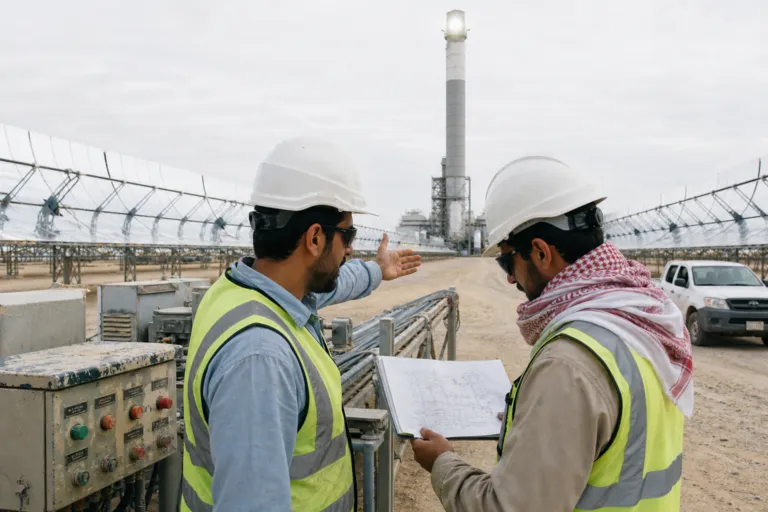
CSP is returning because it is built around heat. Concentrated solar power uses mirrors to focus sunlight toward a receiver, creating solar thermal energy that can drive a steam turbine or another heat engine. With thermal energy storage, CSP can produce electricity during the night. This is one reason it can compete with photovoltaics paired with battery energy storage systems. Another market view says grid planners turn to CSP when discharge horizons exceed eight hours, because PV arrays paired with lithium-ion batteries become uneconomic beyond that point. The same source notes molten-salt storage can run 15 hours or more at lower marginal cost.
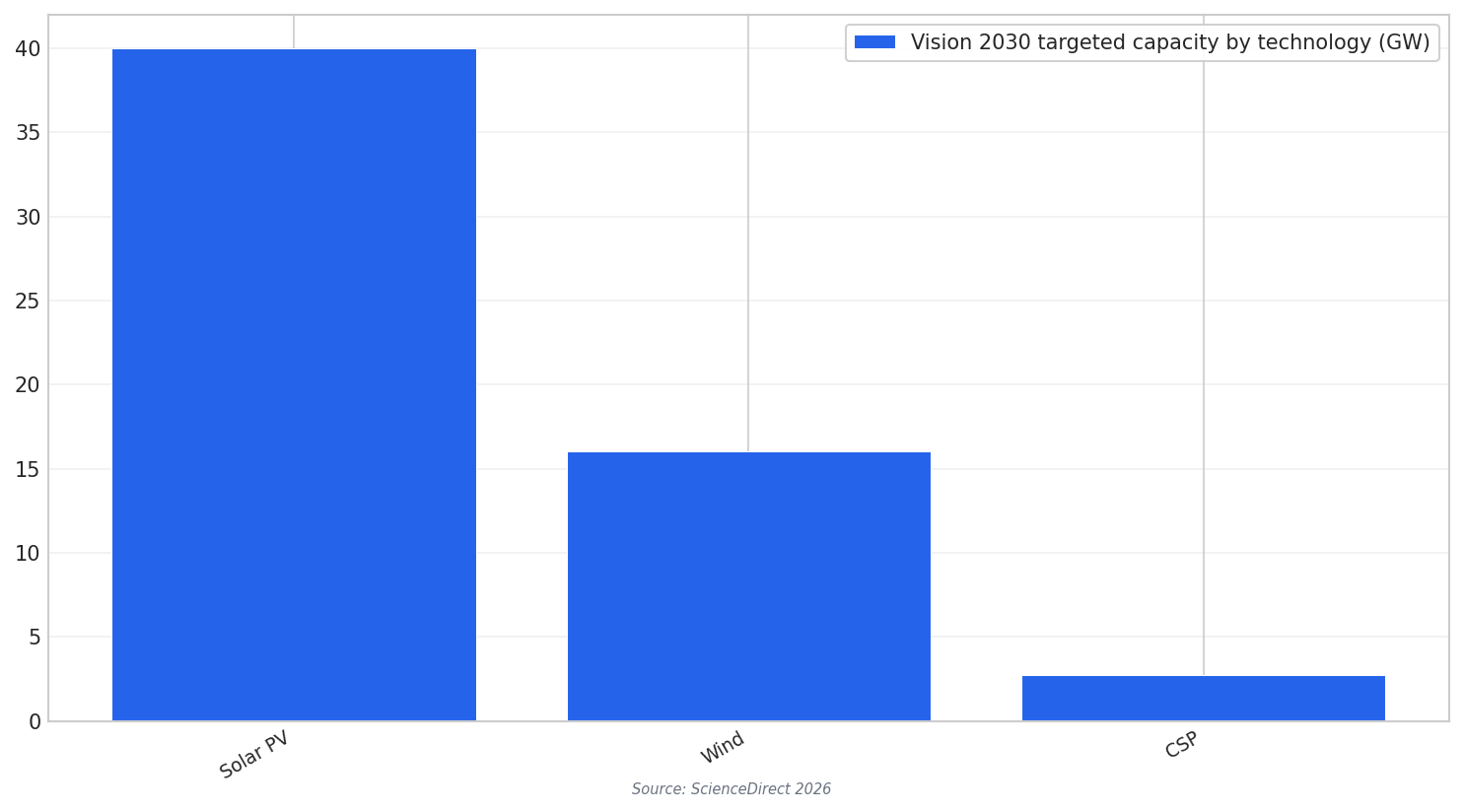
Saudi plans also show why CSP is re-entering the mix. One analysis of Vision 2030 targets describes a 58.7 GW renewables goal by 2030, made up of 40 GW from solar PV, 16 GW from wind energy, and 2.7 GW from concentrated solar power (CSP). Those three numbers show that CSP is smaller than PV, but still officially part of the build-out. Another program view says the National Renewable Energy Program outlines plans for 11.8 GW of renewable energy projects in collaboration with ACWA Power by 2025, subject to approval from the Ministry of Energy.
Why CSP Fits Saudi Arabia’s Next Phase
Solar PV is already the main technology in today’s market. In 2025, solar photovoltaics led with 98.55% of the Saudi Arabia solar energy market share. Even so, the same market assessment projects concentrated solar power to expand at a 44.3% CAGR to 2031, the fastest among all segments. That tells a clear story. Saudi Arabia can keep scaling PV, but it is also looking for tools that can support the grid and supply power when the sun is not available.
Some commentary on Saudi solar innovation says the country has invested heavily in concentrated solar power technology, recognizing its potential for energy storage and grid stability. It also highlights that CSP can be useful in desert environments, including for industrial applications requiring high-temperature heat. A broader CSP market report adds more context on why heat matters: industrial heat between 150 °C and 565 °C represents close to 20% of global final energy demand, and CSP can supply that range without combustion emissions.
CSP is also being discussed in connection with large new developments. A CSP market report says Saudi Arabia’s NEOM project couples a 300 MW CSP plant to a 50,000 t-per-year hydrogen facility, using tower heat to raise electrolyzer efficiency. At the same time, Saudi Arabia continues to build solar capacity through different paths. For example, the Sakaka solar plant finished in November 2019 and produces roughly 900 GWh of electricity per year, powering over 75,000 homes. Together, these details show why concentrated solar power saudi arabia is returning: it complements PV by adding dispatchable heat and a different kind of flexibility.
What is concentrated solar power saudi arabia trying to achieve?
How does CSP differ from solar PV?
What are Saudi Arabia’s 2030 capacity targets for PV, wind, and CSP?
Why can CSP be attractive for long-duration storage?
Talk to us for your needs in:
-
Energy Efficiency Strategy & Feasibility
-
Renewable Energy Strategy & Investment Advisory
-
Digital Energy & Smart Grid Strategy
-
Market Entry Strategy
-
Sustainability & Impact Strategy
-
Energy Project Governance & PMO Advisory
-
Energy Market Research
-
Energy Stakeholder & Customer Research
-
Energy Market Intelligence
-
Energy Feasibility & Investment Assessment
-
Energy Sector Benchmarking & Performance Strategy