Floating solar saudi arabia is gaining attention because water and energy challenges are tied together. Saudi Arabia relies on desalination to meet water demand, and energy can be a major cost inside these plants. At the same time, water bodies like reservoirs and desalination ponds are valuable surfaces that can host solar panels without using more land. This creates a path where clean electricity and water security can support each other.
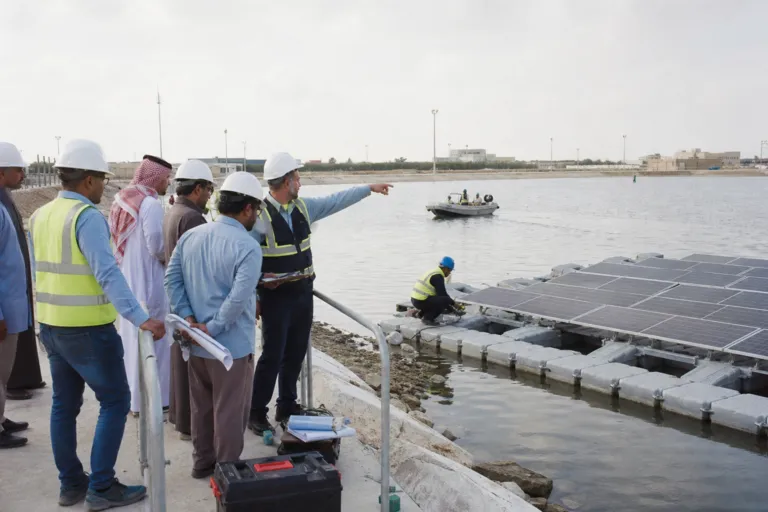
A key signal is a landmark agreement to develop Saudi Arabia’s first floating solar power plant. Arabian Qudra, a subsidiary of Abunayyan Holding, announced the deal with the Saudi Water Authority during the Innovation Driven Water Sustainability Conference (IDWS). Another report says the floating solar power plant will be built on the surface of the Al-Qassim reservoir. The same coverage highlights expected benefits like reduced land use, improved solar panel efficiency, and reduced water evaporation.
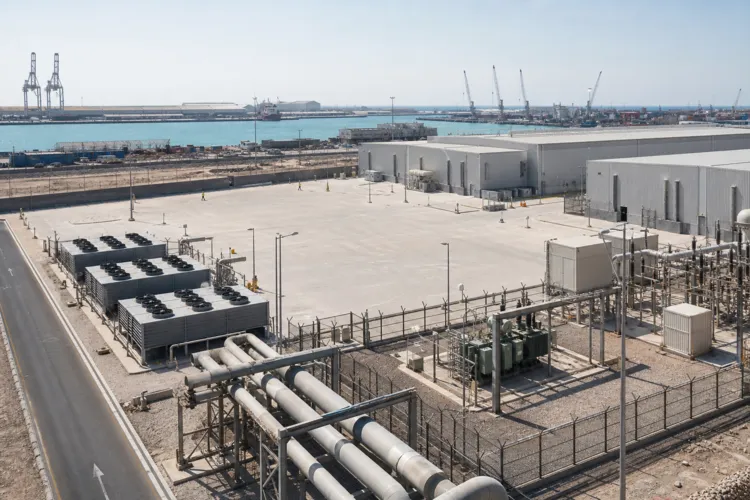
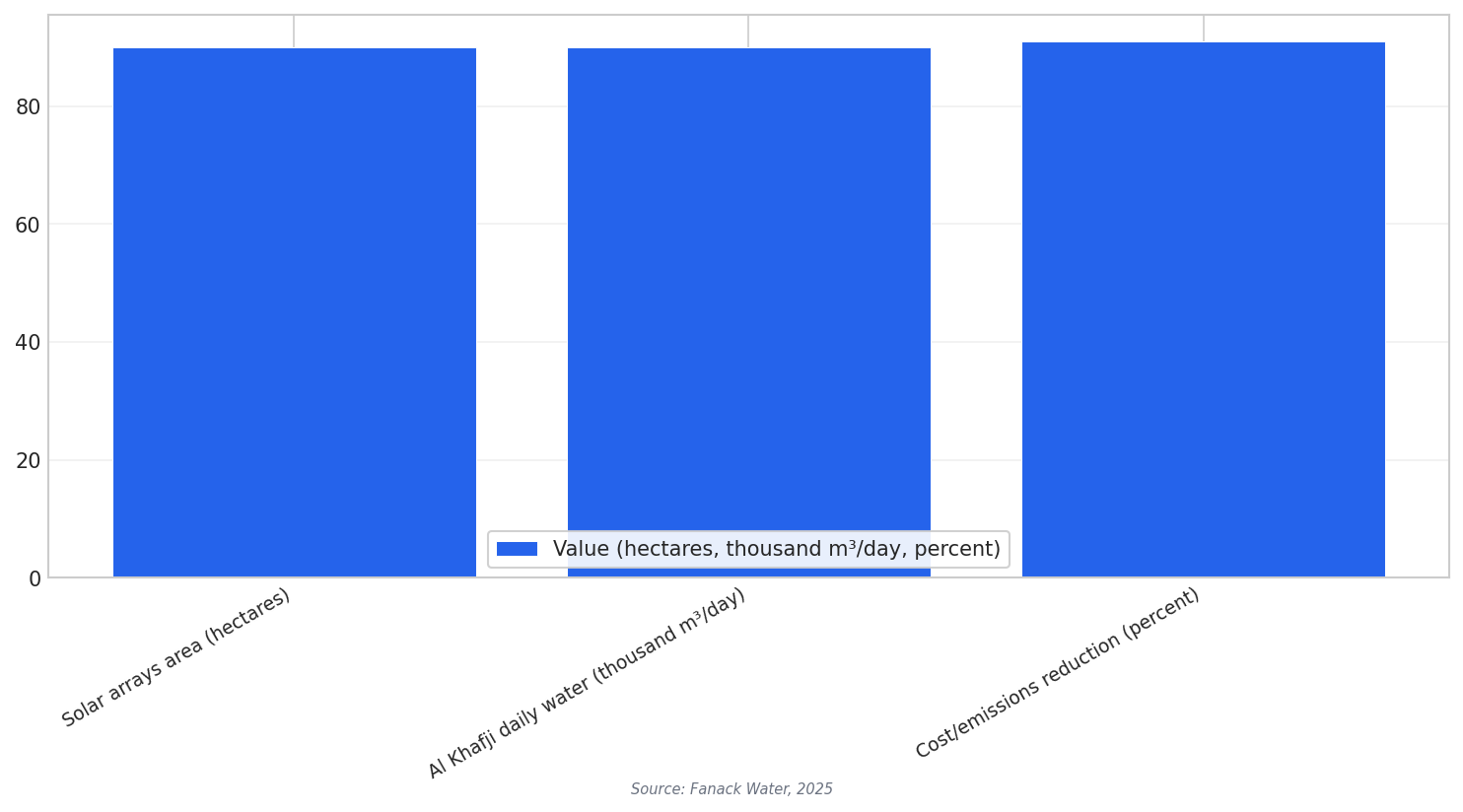
Solar is already being used directly for water production, and the Al Khafji project is often cited as a milestone. Fanack Water describes Al Khafji as the world’s first large-scale solar-powered seawater reverse osmosis desalination plant. It uses solar arrays spread over 90 hectares and can supply up to 60,000–90,000 cubic meters of potable water per day. Fanack Water also reports the approach can reduce operational costs and emissions by up to 91% compared to conventional thermal techniques.
Why Reservoir Surfaces and Ponds Matter in a Hot Climate
In Saudi conditions, surface water can be hard to keep. A ScienceDirect study on PV-powered desalination and Managed Aquifer Recharge (MAR) notes that open-water losses can exceed 1.8 m yr−1. It also notes algal fouling can be common in high-temperature provinces. This context helps explain why covering water surfaces with PV can be attractive, and why some projects aim to avoid long residence times in open ponds.
The same ScienceDirect paper also points to wider water system pressure. It states Saudi Arabia now withdraws almost 10 billion m3 yr−1 from its aquifer systems, while total natural recharge is estimated at less than 2 billion m3 yr−1. It also reports that 64% of the kingdom's central terrain is physically and hydro-geochemically suitable for MAR basins fed by reclaimed effluent or surplus desalinate. The paper frames MAR as evaporation-free storage that can act as a drought reserve and a buffer against grid outages.
For desalination operators, energy cost is a practical driver. One industry article says energy costs can make up to 50% of the overall operational costs of desalination plants. It also says solar energy can offer rates as low as 1.3–1.6 USD cents/kWh. Alongside floating solar on reservoirs like Al-Qassim, these figures explain the momentum behind combining solar PV with water infrastructure as part of Saudi Arabia’s Vision 2030 direction.
What is the first floating solar project announced in Saudi Arabia?
How does floating solar saudi arabia connect to water security?
What makes Al Khafji important for solar-powered desalination?
Why are evaporation and fouling issues relevant when thinking about ponds and reservoirs?
Talk to us for your needs in:
-
Energy Efficiency Strategy & Feasibility
-
Renewable Energy Strategy & Investment Advisory
-
Digital Energy & Smart Grid Strategy
-
Market Entry Strategy
-
Sustainability & Impact Strategy
-
Energy Project Governance & PMO Advisory
-
Energy Market Research
-
Energy Stakeholder & Customer Research
-
Energy Market Intelligence
-
Energy Feasibility & Investment Assessment
-
Energy Sector Benchmarking & Performance Strategy