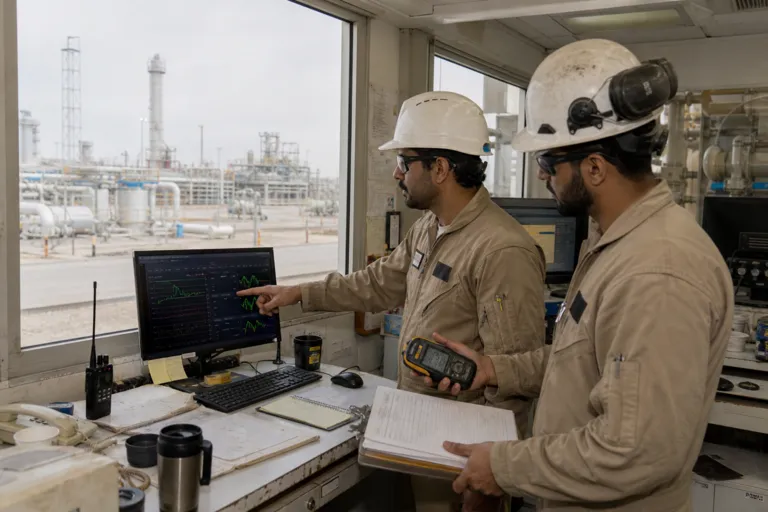
Methane emission reduction saudi arabia is moving from a technical topic to a public scorecard. For Saudi Aramco, the path is clear: measure emissions, report them with higher accuracy, and keep cutting them through systems that reduce venting and flaring. This approach matches a simple idea Aramco repeats in its methane work: you cannot control what you cannot measure.
Aramco’s methane story is tied to long-term gas management. The company initiated the Master Gas System (MGS) in 1975, and it became operational by 1977. The goal was to capture associated gas from oil production and use it domestically, instead of routine flaring. Aramco also says its gas flaring status is below 1% of the total raw gas production, helped by systems designed to cut base flaring, venting, and leakage.
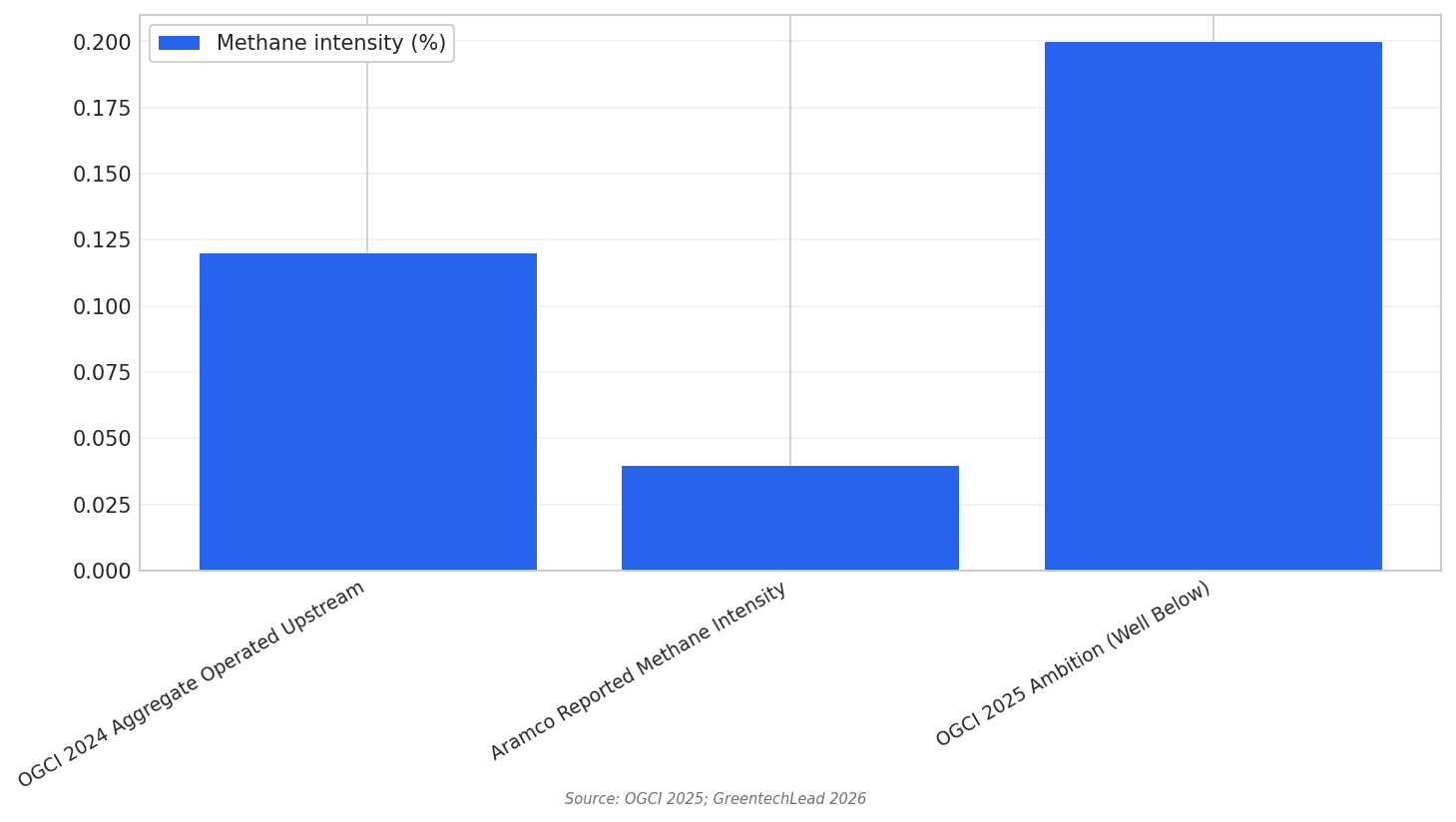
Three public metrics show how industry benchmarks and company performance are discussed today: OGCI reports an aggregate upstream operated methane intensity of 0.12% for 2024; Aramco reports a methane intensity of 0.04%; and OGCI’s average upstream methane intensity ambition for 2025 is well below 0.20%. Together, these figures show the direction of travel: tighter targets, lower measured intensity, and more scrutiny.
From Measurement To OGMP 2.0: What “Compliance” Means In Practice
OGMP 2.0 is described as the global gold standard for emissions transparency. It pushes operators to improve accuracy over time. One step described in the framework is moving from asset, venture, or country-level reporting that uses default emissions factors, toward identifying emissions by individual source types. Examples listed include tanks, flanges, and pneumatics. The goal is more detail, better specificity, and lower uncertainty than broad estimates.
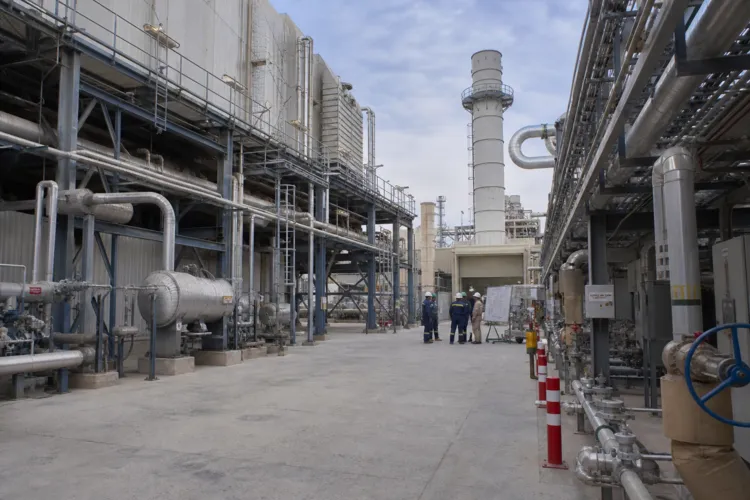
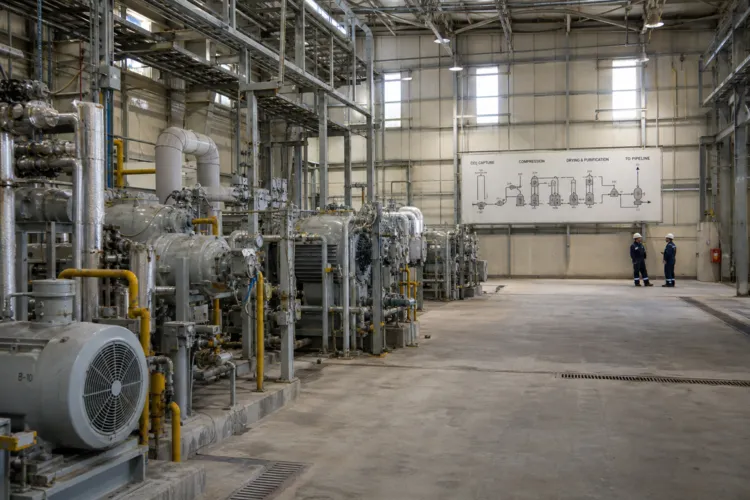
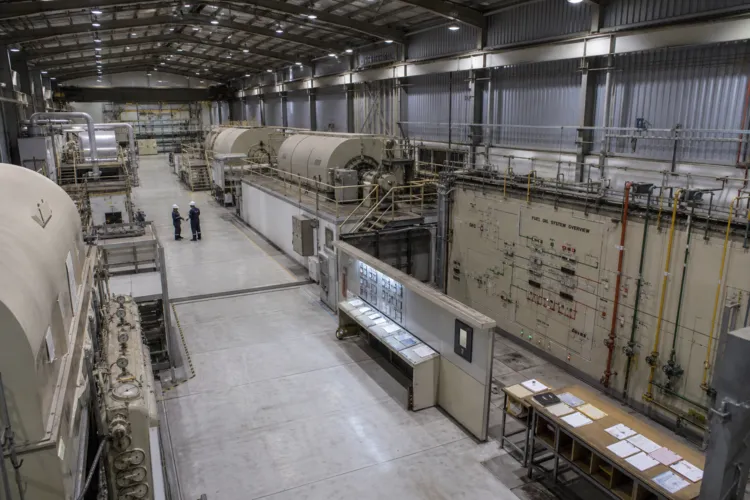
Aramco’s technical approach supports this “measure to manage” logic. It uses a Corporate Flaring Monitoring System that provides real-time oversight using high-precision ultrasonic flowmeters and valve-characteristic calculations for emissions accounting. It also deploys Flared Gas Recovery Systems across onshore and offshore sites to capture base flaring gases and reinject them into the process stream rather than allowing them to be combusted or vented. Internally, Saudi Aramco Engineering Procedures and Standards mandate site-specific Flaring Minimization Plans.
On recent results and targets, Aramco reported an 11.4% reduction in methane emissions in 2024. Its Sustainability Report 2025 also sets an interim roadmap to reduce upstream carbon intensity to 8.6 kg CO2e per barrel of oil equivalent by 2030. The same report notes upstream carbon intensity at 9.7 kg CO2e per barrel of oil equivalent, compared to 9.6 previously. At the industry level, OGCI members also share a 2030 ambition to reduce methane emissions from operated assets to near zero and to eliminate upstream routine flaring by 2030.
What does OGMP 2.0 change for methane reporting?
How does Aramco support methane emission reduction saudi arabia with systems on the ground?
What methane and flaring figures are publicly reported for Aramco?
What upstream carbon-intensity target does Aramco set for 2030?
Talk to us for your needs in:
-
Energy Efficiency Strategy & Feasibility
-
Renewable Energy Strategy & Investment Advisory
-
Digital Energy & Smart Grid Strategy
-
Market Entry Strategy
-
Sustainability & Impact Strategy
-
Energy Project Governance & PMO Advisory
-
Energy Market Research
-
Energy Stakeholder & Customer Research
-
Energy Market Intelligence
-
Energy Feasibility & Investment Assessment
-
Energy Sector Benchmarking & Performance Strategy