
Summer peak power is a high-stress moment for any grid. In Saudi Arabia, the challenge links to fast growth in people and the economy, plus a power system that has been heavily dependent on fossil fuel sources. A demand response program saudi arabia strategy is part of a wider demand-side management (DSM) idea. DSM means changing customer demand through methods such as education and financial incentives. The goal is often to use less electricity during peak hours, or move usage to off-peak times like nighttime and weekends.
Some national context shows why peak management matters. Saudi Arabia had a total population in 2020 of more than 35 million inhabitants, with an approximately 2.3 percent annual population growth rate. GDP at constant prices reached 9.9 percent in the first quarter of 2022 on a yearly basis. At the same time, electricity demand has been overgrowing, and much of that demand has been met by polluting sources. That creates economic and environmental challenges, so managing peak periods becomes a practical priority.
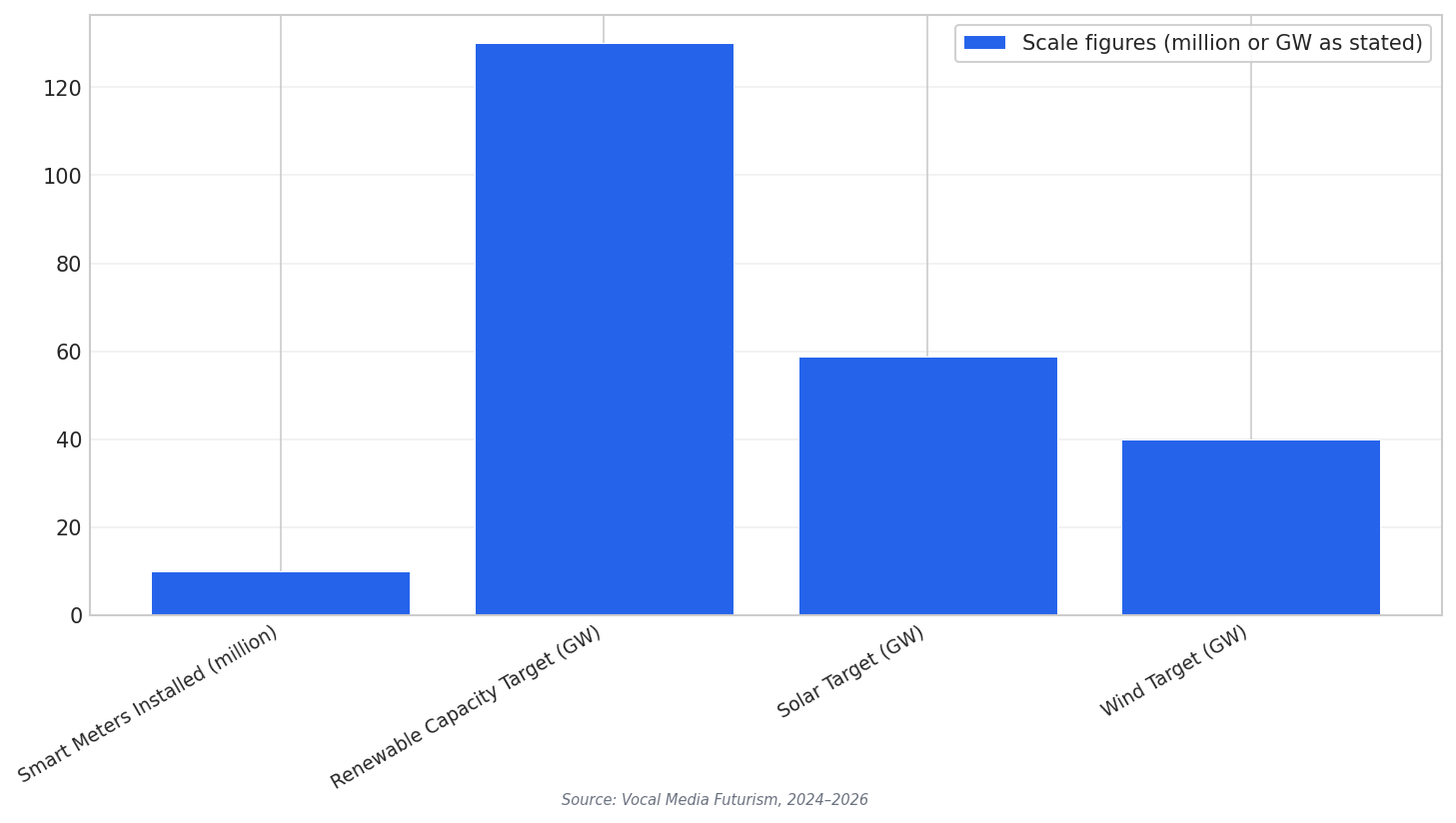
Several figures in the sources show the scale of systems and targets connected to modern peak management. Saudi Electricity Company completed installation of 10 million smart meters across the Kingdom. Vision 2030 includes a commitment to generating 130 GW of renewable capacity, with 58.7 GW from solar and 40 GW from wind. These numbers help explain why planning, monitoring, and flexible demand can matter alongside new supply.
How DSM And Demand Response Reduce Peak Stress
DSM is usually designed to reduce grid congestion periods and reduce the need for investments in networks and power plants for meeting peak demands. Importantly, peak demand management does not necessarily decrease total energy consumption. Instead, it can shift when electricity is used. In many systems, generators brought online during peak demand periods are often fossil fuel units. Minimizing their use can reduce emissions and energy costs, according to the DSM description in the sources.
Energy efficiency is another demand-side tool that fits closely with a demand response program saudi arabia approach. One source notes that embedding energy efficiency within utility planning, through mechanisms like DSM programs, can ensure that energy savings are treated as a resource equivalent to supply-side investments. It also lists practical policy directions. These include mandatory building codes and appliance standards that are periodically updated and rigorously enforced, financial incentives such as grants and rebates to support retrofits, and public awareness campaigns to address behavioral and information barriers.
Digital measurement makes demand response easier to run. The installation of 10 million smart meters supports real-time consumption monitoring. That kind of visibility can support peak load management and can also support integration of distributed generation and backup power systems in residential and commercial establishments. In parallel, the regulatory framework surrounding smart demand response in Saudi Arabia is described as still evolving, and current regulations may not adequately support full program integration, which can create uncertainty for investors.
What is a demand response program saudi arabia approach trying to do?
Does peak demand management always cut total electricity use?
What grid modernization step supports demand response in Saudi Arabia?
How can energy efficiency connect to DSM programs?
Talk to us for your needs in:
-
Energy Efficiency Strategy & Feasibility
-
Renewable Energy Strategy & Investment Advisory
-
Digital Energy & Smart Grid Strategy
-
Market Entry Strategy
-
Sustainability & Impact Strategy
-
Energy Project Governance & PMO Advisory
-
Energy Market Research
-
Energy Stakeholder & Customer Research
-
Energy Market Intelligence
-
Energy Feasibility & Investment Assessment
-
Energy Sector Benchmarking & Performance Strategy