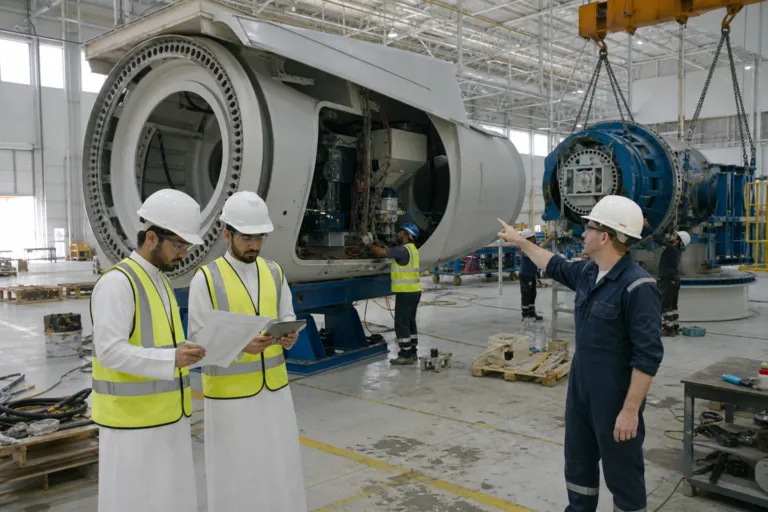
Saudi wind turbine manufacturing is being pulled forward by two forces that are visible in current project and industrial policy signals. One is localization. The other is the pace and scale of renewable tendering. Saudi Power Procurement Company awarded five projects with total capacity of 4.5 gigawatts (GW) as part of the sixth phase of the National Renewable Energy Program, including the 1.5 GW Dawadmi Wind IPP Plant in Riyadh province. Saudi Arabia also expects its total tendered renewable energy generation capacity to reach 64 GW by the end of 2025. These awards create demand pressure for dependable delivery, local procurement, and on-the-ground service capability.
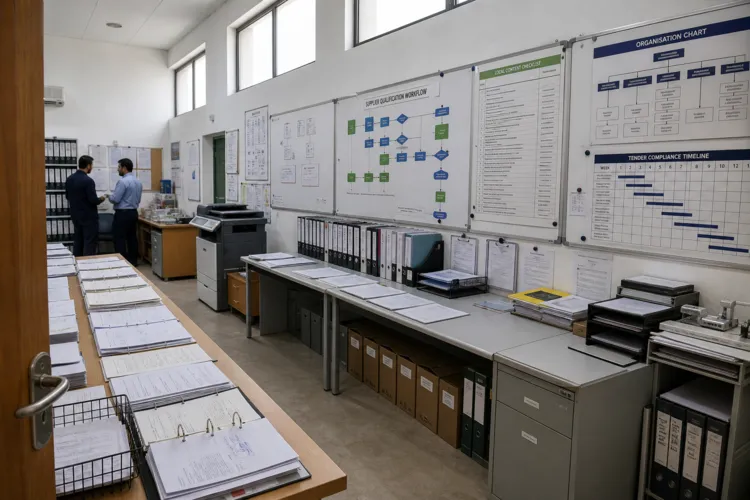
Localization requirements can directly shape how wind OEMs and their partners structure manufacturing and contracting. For the R6 wind project, localization thresholds include a minimum 15% local content during construction. This rises to at least 50% in the first five years of operations. It then progressively increases to 70%. Bidders must also prioritize Saudi-manufactured goods specified on a mandatory procurement list unless exemptions are granted by the SPPC and the Local Content & Government Procurement Authority. If bidders miss these obligations, the sources note that failure to comply may constitute contractual breach and can potentially result in disqualification.
Global OEM partnerships are one practical path to meet these requirements, especially when combined with local industrial groups that already operate essential infrastructure. A joint venture between Abunayyan Holding and Nextpower Arabia, while focused on solar manufacturing, illustrates a localization approach that can be adapted to wind supply chains. The venture’s CEO described its facility as the first phase of a plan to build and localize the supply chain across the region. The plan includes sourcing inputs such as Saudi-produced steel through strategic partnerships. The stated aims include increasing efficiency, reducing costs, and supporting economic diversification and industrial development under Saudi Vision 2030.
Localization Execution: Factories, Systems, and Service Readiness
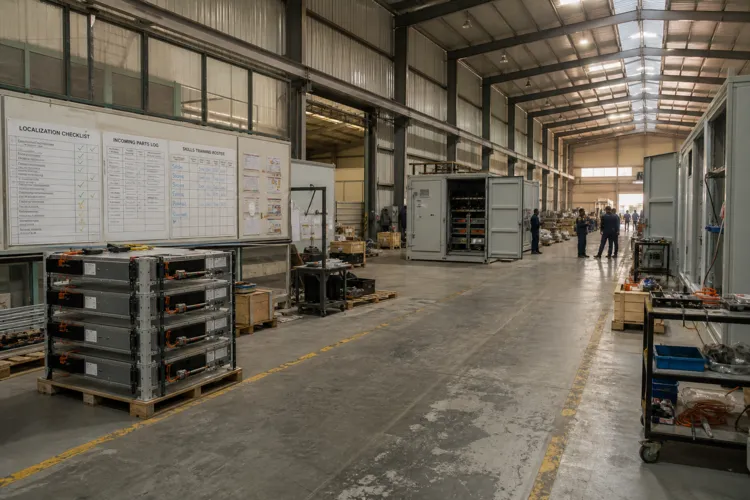
Manufacturing localization is not only about assembling parts. It also covers structured production systems and long-term performance support. Arctech inaugurated Phase II of its Jeddah manufacturing facility, describing it as part of a global localization strategy aligned with Saudi Vision 2030’s local-content program. The expansion introduced structured manufacturing, AI systems, and SCADA monitoring for long-term performance and simplified maintenance. The new phase was developed with a $60 million investment, spans 100,000 square meters, and boosts annual production capacity to 15 GW, enabling local manufacturing of posts, transmission shafts, and AI-powered control boxes. For wind OEMs, the lesson is that localization can extend into digital monitoring and lifecycle service, not just metalwork.
Procurement and ownership structures can also influence how global OEMs partner locally. The investment manual referenced in the R6 wind project context says foreign investors establishing local entities to obtain operating licenses for “construction project management, detailed engineering design, and EPC contracts” must ensure at least 25% ownership is held by Saudi shareholders. Workforce localization adds another operational layer, because Saudi legislation and policies require employers to hire a minimum quota of Saudi nationals, with the target percentage varying by scale and commercial activity. For any saudi wind turbine manufacturing roadmap, these rules push OEMs toward joint ventures, localized hiring plans, and procurement systems that can track compliance.
Finally, cost outcomes and competitive bids can reinforce localization and partnerships when execution is strong. The Dawadmi Wind IPP Plant winning consortium bid reported an LCOE of 1.33803 U.S. cents per kWh, described as a new world record for the lowest LCOE of wind power generation. While this figure is project-specific, it highlights why supply chains, delivery certainty, and operational performance matter in tender environments. Saudi Arabia’s broader industrial shift also shows momentum toward more complex manufacturing. By the third quarter of 2025, non-oil business activity rose 48% year-on-year, and the range of manufactured goods expanded to 612 in 2024. For OEMs, localization partnerships can align industrial capability-building with tender competitiveness.
What is driving saudi wind turbine manufacturing strategies right now?
What localization thresholds can apply to wind projects in Saudi Arabia?
How can global OEM partnerships support localization compliance?
Do foreign ownership rules affect EPC and engineering setups for wind projects?
What does localized manufacturing investment look like in Saudi renewables supply chains?
Talk to us for your needs in:
-
Energy Efficiency Strategy & Feasibility
-
Renewable Energy Strategy & Investment Advisory
-
Digital Energy & Smart Grid Strategy
-
Market Entry Strategy
-
Sustainability & Impact Strategy
-
Energy Project Governance & PMO Advisory
-
Energy Market Research
-
Energy Stakeholder & Customer Research
-
Energy Market Intelligence
-
Energy Feasibility & Investment Assessment
-
Energy Sector Benchmarking & Performance Strategy