Saudi Arabia is accelerating nuclear energy plans as part of Vision 2030. The goal is to diversify the energy portfolio and reduce reliance on fossil fuels. Alongside a first large-scale nuclear power plant, the Kingdom is also exploring small modular reactors saudi arabia as a practical option for flexible deployment.
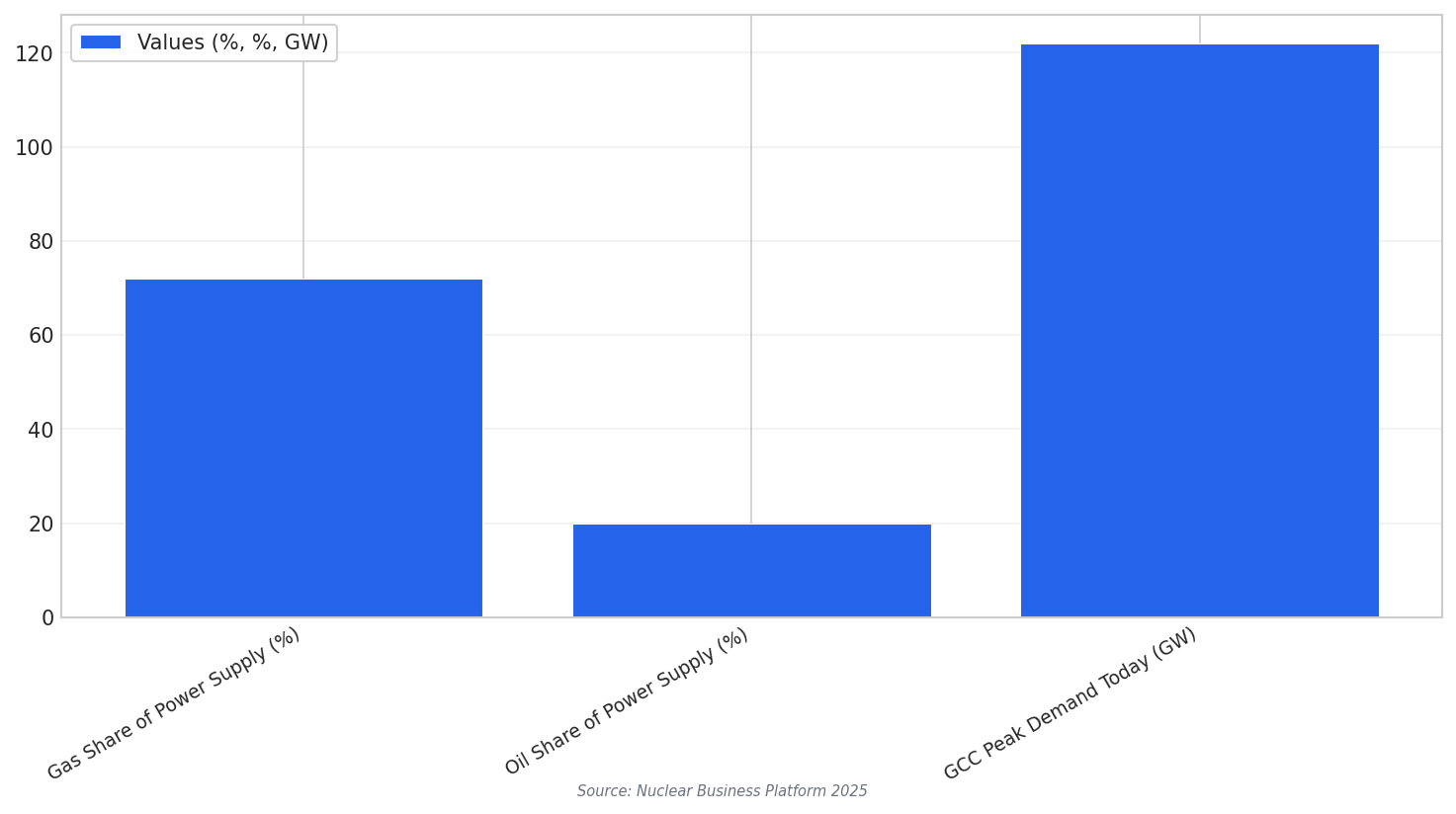
Across the Middle East, the case for nuclear is tied to energy security and diversification. Electricity generation in the region depends almost entirely on fossil fuels, with gas contributing 72% and oil 20% of power supply. This context matters for Saudi planning, because it shows why alternatives that can supply steady power are being taken more seriously.
The same regional source highlights another key pressure point: peak demand. Gulf Cooperation Council (GCC) states project peak demand to more than double from 122 GW today to over 250 GW by 2030. These three figures—72%, 20%, and the 122 GW to over 250 GW range—help explain why policymakers are exploring firm, long-term options, including nuclear and SMRs.
Why SMRs Fit Saudi Priorities
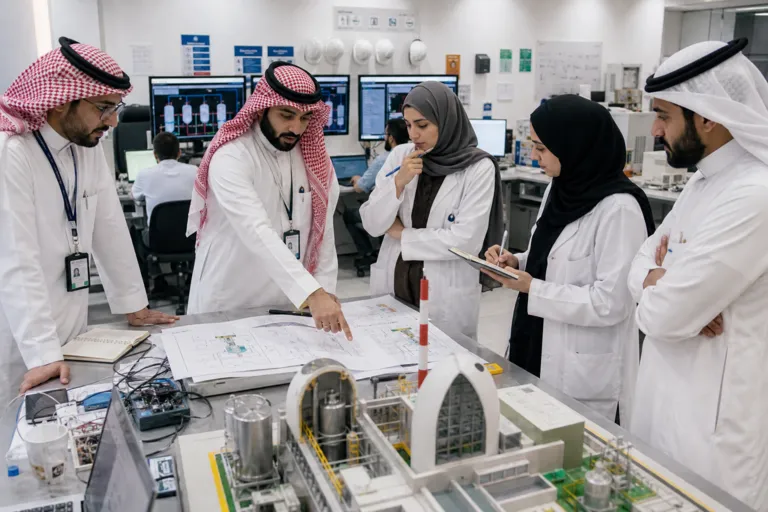
Saudi agencies are linking SMRs to specific national needs. KACARE, the lead agency for nuclear development, has confirmed its interest in SMRs and is assessing different technologies. The reactors are being evaluated for low-emission electricity, and for uses such as water desalination and hydrogen production. Their compact size and scalability are also discussed as advantages for remote areas and industrial zones.
Saudi progress on large nuclear infrastructure is also moving forward. The Kingdom has finalized the technical specifications for its first large-scale nuclear power plant. The plant is designed to meet the highest international standards. It is also expected to enhance national energy security and support Vision 2030 goals, while helping create a foundation for broader nuclear infrastructure where SMRs could later play a role.
International oversight and management readiness are part of the story. In May 2025, Saudi Arabia hosted the IAEA’s first-ever Management Systems Advisory Service (IMSAS) mission. The review focused on the Duwayhin Nuclear Energy Company (DNEC), the designated owner/operator of the first plant. The IAEA found DNEC’s management system well-structured and aligned with international best practices, identifying four good practices and giving recommendations for improvement.
Saudi Arabia is also building capability for a long program, not a one-off project. KACARE continues to invest in human capital through scholarships, training programs, and research initiatives. In parallel, private-sector actors are pointing to SMRs as part of a low-carbon energy system linked to hydrogen ambitions. Together, these steps position small modular reactors saudi arabia as a potential new pillar in a wider energy diversification effort.
Why are small modular reactors Saudi Arabia exploring under Vision 2030?
What progress has Saudi Arabia made on large-scale nuclear power?
What did the IAEA find during its IMSAS mission in Saudi Arabia?
What is driving nuclear interest in the wider Middle East energy system?
Talk to us for your needs in:
-
Energy Efficiency Strategy & Feasibility
-
Renewable Energy Strategy & Investment Advisory
-
Digital Energy & Smart Grid Strategy
-
Market Entry Strategy
-
Sustainability & Impact Strategy
-
Energy Project Governance & PMO Advisory
-
Energy Market Research
-
Energy Stakeholder & Customer Research
-
Energy Market Intelligence
-
Energy Feasibility & Investment Assessment
-
Energy Sector Benchmarking & Performance Strategy