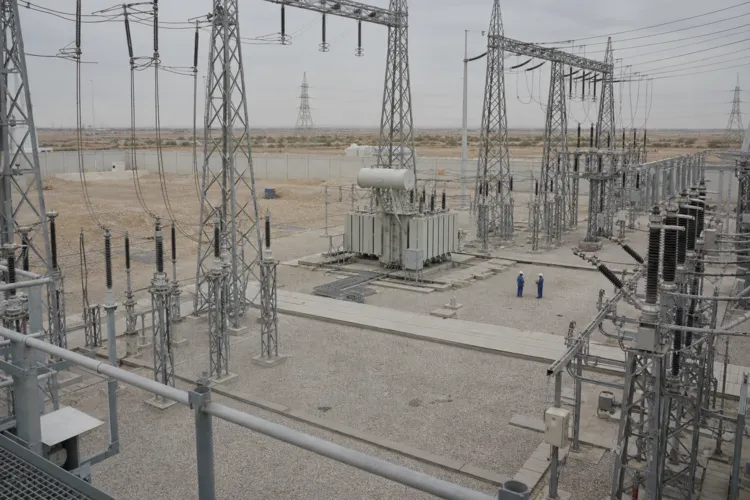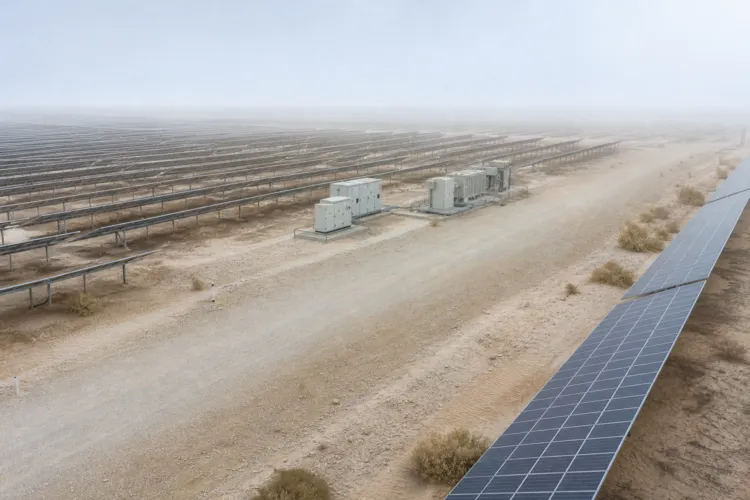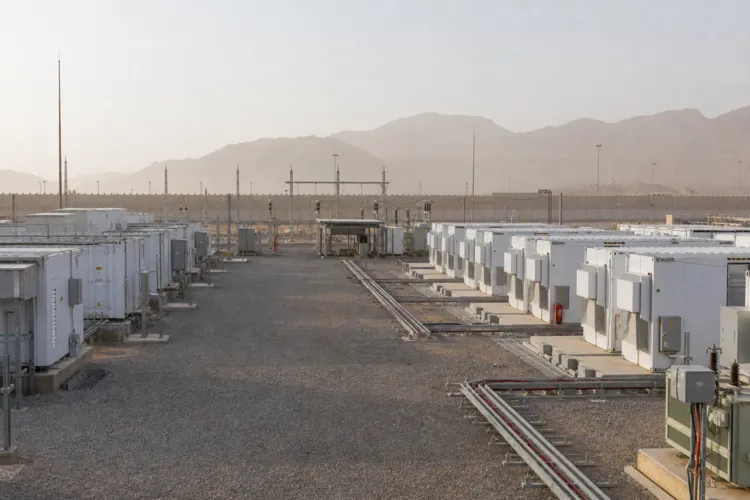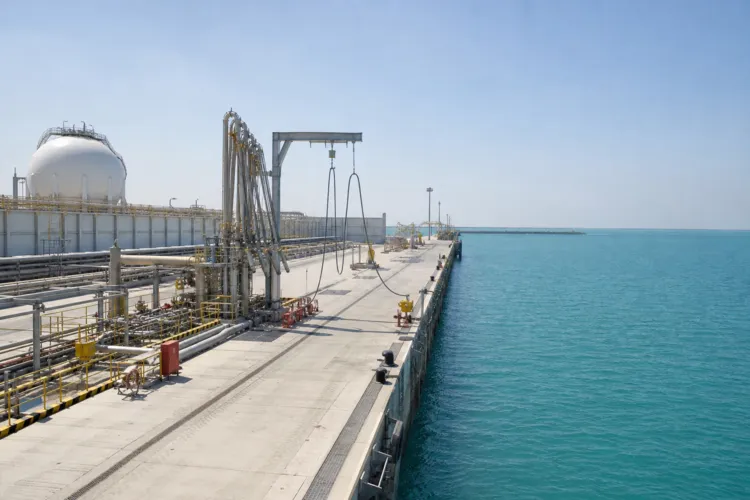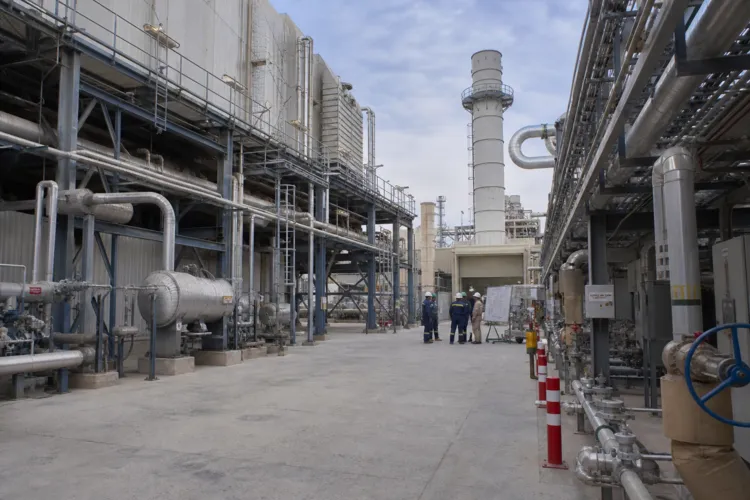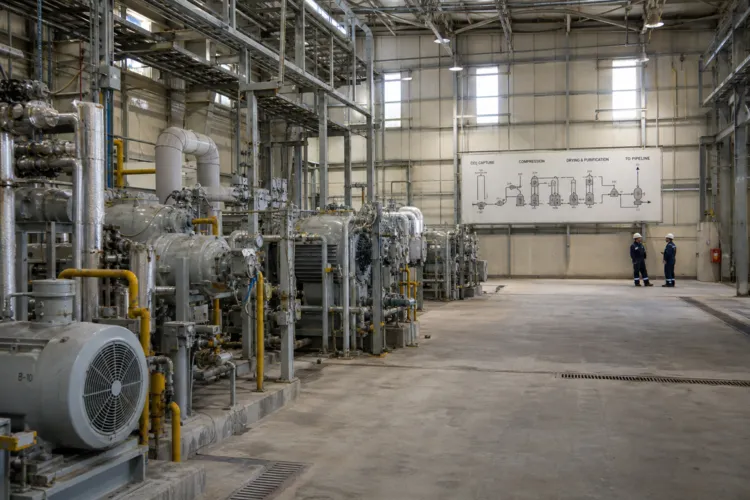
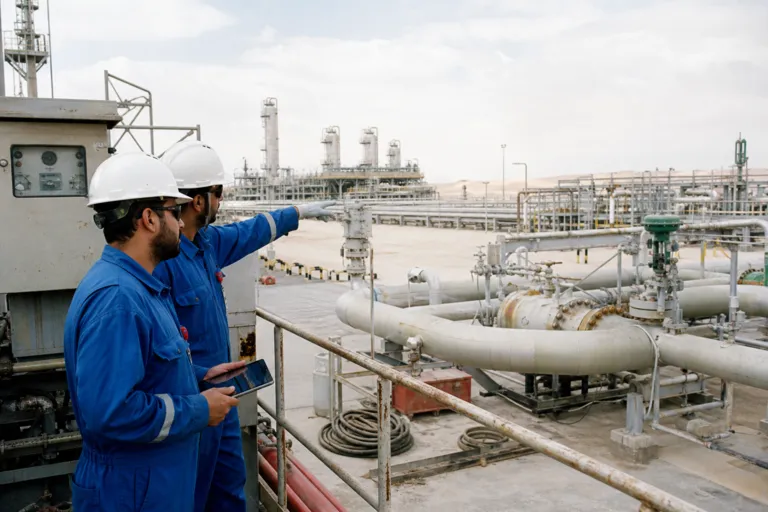
Aramco’s gas strategy to 2030 is anchored to a stated goal: increase sales gas production capacity by about 80% by 2030 compared with 2021 levels. One account ties the 2021 baseline to 9.2 Bscfd. Aramco has framed the build-out as a way to meet growing domestic demand, support Saudi objectives to diversify the energy mix, displace liquid fuels in domestic power generation, and enhance energy security. The company also links this momentum to financial performance, reporting net income of 392.5 billion SAR for the 2025 fiscal year and operating cash flow of 510.8 billion SAR.
The central upstream asset is Jafurah, a liquids-rich unconventional gas development described as the largest of its kind in the Middle East. It spans about 17,000 sq km and is estimated to contain 229 Tscf of raw gas and 75 Bbbl of condensate and liquids. Aramco confirmed first shale gas production from Jafurah began in December 2025. Phase-one facilities were described as producing 450 MMcfd, with output expected to ramp to roughly 2 Bscfd of sales gas by 2030 as additional phases come online. By 2030, Aramco also targets 420 MMscfd of ethane and about 630,000 bpd of high-value liquids from Jafurah.
Master Gas System Expansion: Transmission and Timing to 2028
Midstream capacity is a key part of the story, and it is where Saudi Arabia’s Master Gas System expansion becomes material. Aramco said the Master Gas System expansion project is progressing according to schedule to meet growing domestic demand while also supplying significant volumes of high-value associated liquids. In project detail, Master Gas System Phase 3 is slated for completion by 2028 and is expected to add 3.15 Bscfd of transmission capacity. Aramco also highlighted that major projects are on track, and it listed further gas additions such as Jafurah Phase 2 at 1,350 MMscfd and a Fadhili gas plant expansion at 1,150 MMscfd, both targeting 2027 completion.
Processing is another bottleneck Aramco is addressing. The Tanajib Gas Plant commenced operations in December 2025 and is expected to reach raw gas processing capacity of 2.6 Bscfd in 2026. The facility processes associated gas from the offshore Marjan and Zuluf fields and coincided with the start-up of the Marjan crude oil increment project. Taken together with Jafurah, Aramco says these developments strengthen its integrated gas portfolio and expand processing capacity at scale, positioning the company to respond to changing market conditions while targeting rising domestic demand.
Aramco repeatedly points to domestic power generation as a major sink for additional gas, with one Reuters-based account stating Saudi Arabia uses more than 1 million bpd of crude and fuel oil for domestic power generation, and Aramco aims to replace 500,000 bpd of that by 2030 with gas. That same report noted that at prices around $70 a barrel, 500,000 bpd of crude would generate nearly $12.8 billion in revenue a year, illustrating why displacement could matter financially. Separately, Aramco estimates incremental gas volumes could generate between $12 billion and $15 billion in additional operating cash flow by 2030, subject to market conditions, while it targets roughly 6 MMboed of total gas and associated liquids production under the plan.
What is Aramco targeting for sales gas capacity by 2030 versus 2021?
What are the 2030 output targets from the Jafurah field?
How does Saudi Arabia’s Master Gas System expansion change transmission capacity?
What role does the Tanajib Gas Plant play in the gas expansion plan?
What cash flow upside does Aramco associate with incremental gas volumes by 2030?
Talk to us for your needs in:
-
Energy Efficiency Strategy & Feasibility
-
Renewable Energy Strategy & Investment Advisory
-
Digital Energy & Smart Grid Strategy
-
Market Entry Strategy
-
Sustainability & Impact Strategy
-
Energy Project Governance & PMO Advisory
-
Energy Market Research
-
Energy Stakeholder & Customer Research
-
Energy Market Intelligence
-
Energy Feasibility & Investment Assessment
-
Energy Sector Benchmarking & Performance Strategy