
The saudi electricity company 126 billion grid plan and its stated goal of adding 3,600 km of new transmission lines by 2030 sits inside a wider global reality. New lines are increasingly described as essential, but also slow and hard to deliver. In the U.S., a task force convened by the Energy Systems Integration Group warned that without meaningful transmission planning reform, the grid faces higher costs, slower asset delivery, and rising reliability and resilience risks. That warning lands amid a documented slowdown: the U.S. added about 1,600 miles of high-voltage transmission in 2024, compared with nearly 3,300 miles in 2013, according to Federal Energy Regulatory Commission data cited by Utility Dive.
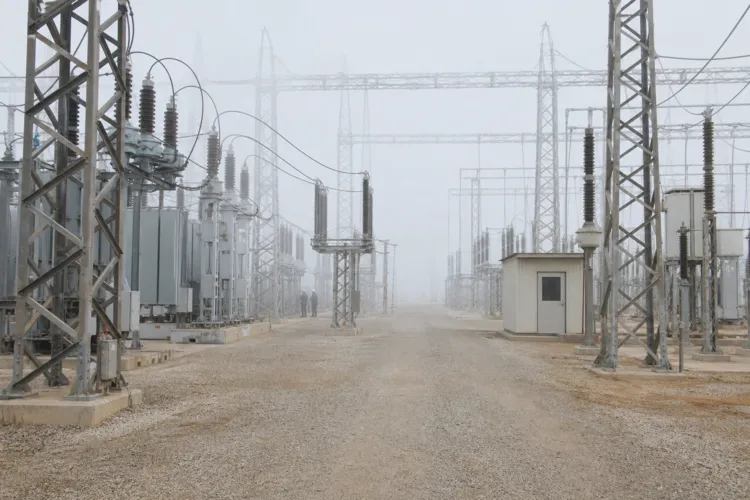
Project examples show how large and specific modern transmission builds have become. In PJM, the companies behind a major proposal said analyses and developer proposals demonstrate that new high-voltage backbone infrastructure is required to maintain reliable service under plausible future conditions. PJM’s plan includes a $1.1 billion project in central Ohio with 300 miles of 765-kV lines. Separately, Dominion Energy Virginia intends to build a $2.3-billion, 525-kV underground “backbone” transmission line in Virginia. That line is 185 miles and also calls for two high-voltage direct current converter stations at each end for about $1.5 billion.
What These Projects Say About Drivers: Data Centers, Reliability, and Peak Demand
Load growth narratives are explicit in the sources, especially around data centers and peak demand. Dominion’s Virginia backbone project is designed to deliver 3,000 MW into Loudoun County in northern Virginia, described as the area with the most data center capacity in the world. One industry view in POWER Magazine adds another planning signal: by some estimates, supporting AI-driven data centers alone will require an additional 35 GW of capacity by 2030, and without significant transmission upgrades, that demand cannot be met. In the central U.S., the Southwest Power Pool board approved an $8.6 billion slate of 50 transmission projects across a 14-state footprint to help meet peak demand it expects will double to reach 109 GW in the next 10 years.
Grid operators also argue that higher-voltage backbones can reduce the footprint of expansion. SPP’s 2025 Integrated Transmission Plan emphasizes development of a 765-kV regional transmission “backbone” that can carry four times the power of existing 345-kV lines, more efficiently. The same materials state that without utilizing 765-kV projects, meeting demand could require up to six times more infrastructure and up to nearly five times the land. In Texas, Oncor and LCRA proposed a 765-kV line of approximately 214 to 244 miles, with estimated project costs of about $1.6 billion to $1.9 billion, excluding almost $400 million in station costs for work at Oncor’s Bell County East Switch, and a targeted in-service date by 2030.
Cost pressure shows up both inside markets and along project delivery. In PJM, Monitoring Analytics reported transmission costs totaled $13.9 billion in 2024, or 32% of total wholesale costs of $43.6 billion. Energy costs made up nearly 59% and capacity accounted for 6.6% of the total. Outside the U.S., Australia’s grid operator has laid out a plan to build 10,000 km of new transmission lines, but the article notes cost blowouts and protests. Some communities are pushing back despite landowner compensation of up to $200,000 per kilometre, illustrating why corridor selection and early alignment can matter to delivery.
Reform and financing tools in the sources aim to make transmission delivery more predictable. The ESIG task force urged planners to follow longer-range, multi-driver, scenario-based strategies laid out in FERC Orders 1920 and 1920A, which the regulator expects operators to comply with over the next two years. The task force also argued that early state involvement can build alignment and a clearer record of need. On financing, Axios reported DOE finalized a $1.6 billion loan guarantee for American Electric Power to optimize and rebuild around 5,000 miles of transmission lines across five states, with AEP claiming preferred-rate financing will save customers roughly $275 million over the life of the loan. These examples offer context for how large grid buildouts like the saudi electricity company 126 billion grid plan may be evaluated: by drivers, permitting reality, and the ability to execute on timelines.
What does the saudi electricity company 126 billion grid plan aim to do by 2030?
How fast is high-voltage transmission being added in the U.S.?
What are examples of large backbone transmission projects cited here?
Why are data centers mentioned in transmission planning discussions?
What challenges can slow new transmission lines even when they are needed?
Talk to us for your needs in:
-
Energy Efficiency Strategy & Feasibility
-
Renewable Energy Strategy & Investment Advisory
-
Digital Energy & Smart Grid Strategy
-
Market Entry Strategy
-
Sustainability & Impact Strategy
-
Energy Project Governance & PMO Advisory
-
Energy Market Research
-
Energy Stakeholder & Customer Research
-
Energy Market Intelligence
-
Energy Feasibility & Investment Assessment
-
Energy Sector Benchmarking & Performance Strategy