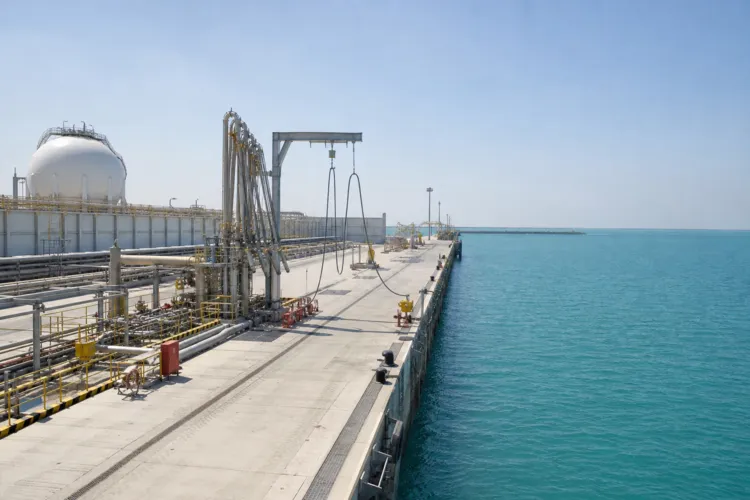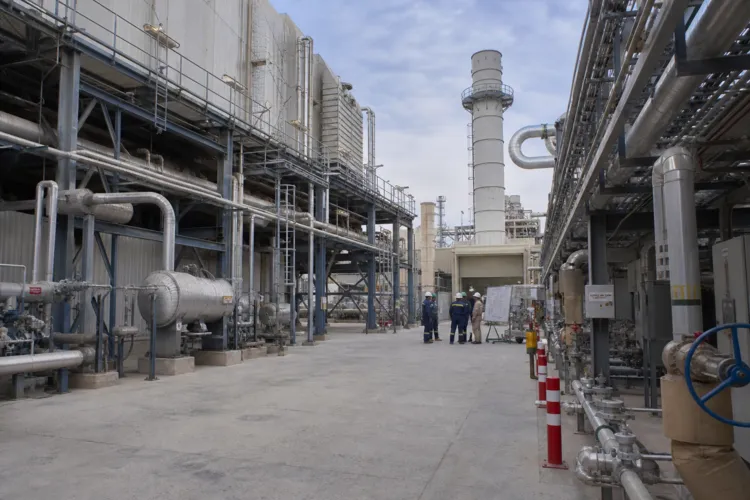
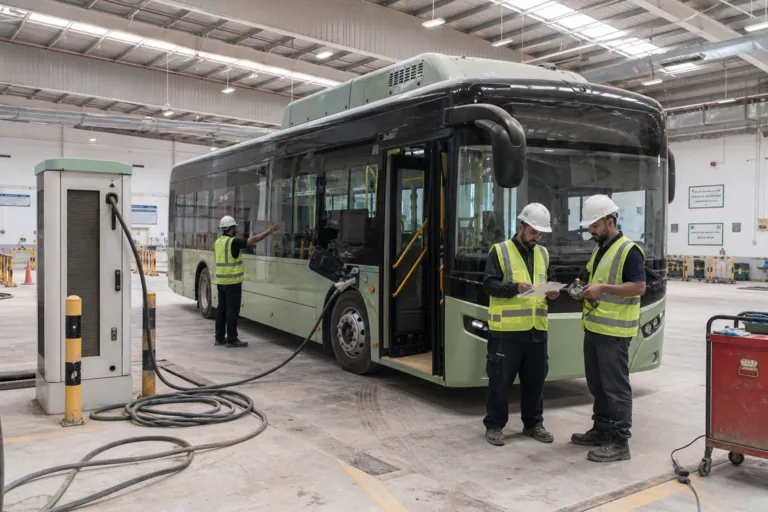
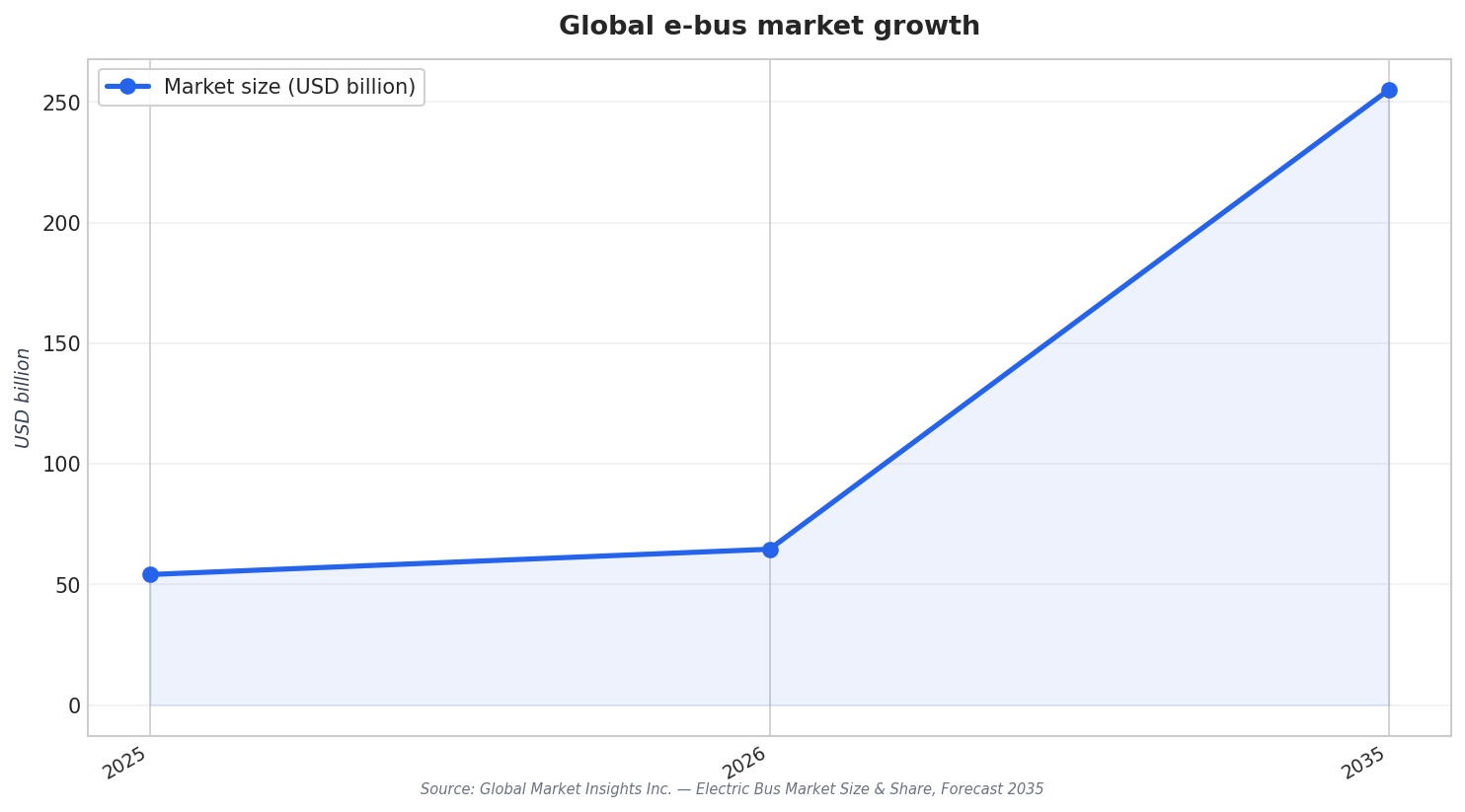
Riyadh’s transit electrification is moving from ambition to action, shaped by Vision 2030 priorities and large-scale public transport modernization. Global Market Insights says Saudi Arabia is expected to grow at the fastest CAGR in the MEA electric bus market, tied to government initiatives, sustainability goals, and investments that include introducing electric buses, developing charging infrastructure, and collaborating with international OEMs. The same source frames the global context: the global electric bus market was estimated at USD 54.1 billion in 2025 and is expected to rise from USD 64.6 billion in 2026 to USD 255.1 billion in 2035, at a CAGR of 16.5%. This global direction matters for Riyadh because it widens the pool of suppliers, technology, and procurement playbooks that large cities can use.
National policy signals also tighten the timeline for electrification. Ken Research states that in 2023 the Saudi government implemented a regulation mandating that all new public transport buses must be electric by 2030. It also reports an allocation of approximately SAR 20 billion (USD 5.33 billion) for public transport projects in future, emphasizing the transition to electric buses, alongside plans to deploy over 1,000 electric buses by future. Demand fundamentals are visible in usage data: Nexdigm cites GASTAT figures showing 43.5 million passengers carried by public buses within and between cities in 2022, described as a more than threefold jump compared with 2021. Riyadh, Jeddah, and Dammam are repeatedly named across sources as leading cities for electric bus activity and related infrastructure readiness.
What Makes Riyadh’s E-Bus Push Different: Heat, Batteries, and Infrastructure Timing
Saudi conditions shape electric bus specifications, especially for batteries operating in extreme temperatures. IndexBox reports that battery pack designs are increasingly customized for ambient temperatures exceeding 50°C, driving adoption of liquid-cooled thermal management and derating strategies that reduce usable capacity by 10–15% to preserve cycle life. It also notes that by 2026, LFP-based packs account for an estimated 70–80% of new electric bus battery installations in Saudi Arabia, favored for thermal stability, cycle life, and cost efficiency in hot-climate operations. On pricing, IndexBox states pack-level system prices range from USD 180–260/kWh in 2026, reflecting a 15–25% premium over baseline cell costs due to liquid-cooled thermal management, ASIL-D BMS requirements, and certification costs for UNECE R100 and local high-temperature validation.
Procurement and infrastructure have to move together, and the sources suggest that coordination is still a practical constraint. Mordor Intelligence notes that a timing mismatch between bus procurement and charger deployment pushes operators toward plug-in hybrids or diesel until corridor coverage matures. It also states city buses captured 43.18% of 2024 deliveries because Riyadh, Jeddah, and Dammam expanded high-frequency urban routes under Vision 2030, and that battery-electric units are advancing at a 6.37% CAGR through 2030. IndexBox adds that public procurement is the primary demand driver, with municipal transit authorities and the Saudi Public Transport Authority (PTA) as dominant buyers, and that tenders in Riyadh, Jeddah, and Dammam shape specifications and volumes. But supply chain realities also bite: IndexBox reports lead times for qualified cells and ASIL-D certified BMS units extending to 12–18 months.
Riyadh’s electrification story sits inside a broader clean mobility push that blends buses with wider fleet and powertrain trends. Nexdigm cites GASTAT data of 14.9 million vehicles in the Kingdom in 2022 and more than 15.8 million vehicles in use by end-2024, with over 1 million newly registered in 2024 alone. It also reports Saudi Arabia has committed to reduce or avoid 278 million tons of CO₂ equivalent annually under its updated national contribution, positioning transport electrification as a key lever. For a grounded example of early adoption, Bonafide Research says that in 2023 an electric bus route was launched in Madinah, connecting Prince Mohammed bin Abdulaziz International Airport with the Prophet’s Mosque. Together, these signals show why the electric bus Saudi Arabia market is being pulled forward by policy, procurement, and city-by-city deployment realities.
What is driving electric bus adoption in Riyadh and other Saudi cities?
What battery chemistry is most common for Saudi electric buses?
How does extreme heat affect electric bus battery operation in Saudi Arabia?
How fast are battery-electric buses growing in Saudi fleets?
What does the electric bus market in Saudi Arabia mean for procurement and supply timing?
Talk to us for your needs in:
-
Energy Efficiency Strategy & Feasibility
-
Renewable Energy Strategy & Investment Advisory
-
Digital Energy & Smart Grid Strategy
-
Market Entry Strategy
-
Sustainability & Impact Strategy
-
Energy Project Governance & PMO Advisory
-
Energy Market Research
-
Energy Stakeholder & Customer Research
-
Energy Market Intelligence
-
Energy Feasibility & Investment Assessment
-
Energy Sector Benchmarking & Performance Strategy