
Saudi Energy Efficiency Program Targets 90% of Energy Use
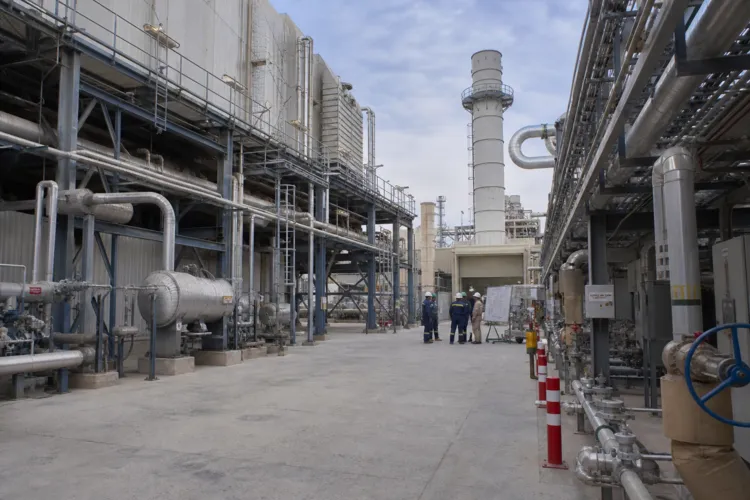
The Saudi Energy Efficiency Program was launched in 2012 and runs through 2030. It targets three major sectors: industry, construction, and land transport; which together account for over 90% of the Kingdom’s primary energy consumption. The program has rolled out over 80 initiatives in collaboration with more than 30 government and semi-government bodies.
It includes energy efficiency labels for household appliances, insulation standards, and vehicle energy labeling (including updates for electric vehicles). These initiatives directly support the growing demand for services like TAB (Testing, Adjusting, and Balancing), especially as the country pushes for compliance with increasingly stringent energy performance standards.
Saudi Arabia Energy Efficiency Program Powers $108M TAB Market by 2030
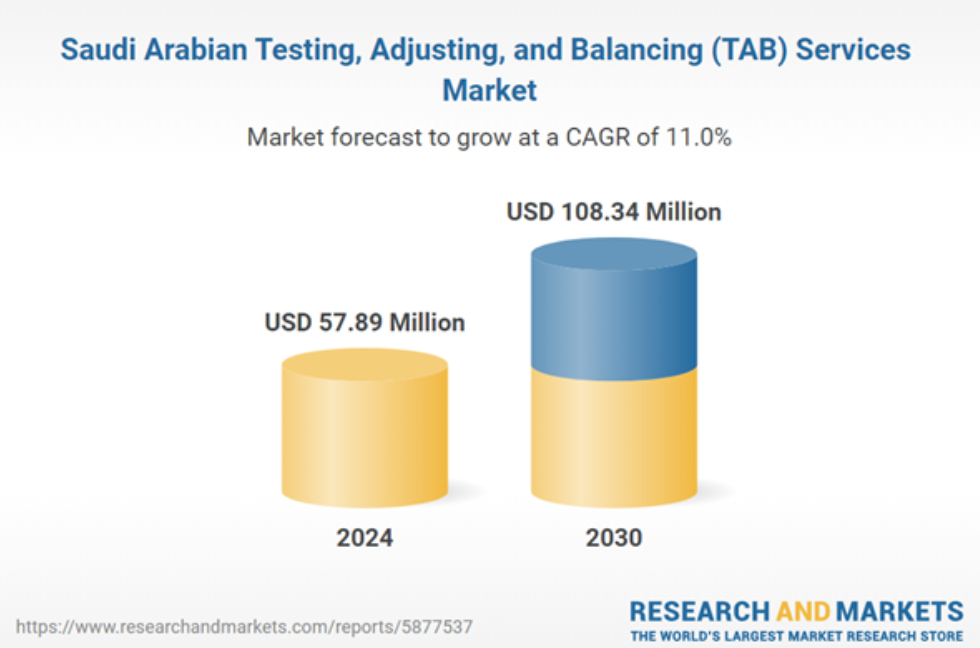
The Saudi Arabia energy efficiency program is not only reshaping building standards but also fueling the growth of specialized services like Testing, Adjusting, and Balancing (TAB). With the TAB services market projected to grow from USD 57.89 million in 2024 to USD 108.34 million by 2030, at a CAGR of 11.01%, the Kingdom is clearly investing in smarter, greener systems.
$110B Hospitality Expansion Drives TAB Demand
A major catalyst behind this surge is the $110 billion investment in Saudi Arabia’s hospitality sector, which includes the development of 362,000 new hotel rooms by 2030. These large-scale projects require high-performance HVAC systems to ensure guest comfort, air quality, and energy savings. TAB services are essential in this context, as they fine-tune air and water distribution systems to meet both comfort and regulatory standards. The Saudi Arabia energy efficiency program plays a pivotal role here, mandating performance benchmarks that TAB providers must help developers achieve.
Regulatory Pressure Spurs Innovation in TAB Services
While growth is strong, the market also faces headwinds in the form of strict government norms. The Saudi Building Code (SBC) and agencies like the Saudi Energy Efficiency Center (SEEC) and SASO enforce rigorous standards for HVAC systems. For example, SASO 2874 sets minimum energy efficiency ratios (EER) for air conditioning units, directly impacting how TAB services are delivered.
These evolving codes require TAB providers to stay agile, continuously updating their methodologies to remain compliant. Non-compliance can lead to penalties, project delays, or underperforming systems—risks that developers are keen to avoid. As a result, the Saudi Arabia energy efficiency program is not just a guideline but a driving force behind operational excellence in the TAB sector.
Retrofitting Older Buildings Adds to Market Momentum
Beyond new construction, the renovation and refurbishment of older buildings is another growth engine. Many existing structures require HVAC rebalancing to align with updated energy standards. This retrofit wave is especially important in urban centers where older buildings are being modernized to meet sustainability goals. TAB services are instrumental in this process, ensuring that legacy systems are recalibrated for optimal performance under the Saudi Arabia energy efficiency program.
Energy Labeling and EER Standards Shape Market Behavior
One of the most impactful trends is the emphasis on energy labeling and performance transparency. SEEC’s labeling system allows consumers and developers to make informed decisions about HVAC equipment, while SASO’s standards like SASO 2874 enforce minimum efficiency thresholds. These measures have elevated the role of TAB services from optional to essential, as precise calibration is now a compliance requirement.
This shift has also led to a more educated market. Developers are increasingly aware that investing in TAB services not only ensures regulatory compliance but also reduces long-term operational costs. The Saudi Arabia energy efficiency program thus acts as both a regulatory framework and a market educator.
Key Players Position for Long-Term Growth
Several companies are positioning themselves to capitalize on this momentum. Notable players include Abdullah H. Al Shuwayer Company, Blue Star Limited, Evolution Engineering Services, and National TAB Intelligence. These firms are expanding their capabilities to meet the growing demand for high-precision TAB services aligned with the Saudi Arabia energy efficiency program.
Also Read: Energy Efficiency at Scale: NEOM’s High-Voltage Smart Grid Blueprint
Frequently Asked Questions (FAQ)
What is the Saudi Arabia energy efficiency program?
The Saudi Arabia energy efficiency program is a national initiative launched in 2012 and running through 2030. It targets the Kingdom’s highest energy-consuming sectors: industry, construction, and land transport, through over 80 initiatives. These include energy labeling, HVAC standards, and building insulation regulations to reduce energy consumption and promote sustainability.
How big is the TAB services market in Saudi Arabia?
The Testing, Adjusting, and Balancing (TAB) services market in Saudi Arabia was valued at USD 57.89 million in 2024 and is projected to reach USD 108.34 million by 2030, growing at a CAGR of 11.01%.
Why is the TAB market growing in Saudi Arabia?
The market is expanding due to several factors:
- The Vision 2030 initiative driving infrastructure and urban development.
- A $110 billion investment in the hospitality sector, including 362,000 new hotel rooms by 2030.
- Stricter energy efficiency regulations from SEEC and SASO.
- Increased demand for HVAC optimization in both new and retrofitted buildings.
What role does energy efficiency play in HVAC systems?
Energy efficiency standards require HVAC systems to meet specific performance benchmarks. TAB services ensure these systems are properly calibrated and balanced, improving energy use, indoor air quality, and compliance with national codes like SASO 2874 and the Saudi Building Code (SBC).
Who are the key players in Saudi Arabia’s TAB market?
Leading companies in the Saudi TAB services market include:
- Abdullah H. Al Shuwayer Company
- Blue Star Limited
- Evolution Engineering Services
- National TAB Intelligence These firms specialize in optimizing HVAC systems to meet the country’s evolving energy efficiency and sustainability goals.
Talk to us for your needs in:
-
Energy Efficiency Strategy & Feasibility
-
Renewable Energy Strategy & Investment Advisory
-
Digital Energy & Smart Grid Strategy
-
Market Entry Strategy
-
Sustainability & Impact Strategy
-
Energy Project Governance & PMO Advisory
-
Energy Market Research
-
Energy Stakeholder & Customer Research
-
Energy Market Intelligence
-
Energy Feasibility & Investment Assessment
-
Energy Sector Benchmarking & Performance Strategy