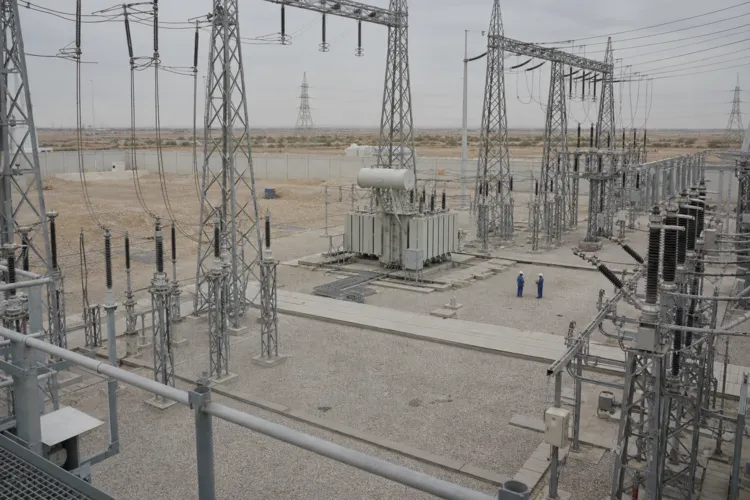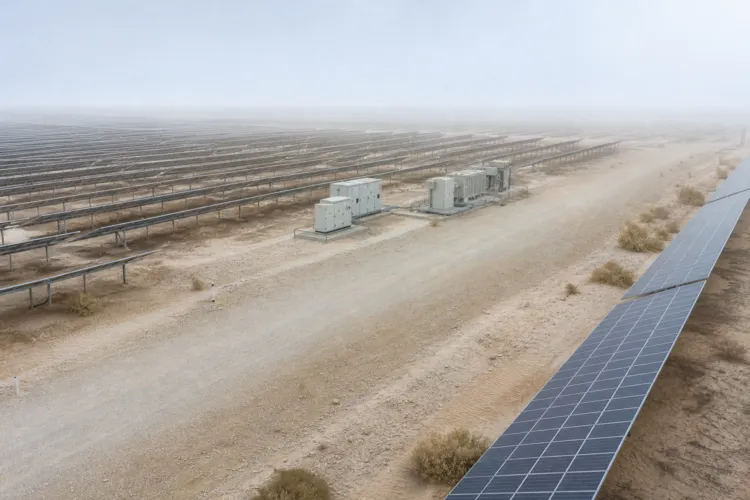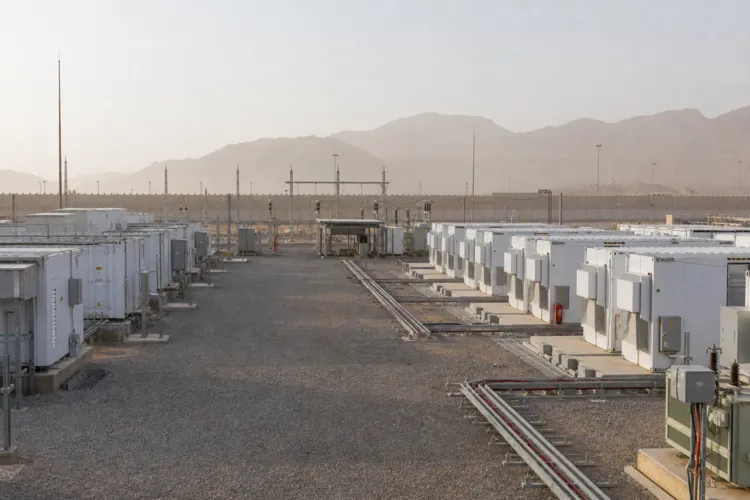

Grid stability in Saudi Arabia is entering a new era. As massive solar capacity hits the grid in 2025, the biggest threat is no longer a lack of power, but intermittency. Solar output spikes at noon and collapses in the evening, stressing an already modernizing grid. Because of this, the hot market is shifting away from solar panels and toward large-scale Battery Energy Storage Systems (BESS).
Saudi Arabia aims for 8 GWh of storage by 2025 and 22 GWh by 2026, placing it among the world’s top energy-storage markets. This shift makes BESS the core solution for real-time balancing, frequency regulation, and voltage support.
Read Also: Saudi Arabia Energy Mix 2030: Oil, Gas & Beyond
The Duck Curve: A Direct Challenge to Grid Stability in Saudi Arabia
The “duck curve” is the defining challenge of high-solar grids. Midday solar surges create overgeneration, while the sharp evening ramp forces the grid to work harder than ever. Without storage, this mismatch between supply and demand causes instability and costly interventions.
BESS flattens that curve by storing excess solar energy during peak generation and releasing it when the sun drops. For a country rapidly scaling solar as part of Vision 2030, this ability to shift energy is essential.
Saudi Arabia’s parallel push for automation, which reached 32% of the distribution network automated in 2024, on track for 40% in 2025, strengthens this stability further by enabling quicker response times and reducing outages.
Grid Stability in Saudi Arabia: The Ministry of Energy’s Massive BESS Tenders
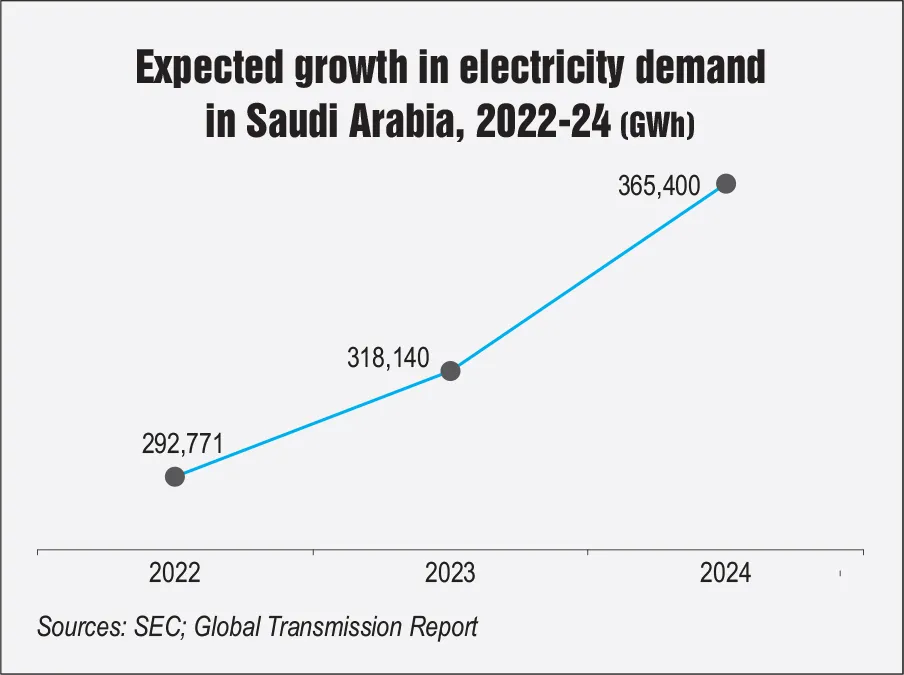
Saudi Arabia’s Ministry of Energy is rolling out one of the largest battery tender programs in the region. These projects align directly with the 8 GWh by 2025 national target. They form the backbone of the Kingdom’s reliability strategy as renewable integration accelerates.
Alongside battery tenders, new advanced control centers are scheduled for completion by 2026. These digital hubs will allow operators to manage huge volumes of solar and storage with real-time data visibility.
This investment wave sits within a broader transformation: the smart-grid market, valued at USD 0.72 billion in 2024, is expected to hit USD 2.84 billion by 2034, growing at 14.70% CAGR. The combination of automation and storage is what will ultimately secure grid stability.
Read Also: Saudi Arabia Energy Efficiency Powers $108M TAB Market Expansion
Investment Angle: Software and Grid-Tech Firms Enter a Prime Market
Foreign technology providers now have a strong entry point. As storage grows, the need for advanced grid-management software becomes urgent. AI-based forecasting, IoT-driven diagnostics, predictive stability tools, and real-time balancing systems all sit at the center of this new opportunity.
The growth of automation and BESS creates a technical environment that software innovators can shape. For investors, the real boom is not only in building batteries — it is in enabling smarter grids and unlocking reliability across a fast-changing energy landscape.
Final Outlook: Why Grid Stability in Saudi Arabia Drives the BESS Boom
Grid stability in Saudi Arabia is now the foundation of its energy future. BESS, automated networks, and advanced control centers are no longer optional but the structural necessities for a solar-heavy grid. For deeper insight into this evolving market, investors can contact Eurogroup Consulting. With 40 years of distinguished experience and a strong focus on market research in the region, Eurogroup Consulting offers unmatched strategic support for navigating the fast-moving energy and technology landscape tied to grid stability.
Talk to us for your needs in:
-
Energy Efficiency Strategy & Feasibility
-
Renewable Energy Strategy & Investment Advisory
-
Digital Energy & Smart Grid Strategy
-
Market Entry Strategy
-
Sustainability & Impact Strategy
-
Energy Project Governance & PMO Advisory
-
Energy Market Research
-
Energy Stakeholder & Customer Research
-
Energy Market Intelligence
-
Energy Feasibility & Investment Assessment
-
Energy Sector Benchmarking & Performance Strategy