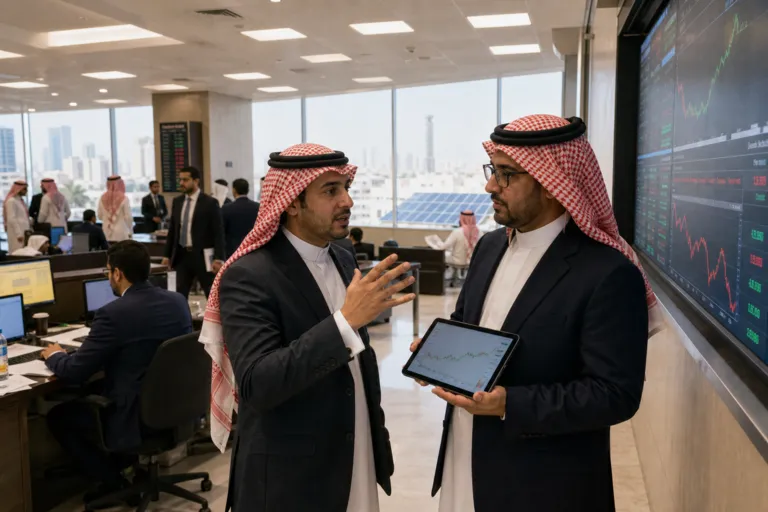
The keyword “saudi energy ipo tadawul” sits at the center of a wider Vision 2030 funding story. Even with a noticeable slowdown in IPO pace during the first five months of 2025, the Saudi stock market continues to attract strategic listings that reinforce diversification goals, according to Asharq Al Awsat. Analysts linked the softer momentum to global factors, including a 7% decline in the Tadawul All Share Index (TASI) since the start of 2025 and rising geopolitical and trade tensions. Still, quality offerings can land even during instability, as shown by flynas debuting on Tadawul amid the escalating Iran-Israel conflict.
Those market conditions matter because the energy transition is not just about building projects. It also depends on investor confidence and on capital markets that can absorb new offerings. A separate Arthur D. Little insight highlights how the region’s IPO scene has expanded over the past six years, with the UAE and Saudi Arabia acting as benchmark markets for IPO execution and investor engagement. In 2024, the GCC recorded its highest-ever level of IPO activity, with 53 listings raising $12.9 billion in proceeds. That broader momentum supports the idea that Tadawul listings can remain strategically attractive, even when near-term market sentiment is cautious.
Energy Transition Pressure Is Also Coming from Pricing Reform
Public markets are only one part of the shift. Energy pricing reform is also changing incentives for listed companies. On January 1, 2026, Saudi Aramco (TADAWUL: 2222) notified Tadawul-listed companies of significant adjustments to feedstock and fuel prices, targeting methane, ethane, diesel, and heavy fuel oil (HFO). The same report frames this as a milestone in a multi-year energy subsidy reform program, aimed at aligning domestic energy costs with international market benchmarks. It also points to a short-term focus on “cost-pass-through,” while suggesting that firms like Ma’aden (TADAWUL: 1211) may accelerate renewable integration, including solar-powered mining operations, to offset rising traditional fuel costs.
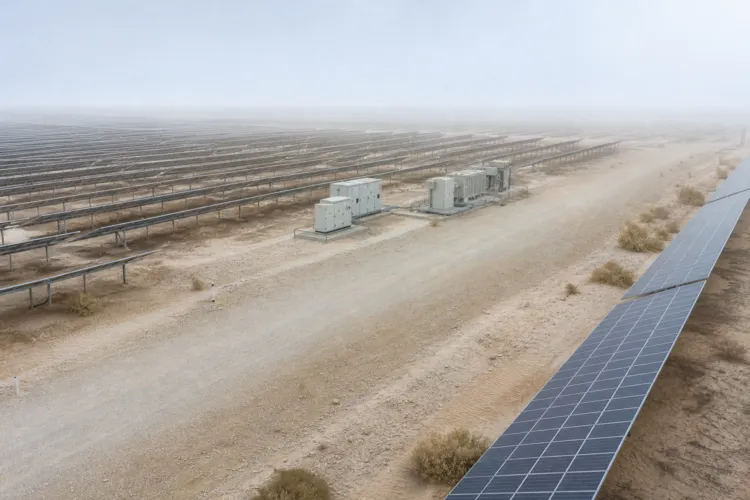
Meanwhile, the government’s renewables pipeline is becoming more concrete. Saudi Arabia awarded one wind power and four solar power projects worth a total estimated investment of $2.4 billion (9 billion Saudi riyals), with a total capacity of 4.5 GW, as part of the sixth phase of the National Renewable Energy Program. One project is the Dawadmi Wind IPP Plant in Riyadh province with 1.5 GW capacity. The Saudi Energy Ministry also states an ambition for renewables to make up around 50% of the energy mix used to produce electricity by 2030, alongside replacing liquid fuel with natural gas. This project cadence creates clearer investment narratives that can support listings tied to the transition.
Solar growth figures add more context, even if they do not directly map to IPO proceeds. GlobalData estimates cumulative solar capacity rose from 4,665 MW at the end of 2024 to 12,465 MW by the end of 2025, with total renewables capacity at around 13 GW, making solar the dominant form of renewables. It also notes that Saudi Power Procurement Company signed five solar PPAs totaling 12 GW and two wind PPAs totaling 3 GW in a single phase, billed as the largest renewable energy capacity signed for in a single phase globally to date, with projects scheduled to be operational across 2027 and 2028. At the same time, GlobalData says this trajectory falls behind the pace required to reach a target of 130 GW of renewable power capacity by 2030, which would require adding over 23 GW annually.
All of this sits inside a broader Vision 2030 progress update. Saudi Arabia’s investment minister said 85% of Vision 2030 targets were complete or on track as of the end of 2024, even as the multi-billion dollar program faces delays and recalibrations under economic headwinds and logistical constraints. Separately, officials said 50.6% of the economy is “completely decoupled” from oil, and that about 40% of government revenues now come from non-oil sources. In this environment, Tadawul listings can be positioned as a financing mechanism that helps companies adapt to reform-driven cost changes while aligning with the renewables build-out and the wider diversification agenda.
What does “saudi energy ipo tadawul” mean in the Vision 2030 context?
Why did Saudi IPO momentum slow in early 2025?
What renewables projects were recently awarded under Saudi programs?
How does energy pricing reform affect Tadawul-listed industrial companies?
How fast is Saudi solar capacity growing, according to GlobalData?
Talk to us for your needs in:
-
Energy Efficiency Strategy & Feasibility
-
Renewable Energy Strategy & Investment Advisory
-
Digital Energy & Smart Grid Strategy
-
Market Entry Strategy
-
Sustainability & Impact Strategy
-
Energy Project Governance & PMO Advisory
-
Energy Market Research
-
Energy Stakeholder & Customer Research
-
Energy Market Intelligence
-
Energy Feasibility & Investment Assessment
-
Energy Sector Benchmarking & Performance Strategy