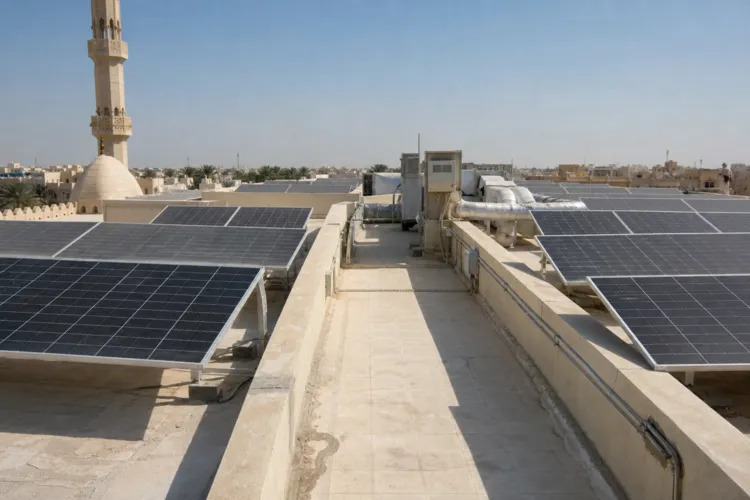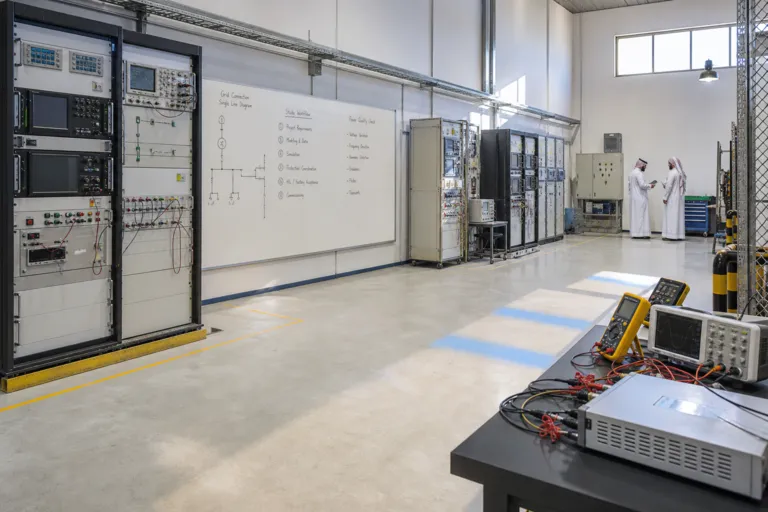
For renewable developers, a successful Saudi grid code renewable connection is not paperwork first. It is engineering first. Saudi Arabia’s connection framework is driven by the Saudi Arabian Grid Code (SAGC), and practical compliance is often enforced through utility submission and study requirements. SERA publishes the electricity sector’s technical codes and standards to support quality, safety, and protection in service delivery. On the ground, developers face strict review expectations that can trigger rejected submissions, equipment replacements, and major project delays if they are not designed correctly from the start.
One recurring gate is the Grid Impact Study (GIS). A GIS evaluates how a proposed connection such as solar PV, wind, BESS, hybrid plants, or large industrial loads affects the existing power system. The study is used to confirm that voltage and thermal limits are not violated, fault levels remain within equipment ratings, stability is maintained during disturbances, and protection stays selective. According to an industry guide, Saudi Arabia’s grid code (updated May 2024) formally defines the connection process and includes grid impact studies as a mandatory step. For distribution-level projects, SEC enforces technical standards for renewable generator-based systems connected to LV and MV networks.
Connection Voltage Levels and What They Trigger
Connection voltage is a major divider in the scope of requirements. SEC submission guidance describes LV as standard commercial and residential connections at 400V/230V, where submissions focus on load distribution, safety, and basic metering. MV connections are described at 13.8kV or 33kV and typically require comprehensive protection coordination studies, custom switchgear approvals, and rigorous substation design. At the largest end, HV connections at 110kV or 380kV are associated with exhaustive transient stability analyses and direct coordination with National Grid SA. The application journey is also described as starting digitally, via SEC’s Kahraba portal for the initial load application.
Beyond studies and voltages, performance expectations shape plant design. Grid-code compliance discussions for the region emphasize frequency response, voltage and reactive power control, fault ride-through, power quality, and control performance. Grid codes typically require plants to limit harmonics, flicker, and voltage unbalance while maintaining stable voltage characteristics. These topics tie back to what developers must prove in models, settings, and test-ready documentation. Practically, that means a renewable plant’s control philosophy and protection scheme need to be aligned early with grid code and SEC expectations, not added late as a commissioning workaround.
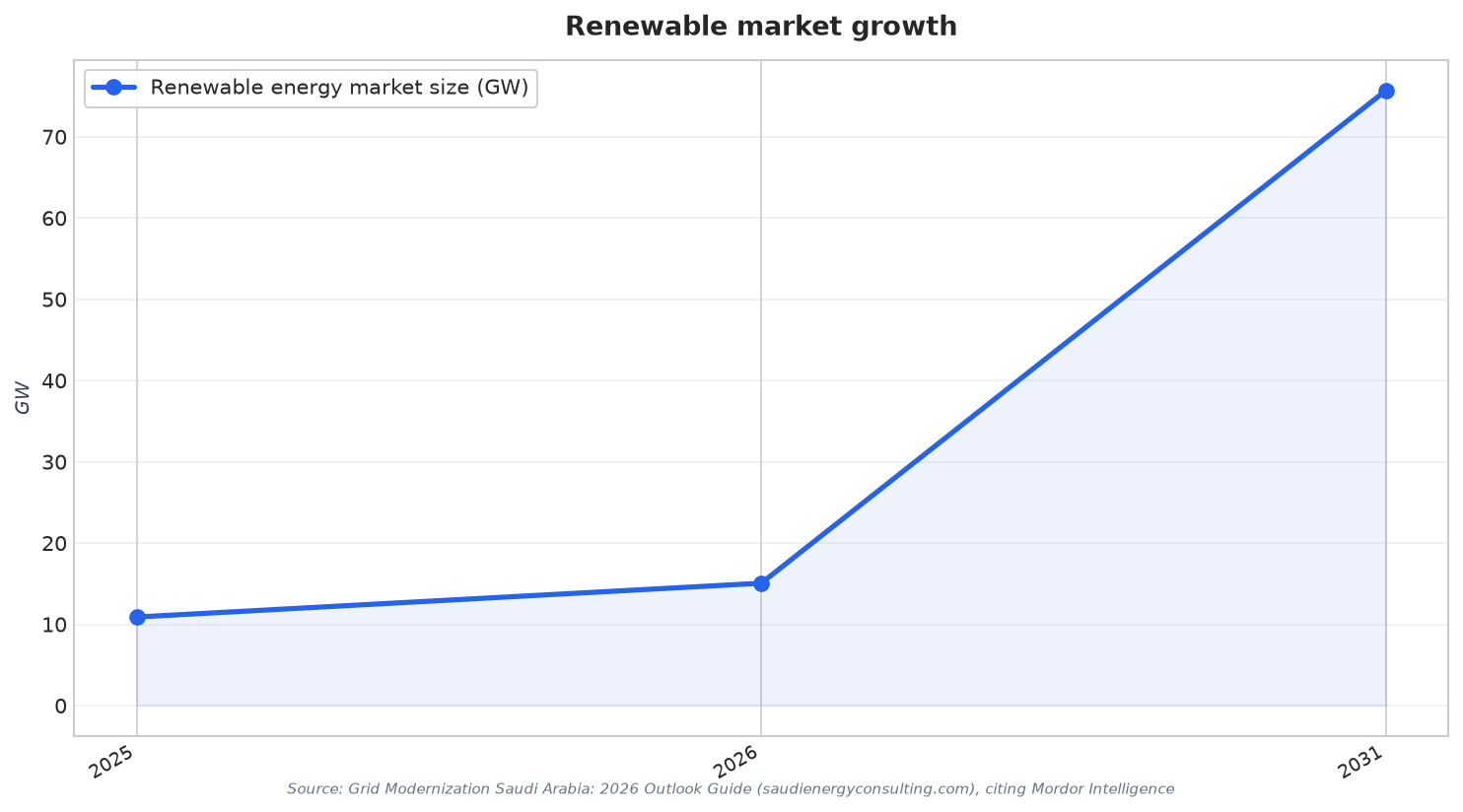
Saudi Arabia’s operating renewable base and forward pipeline make disciplined interconnection work more urgent. Official renewable energy statistics reported 6,551 MW of renewable capacity operational by end-2024. Separate market commentary also references a National Renewable Energy Program procurement pipeline of 130 GW, and notes that rooftop installations surged 180% year over year after net-metering rules took effect. As the connected fleet grows, grid integration becomes less forgiving of incomplete studies or ambiguous compliance claims. Developers can reduce friction by delivering structured, traceable submissions that map plant behavior to SAGC and SEC requirements from day one.
What is the core approval bottleneck for renewable interconnection in Saudi Arabia?
Which connection voltages does SEC commonly reference, and why do they matter?
What performance areas do grid codes emphasize for renewable plants?
Where does the Saudi grid code renewable connection process typically start for developers?
What operating renewable capacity figure is cited for Saudi Arabia by end-2024?
Talk to us for your needs in:
-
Energy Efficiency Strategy & Feasibility
-
Renewable Energy Strategy & Investment Advisory
-
Digital Energy & Smart Grid Strategy
-
Market Entry Strategy
-
Sustainability & Impact Strategy
-
Energy Project Governance & PMO Advisory
-
Energy Market Research
-
Energy Stakeholder & Customer Research
-
Energy Market Intelligence
-
Energy Feasibility & Investment Assessment
-
Energy Sector Benchmarking & Performance Strategy