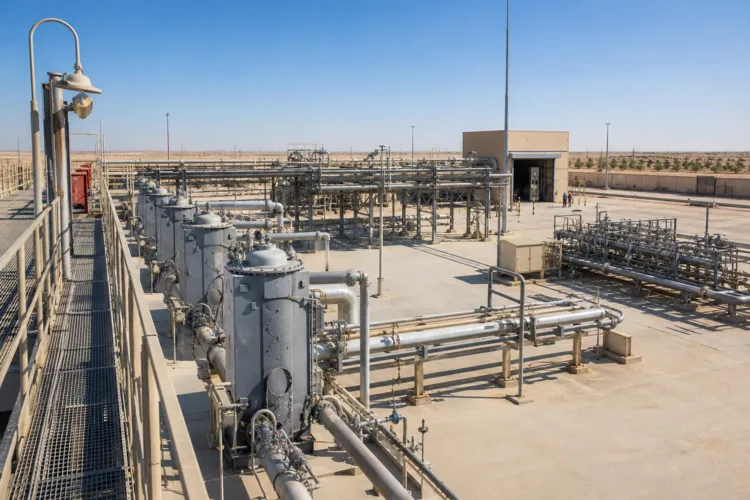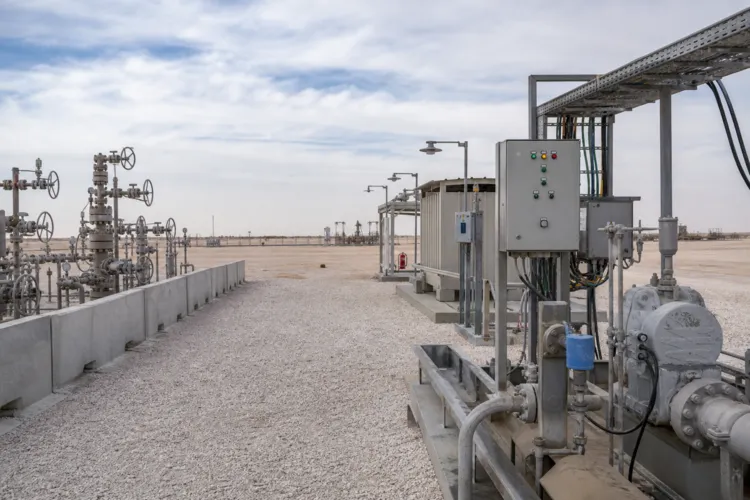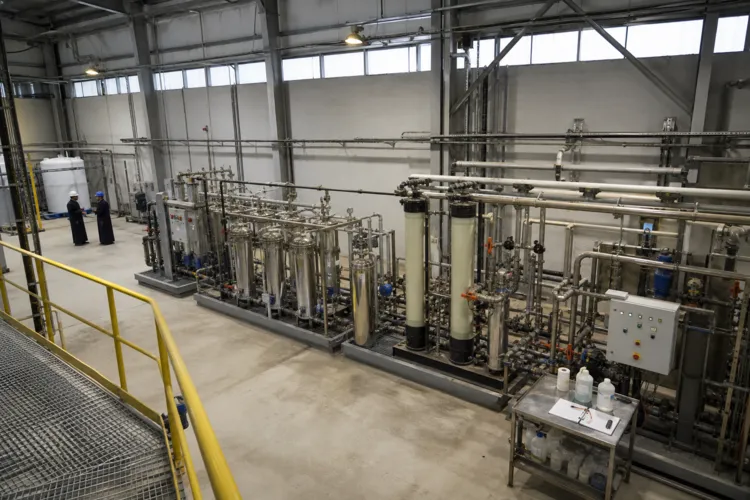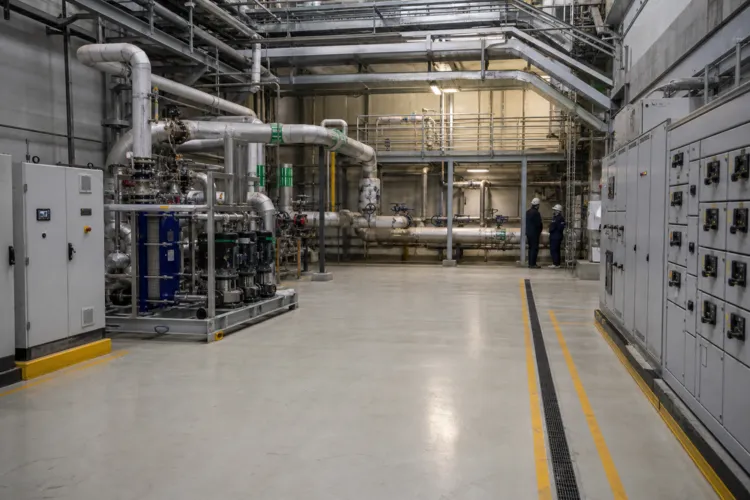
Hydrogen-ready gas turbines are moving from concept to procurement in Saudi Arabia, with projects that are explicitly positioned to begin on natural gas and transition toward hydrogen blends later. A regional review of publicly disclosed projects described Saudi Arabia as having the “strongest public pipeline” of hydrogen-ready gas turbine assets, pointing to Jafurah, Rumah-1, Al-Nairyah-1, Taiba 2, and Qassim 2 as examples of how gas-fired flexibility is being paired with a longer-term hydrogen pathway. The same review also warned that headlines often blur hydrogen production, hydrogen-ready assets, and actual hydrogen-to-power operation, and that true hydrogen-to-power operation is “far less common” than many headlines suggest.
For operators focused on hydrogen blending for existing power plants, procurement signals matter because they show what OEMs are delivering and what future fuel flexibility is being designed into new builds. In March 2025, Siemens Energy AG secured a USD 1.6 billion project to supply six SGT6-9000HL gas turbines and other equipment for two gas-fired power plants in Saudi Arabia, adding 3.6 GW of capacity. Separate market reporting also cited a USD 1.6 billion Siemens Energy project for Rumah 2 and Nairyah 2, likewise described as adding 3.6 GW to the grid. In parallel, a March 2025 contract “exceeding USD 2.6 billion” was reported for a 3 GW combined-cycle gas-fired power plant in Saudi Arabia’s Eastern Province, with ACWA Power and Saudi Electricity Company involved.
Blending Options: Start Low, Design for Higher Blends
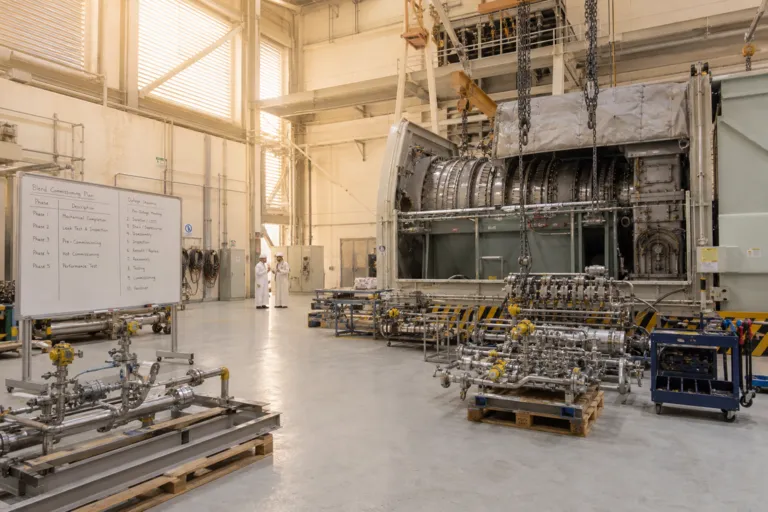
The practical blending story is about combustion systems that tolerate change, not just a single end-state claim. Technavio noted that hydrogen-ready combustion systems can offer enhanced fuel flexibility, including capabilities to operate on hydrogen blends of 30% or more, and framed this as relevant to energy security. OEM product positioning also provides guardrails for blending expectations. Fact.MR stated GE Vernova’s HA-class platform supports 50% hydrogen fuel capability, while also reporting combined cycle efficiency exceeding 64% for that platform. Fact.MR also highlighted that hydrogen-ready specifications can create long-term asset value, and pointed to Siemens Energy’s SGT-800 receiving TÜV H2-Ready certification, with HL-class turbines anchoring Saudi mega-projects such as Taiba 2 and Qassim 2.
Saudi Arabia’s broader market context helps explain why blending is being discussed alongside reliability and scale. A Saudi-focused market report valued the Saudi Arabia gas turbine market at USD 2.18 billion in 2025, while a separate regional report valued the Middle East gas turbine market at USD 3.4 billion in 2025 and projected USD 5.4 billion by 2033, a CAGR of 6.0%. That same Middle East report argued policy and fuel-economics decisions shape turbine demand, and stated Saudi Arabia “historically burned close to 0.7–1.0 million barrels of oil per day for electricity,” creating incentives to substitute with natural gas. In this environment, hydrogen blending can be positioned as an additional future-proofing layer on top of gas-based flexibility, rather than as immediate full hydrogen-to-power operation.
A credible blending plan for existing plants also has to account for execution risk and project cadence. The same Saudi market analysis that cited USD 2.18 billion in 2025 also emphasized exposure to supply chain disruptions, noting reliance on globally sourced high-temperature superalloys, precision-cast turbine blades, combustion systems, control electronics, bearings, generators, and semiconductor-based monitoring components with long production cycles. Separately, the NEOM green hydrogen project was described as more than 90% complete, with commercial production expected in 2027, underscoring that hydrogen supply timelines may not match power-sector retrofit timelines. For operators evaluating hydrogen blending gas turbines Saudi Arabia strategies, the near-term lever is to align combustion readiness, service planning, and staged blend targets with what is publicly evidenced in OEM capabilities and local project build-outs.
What is the near-term reality of hydrogen-to-power in Saudi Arabia versus hydrogen-ready turbines?
Which recent Saudi projects signal hydrogen-ready gas turbine investment momentum?
What hydrogen blending levels are referenced for gas turbines and combustion systems?
How do supply chain constraints affect hydrogen-ready upgrades for existing plants?
How should operators think about hydrogen blending in gas turbines in Saudi Arabia when planning retrofits?
Talk to us for your needs in:
-
Energy Efficiency Strategy & Feasibility
-
Renewable Energy Strategy & Investment Advisory
-
Digital Energy & Smart Grid Strategy
-
Market Entry Strategy
-
Sustainability & Impact Strategy
-
Energy Project Governance & PMO Advisory
-
Energy Market Research
-
Energy Stakeholder & Customer Research
-
Energy Market Intelligence
-
Energy Feasibility & Investment Assessment
-
Energy Sector Benchmarking & Performance Strategy