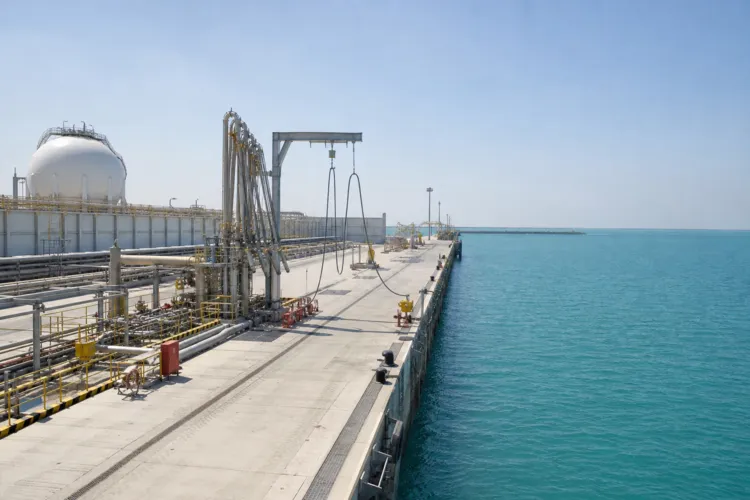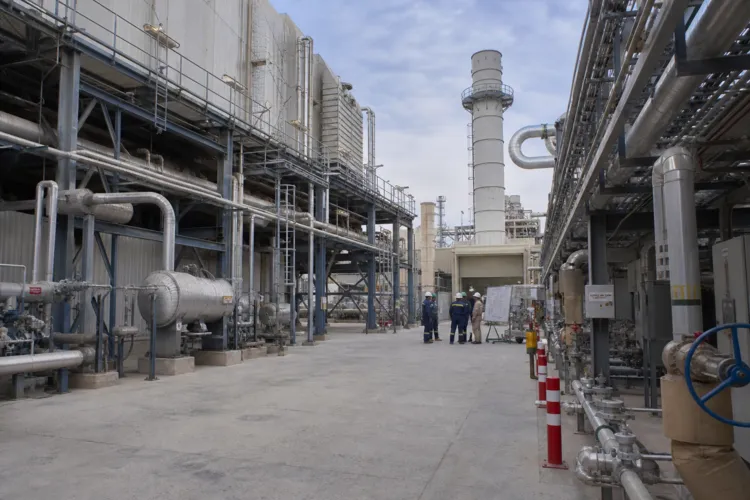
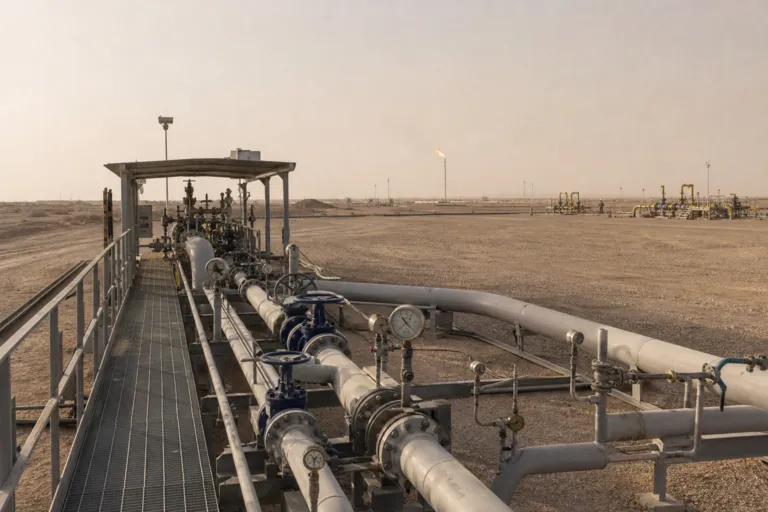
CO2 enhanced oil recovery in Saudi Arabia is increasingly framed as a bridge between carbon capture and oilfield performance. Multiple sources describe a market shaped by mature reservoirs and the need to extend field life as conventional methods reach limits. One report notes that conventional recovery typically extracts only 30–50% of the original oil in place, leaving a large portion that advanced methods aim to unlock. In this context, gas injection is repeatedly highlighted as a leading pathway, with CO2-based EOR described as dominant because it can align production optimization with lower-emissions strategies when paired with carbon capture, utilization, and storage (CCUS).
Market outlooks vary by publisher, but both point to continued activity around EOR in the Kingdom. Mark & Spark Solutions values the Saudi Arabia EOR market at USD 5.6 billion in 2025 and projects USD 9.6 billion by 2033, implying a 7.0% CAGR for 2025–2033. By contrast, Grand View Research reports Saudi Arabia EOR revenue of USD 528.2 million in 2025 with an expected rise to USD 597.8 million by 2033, and a CAGR of 0.8% from 2026 to 2033. Taken together, these published figures underscore two realities: the sector is being tracked closely, and the narrative around CO2 injection is central to the forecast discussions.
Where Captured CO2 Meets Mature-Field Optimization
The strategic story hinges on pairing CO2 supply with fields that benefit from injection. Mark & Spark Solutions states that Saudi Aramco is actively identifying oilfields suitable for CO2 injection sourced from the Jubail carbon capture hub, signaling a shift toward scalable deployment tied to CCUS infrastructure. The same source cites the growing reliance on EOR for aging oilfields such as Ghawar and Safaniya as natural reservoir pressure declines, while the openPR release also lists Ghawar, Safaniya, and Abqaiq as major fields increasingly reliant on advanced recovery techniques. Grand View Research adds that, while thermal was the largest revenue technology in 2025, CO2 injection is described as the most lucrative segment and the fastest growing during the forecast period.
CCS targets and timelines provide the upstream “feedstock” logic for CO2-EOR pathways. A Saudi-focused techno-economic assessment published on ScienceDirect describes milestones that include reducing 278 MTPA of CO2 emissions by 2030 and achieving net-zero emissions by 2060. It also states a plan to build a major CCS facility aiming to capture and sequester 9 MTPA of CO2 by 2027, leveraging the country’s experience with CO2 injection for enhanced oil recovery. The same paper notes that around 80% of active carbon capture initiatives globally focus on CO2-EOR, driven largely by financial returns from increased oil output, which helps explain why integration is often discussed as both a production and carbon-management strategy.
Global market context also reinforces why CO2 injection remains a prominent theme, even when the statistics are not specific to Saudi Arabia. Straits Research projects the global enhanced oil recovery market to grow from USD 51.95 billion in 2026 to USD 69.25 billion by 2034, at a 3.66% CAGR, and links adoption to the capture of carbon from refineries and its injection into depleting oilfields as part of EOR. Within Saudi Arabia, commentary from Vocal Media argues that EOR using captured CO2 creates economic value from captured emissions, improving project economics while supporting secure permanent storage, and it also claims AI-based workflows can improve site selection accuracy by 10–15% while reducing storage risks. In practice, the direction of travel is clear: integrate capture, transport, and injection so CO2 handling becomes a production enabler, not a standalone climate measure.
How is CO2 enhanced oil recovery in Saudi Arabia linked to carbon capture?
What do sources say about how much oil conventional methods recover?
What market growth figures are published for Saudi Arabia’s EOR sector?
What CCS milestones are cited for Saudi Arabia in the sources?
How common is CO2-EOR among carbon capture initiatives globally?
Talk to us for your needs in:
-
Energy Efficiency Strategy & Feasibility
-
Renewable Energy Strategy & Investment Advisory
-
Digital Energy & Smart Grid Strategy
-
Market Entry Strategy
-
Sustainability & Impact Strategy
-
Energy Project Governance & PMO Advisory
-
Energy Market Research
-
Energy Stakeholder & Customer Research
-
Energy Market Intelligence
-
Energy Feasibility & Investment Assessment
-
Energy Sector Benchmarking & Performance Strategy