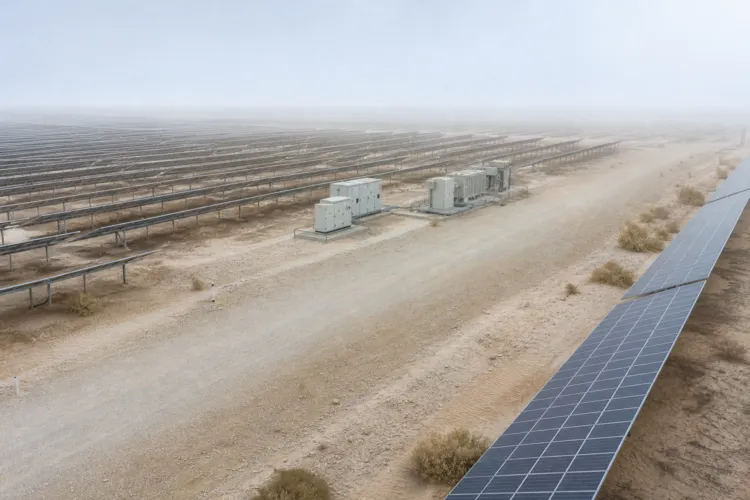
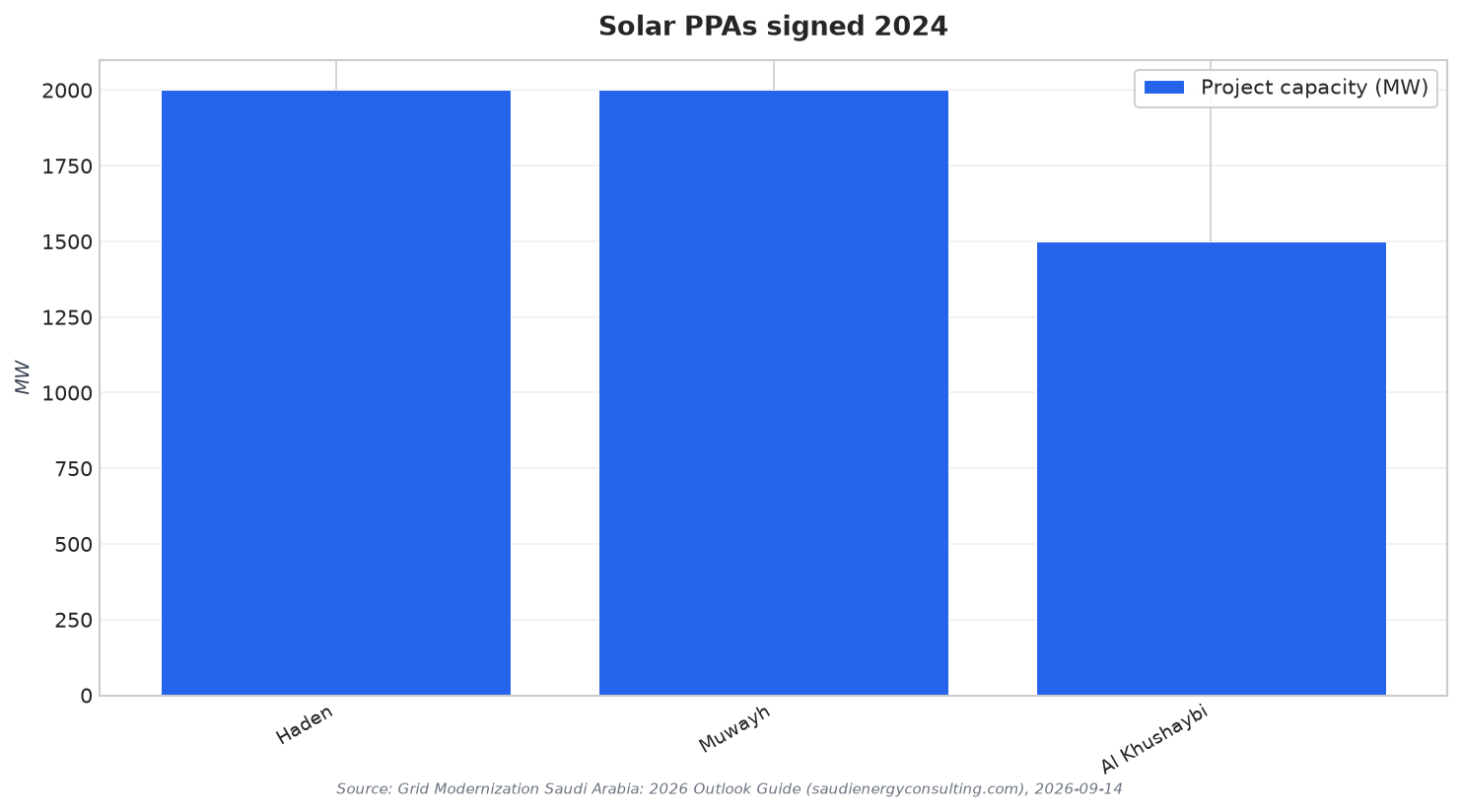
The Haden and Muwayh build-out stands out because it concentrates very large PV capacity in and around Makkah Province. Financing agreements signed on 1 September 2024 covered three large-scale solar projects in Saudi Arabia: Haden (2,000 MW), Muwayh (2,000 MW), and Al-Khushaybi (1,500 MW) across the Makkah and Qassim provinces, totaling US$ 2.58 billion. A separate 2024 snapshot frames the same contracting wave as PPAs signed for Haden, Muwayh, and Al Khushaybi totaling 5,500 MW, valued at SAR 12.3 billion (USD 3.3 billion). Together, these figures signal a large, coordinated procurement push that can alter supply patterns serving Makkah Province as new utility-scale generation comes online.
Project execution details show why Haden is frequently cited as a bellwether. China Energy Engineering won a $972 million EPC contract for the 2-GW Haden solar PV plant in western Saudi Arabia, with the site described as around 70 km northeast of Taif City in Mecca Province and an expected completion timeline of 31 months. IMARC also states that, upon completion, the Haden solar plant is anticipated to generate approximately 6,355,382 MWh of electricity annually for the Saudi power grid. Supply-chain and equipment commitments show scale as well: Arctech reached an agreement to deliver 2.3 GW of SkyLine II solar trackers for the PIF4-Haden project in Saudi Arabia. These anchored commitments help explain how a single plant can be treated as a major supply addition tied directly to the regional grid.
Why Makkah’s Solar Surge Needs Storage and a Stronger Grid
Large solar additions do not only change how much power is available; they change how the system must operate. In Saudi Arabia, congestion in high-solar regions is explicitly flagged as an operational challenge that must be addressed as solar and wind scale. The grid context is also fast-moving: SEC’s directly owned capacity stood at 56.4 GW in 2024, representing 61% of the Kingdom’s total capacity and 2% year-on-year growth. The same grid modernization discussion cites differing snapshots of renewable integration, including 6.5 GW of grid-connected renewables in 2024 scheduled to double to 12.7 GW in 2025, and another source reporting 12.3 GW grid-connected renewables and 64 GW in the project pipeline as of late 2025. Against that backdrop, adding two 2,000 MW PV plants in Makkah Province heightens the need for planning around connection points, protection, and congestion management.
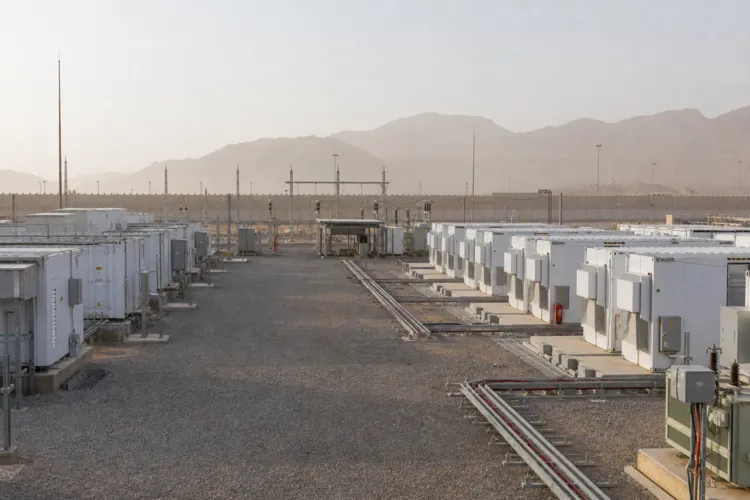
Storage contracting signals how Saudi Arabia is trying to make higher solar penetration workable around places like Makkah. A deal note describes three Storage Services Agreements with SPPC: Haden, Muwayh, and AlKahfah, each 500 MW / 2,000 MWh, each on 15 years, and each four hours at full output, signed at the Ministry of Energy in Riyadh before Energy Minister HRH Prince Abdulaziz bin Salman. This matters because it adds a balancing layer sized in both MW and MWh. It also aligns with broader market analysis that identifies battery storage capacity of 25–35 GWh as a binding enabler for high solar penetration by 2030 in Saudi Arabia. Put simply, utility-scale PV growth in Makkah Province becomes more actionable when it is paired with contracted storage services that can respond over a defined duration.
Viewed inside the Kingdom’s wider renewables pipeline, the Haden and Muwayh expansion sits in a market that is accelerating but still execution-sensitive. One analysis tracks Saudi Arabia’s renewable energy pipeline at 63.8 GW across 53 projects, while stating that only 19.3 GW was operational as of September 2026, meaning roughly two-thirds of the pipeline remains unbuilt. That is the backdrop for why the Haden-Muwayh solar project story resonates: it links very large PV capacity in Makkah Province to concrete financing, EPC and equipment awards, and parallel storage services contracts with defined MW, MWh, and 15-year terms. If these pieces land as contracted, they reshape not only supply volume, but also the grid’s ability to absorb and firm solar output for the region.
What are the capacities of the Haden and Muwayh solar plants?
How much financing was contracted for the three projects that include Haden and Muwayh?
What is the expected annual generation figure cited for Haden?
What storage agreements are linked to Haden and Muwayh?
How does the Haden-Muwayh solar project fit into Saudi Arabia’s wider renewables build-out?
Talk to us for your needs in:
-
Energy Efficiency Strategy & Feasibility
-
Renewable Energy Strategy & Investment Advisory
-
Digital Energy & Smart Grid Strategy
-
Market Entry Strategy
-
Sustainability & Impact Strategy
-
Energy Project Governance & PMO Advisory
-
Energy Market Research
-
Energy Stakeholder & Customer Research
-
Energy Market Intelligence
-
Energy Feasibility & Investment Assessment
-
Energy Sector Benchmarking & Performance Strategy