As Saudi Arabia shifts from oil-dependent energy toward renewable sources, inverter adoption is accelerating across utility, commercial, and residential segments. MarketsandMarkets links this momentum to rising electricity demand, government incentives, and the declining cost of solar PV systems, alongside capital investments in renewable infrastructure and grid modernization. That combination matters because higher shares of intermittent renewables make grid stability harder to maintain. Grid-forming inverters address this by behaving as a voltage source that can set frequency and voltage, rather than simply following a waveform supplied by synchronous generators.
In global context, Dataintelo values manufacturer-level sales of grid-forming-enabled inverters and power conversion systems at $1.9 billion in 2025, forecasting $8.11 billion by 2034 at a 17.5% CAGR. The report’s scope includes grid-forming converters for batteries, solar and wind plants, STATCOM converters, microgrid and off-grid inverters, and residential hybrid and microinverters that can form a home grid during an outage. This definition is important for Saudi Arabia because it frames grid-forming as a control capability that can be deployed across multiple asset types, not a single product category.
Why Grid-Forming Is Moving to Center Stage in Saudi Projects
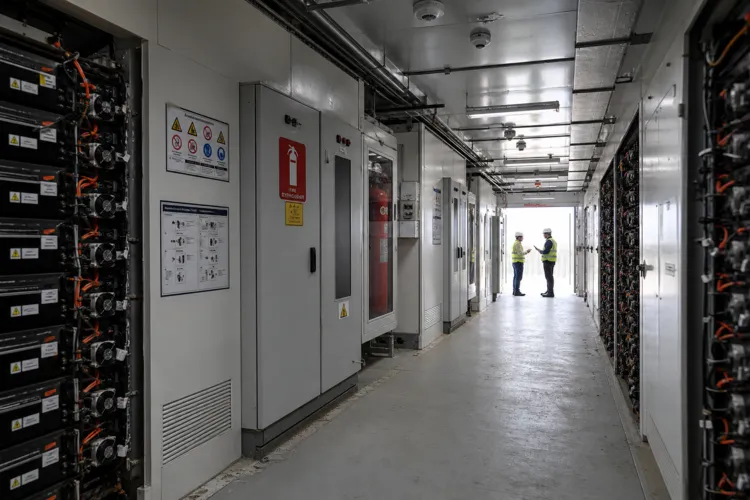
Industry reporting shows Saudi Arabia is being watched as a newer grid-forming inverter market. ESS News cites S&P Global Energy analysis stating that Saudi Arabia and Chile are expected to reach high penetration rates very quickly. It also notes that while there are relatively few grid-forming BESS projects currently, they can be very large in scale, highlighting a three-site, 7.8 GWh project in Saudi Arabia supplied by Sungrow. As developers and grid operators learn what settings work best, control approaches such as droop control and virtual synchronous generator (VSG) algorithms are part of the technical decision-making.
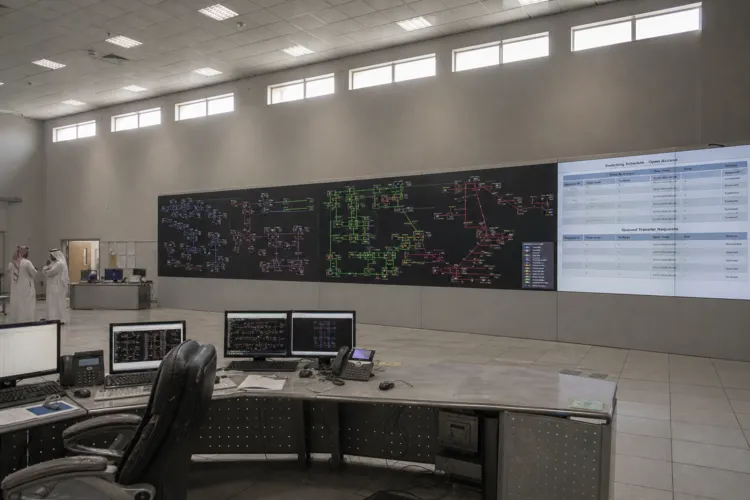
Microgrids and controls add another Saudi-specific driver. IndexBox projects Saudi Arabia’s microgrid controller market to grow at a 9–12% CAGR from 2026 to 2035, with demand volume potentially doubling by the early 2030s as renewable integration accelerates. In the same report, grid-forming inverters are described as the fastest-growing technology segment, expanding at an estimated 12–15% annually. The appeal is functional: grid-forming capability can establish grid voltage and frequency without external reference, which is essential for high-renewable-penetration microgrids and for isolated or behind-the-meter systems that must remain stable under fast-changing conditions.
Costs and procurement realities shape adoption choices. IndexBox states that grid-forming inverters often carry a 30–50% per-unit premium over traditional grid-following inverters due to advanced control algorithms and power electronics. It also estimates that compliance with Saudi grid codes and international standards—citing IEC 61850 for substation automation and cybersecurity standards such as IEC 62443—adds about 5–10% to controller costs. At the same time, multiple sources describe the broader pull of modernization: SNS Insider says Saudi Arabia emerged as the dominant country in the Middle East & Africa region for grid-forming inverters, driven by large-scale renewable energy megaproject investments. Together, these signals explain why grid forming inverters Saudi Arabia stakeholders evaluate are increasingly tied to both resilience requirements and total delivered system cost.
What is a grid-forming inverter, and why does it matter for renewable-heavy grids?
What evidence shows Saudi Arabia is adopting grid-forming technology at scale?
How fast are grid-forming inverters growing in Saudi microgrid applications?
What cost premiums are associated with grid-forming capability in Saudi projects?
How do stakeholders typically frame the grid forming inverters topic in Saudi Arabia?
Talk to us for your needs in:
-
Energy Efficiency Strategy & Feasibility
-
Renewable Energy Strategy & Investment Advisory
-
Digital Energy & Smart Grid Strategy
-
Market Entry Strategy
-
Sustainability & Impact Strategy
-
Energy Project Governance & PMO Advisory
-
Energy Market Research
-
Energy Stakeholder & Customer Research
-
Energy Market Intelligence
-
Energy Feasibility & Investment Assessment
-
Energy Sector Benchmarking & Performance Strategy