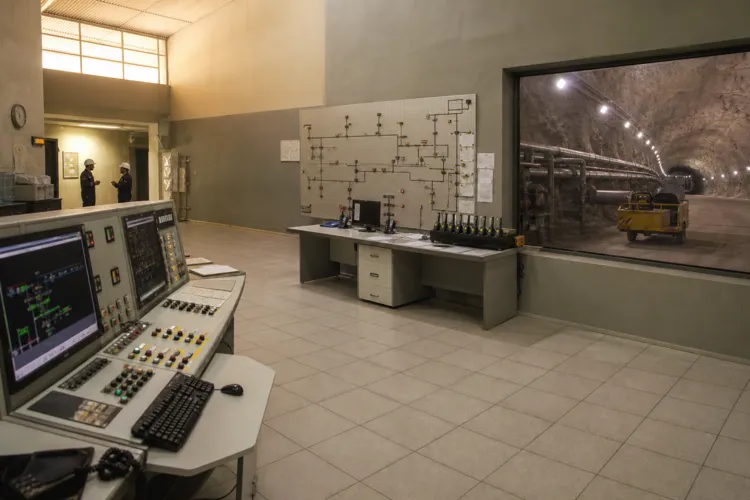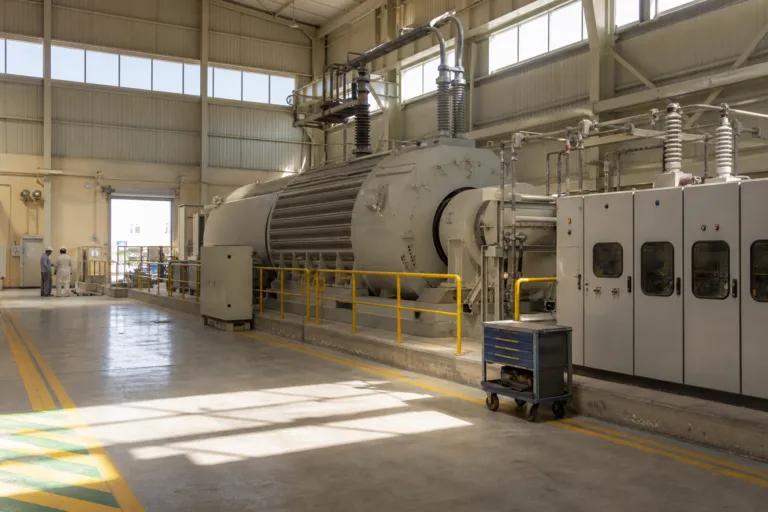
Synchronous condensers are rotating machines that spin without producing active power, but they can supply or absorb reactive power. Reactive power is sometimes described as “phantom power” because it is invisible in everyday energy use, yet it can build up and shift in ways that destabilize a grid if left unmanaged. Historically, these machines helped maintain voltage stability across long transmission lines. Today, the same core problem has returned at a larger scale, because solar and wind add variability and reduce the amount of synchronous inertia that older power plants used to provide.
In Saudi Arabia, the need is being framed directly by the country’s clean-energy transition. Under Vision 2030, Saudi Arabia aims to generate 50% of its electricity from renewable sources by the end of the decade. That shift is paired with a large development pipeline: according to the Energy Information Administration, Saudi Arabia has over 21 GW of renewable projects in development, with most of them solar. As inverter-based generation expands, grid operators need proven tools for voltage regulation, frequency stability, and short-circuit strength, especially in high-voltage networks where fast, dynamic support can determine how reliably new renewables are integrated.
Why SEC Is Turning to Synchronous Condensers Now
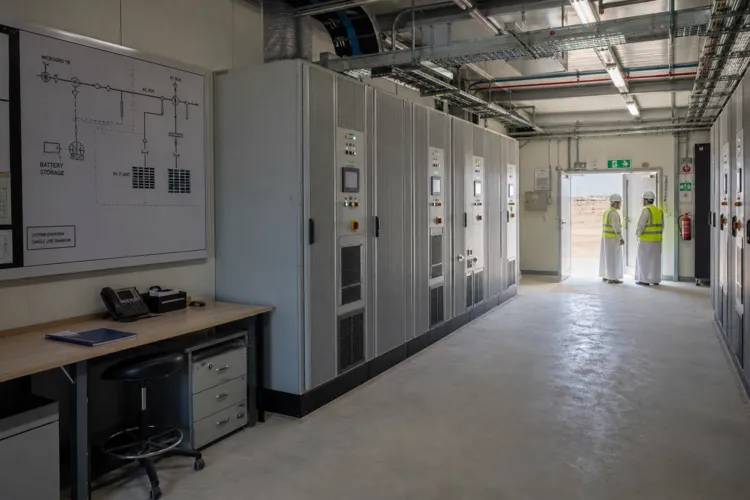
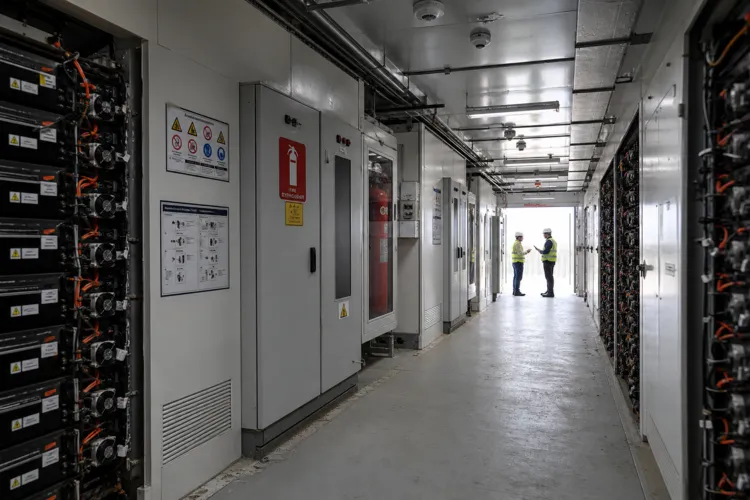
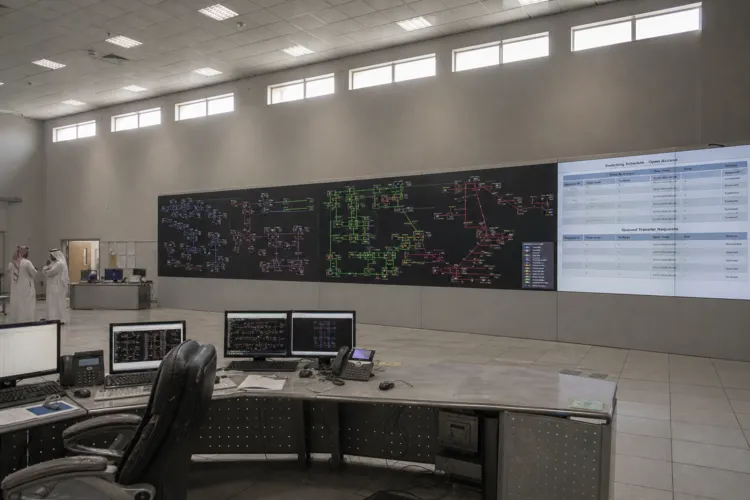
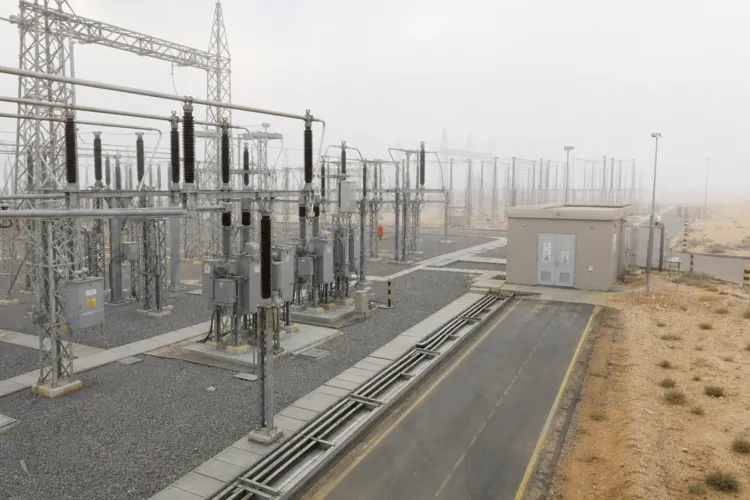
Saudi Electric Company (SEC) has begun implementing synchronous condensers supplied by GE Vernova, deploying them across multiple renewable energy sites to support stable and reliable electricity delivery. The operational value is practical: these machines can absorb or generate reactive power as needed, and they provide inertia and frequency control without burning fuel. In other words, instead of running conventional turbines solely to keep the grid steady, synchronous condensers can supply key stability services more efficiently while enabling additional renewable integration and reducing dependence on traditional generation assets for grid support.
Global market signals also show why the technology is returning to prominence, even though local decisions depend on local grid needs. Dataintelo estimates the global synchronous condenser for grid support market was valued at $1.8 billion in 2025 and is projected to reach $3.6 billion by 2034, with a CAGR of 8.1% over 2026–2034. Verified Market Reports estimates a global synchronous condenser system market size of USD 0.78 billion in 2025, forecasting USD 1.5 billion by 2033 with a 3.3% CAGR over 2026–2033. IndexBox estimates a 6.5% CAGR for the global synchronous condenser units market over 2026–2035, bringing the market index to roughly 185 by 2035 (2025=100), and notes the Middle East & Africa holds a 7% share.
Looking forward, the case for synchronous condensers in Saudi Arabia is closely tied to grid stability needs as renewables scale. Datamintelligence notes the global order volume is forecast to rise from 68 units in 2025 to 377 units in 2035, reflecting demand from utilities and grid companies for inertia, voltage control, and fault-current capability. The same source states that global renewable electricity generation provided 36.9% of total electricity in 2025, alongside 630 GW solar PV and 156 GW wind additions. Against that backdrop, Saudi Arabia’s roll-out of synchronous condensers supports a clear goal: restore grid inertia and strengthen voltage control so solar growth can continue without leaning on conventional plants for stability services.
What do synchronous condensers do for grid stability?
Why are synchronous condensers becoming important in Saudi Arabia as solar grows?
Who is deploying synchronous condensers in Saudi Arabia, and who is supplying them?
How fast is the global market for synchronous condensers growing?
Talk to us for your needs in:
-
Energy Efficiency Strategy & Feasibility
-
Renewable Energy Strategy & Investment Advisory
-
Digital Energy & Smart Grid Strategy
-
Market Entry Strategy
-
Sustainability & Impact Strategy
-
Energy Project Governance & PMO Advisory
-
Energy Market Research
-
Energy Stakeholder & Customer Research
-
Energy Market Intelligence
-
Energy Feasibility & Investment Assessment
-
Energy Sector Benchmarking & Performance Strategy