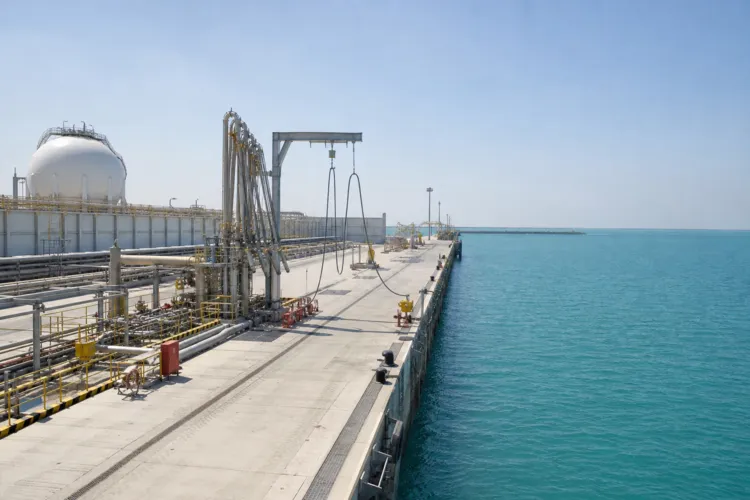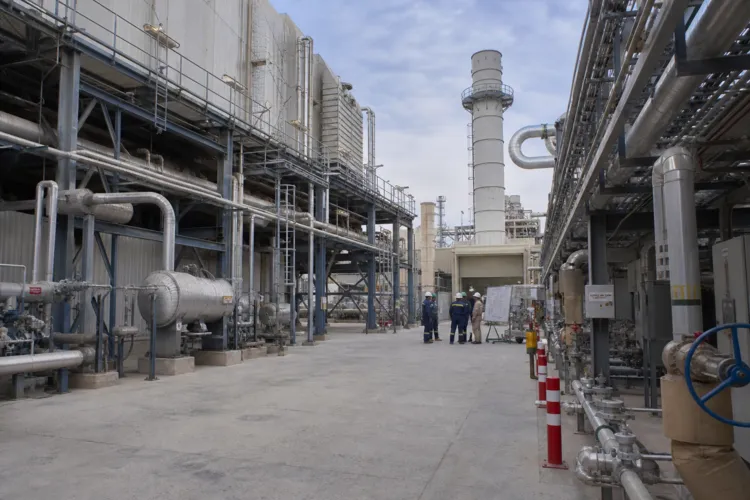
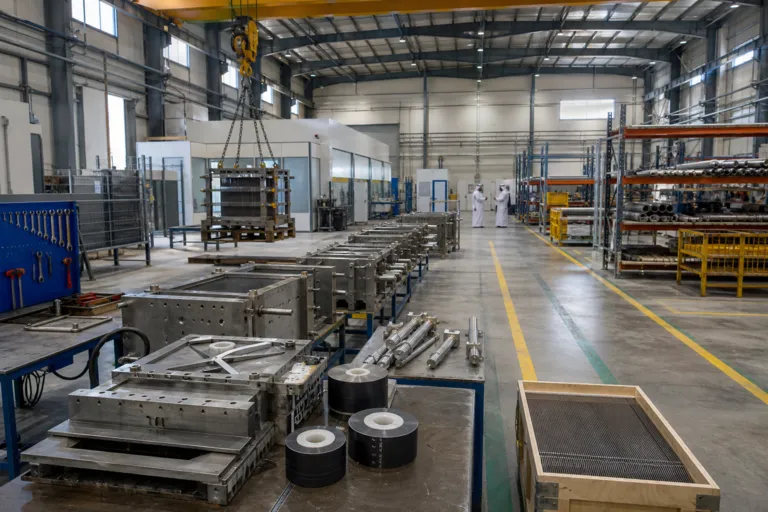
Saudi Arabia is increasingly linked to giga-scale green hydrogen and green ammonia projects aimed at supplying international markets such as Europe, Japan, and South Korea. One global market report ties demand for high-capacity electrolyzer systems to projects that integrate dedicated renewable power plants and export infrastructure, and it explicitly includes Saudi Arabia among countries with abundant low-cost solar and wind resources. For the industrial equipment layer behind those projects, alkaline water electrolysis is often positioned as the pragmatic workhorse. Alkaline electrolyzer systems have been commercially used for decades in chemical, fertilizer, and refining industries, making them one of the most proven electrolysis technologies globally.
For localization decisions, the cost and scale characteristics of alkaline technology matter. Fortune Business Insights notes that, compared with PEM and SOEC systems, alkaline electrolyzers offer lower manufacturing and operational costs, particularly for high-capacity projects exceeding 100 MW. MarketsandMarkets also characterizes the alkaline electrolyzers segment as leading due to cost-effectiveness, proven technology, and scalability for hydrogen production. These points create a practical rationale for Saudi-focused localization: if the Kingdom expects large projects and industrial hubs, manufacturing capabilities that favor high-capacity alkaline systems can align with those project realities while supporting local value creation.
What Localization Must Solve: Imports, Bottlenecks, and Bankability
IndexBox describes Saudi Arabia’s stationary hydrogen energy storage market as moving from pilot-scale validation into early commercial deployment, driven by an ambition to become a global green hydrogen hub and a need to integrate over 50 GW of renewable capacity by 2030. It estimates installed stationary hydrogen storage capacity at 50–120 MWh equivalent in 2026, with annual deployments expected to grow at a compound annual rate above 35% through 2035, reaching 3–5 GWh by the end of the forecast horizon. This scale-up pressure intersects directly with equipment sourcing: the same report states that more than 80% of system components are imported in 2026, including electrolyzer stacks. It also lists electrolyzer stack manufacturing capacity as an observed bottleneck, signaling why localized production is not just industrial policy, but also delivery risk management.
Localization also has to match how projects are being packaged and financed. IndexBox reports that power-to-gas-to-power integrated systems are gaining traction as developers seek single-point responsibility for system performance, grid compliance, and lifecycle guarantees. It also notes hybrid hydrogen-plus-battery systems are emerging as a preferred configuration for renewables integration, reducing total system cost by 15–25% compared to hydrogen-only designs. These trends shift the manufacturing discussion beyond stacks alone, toward local capabilities in integration, qualification, and long-term service. IndexBox further points to regulatory momentum, including the Saudi Green Hydrogen Certification Scheme, grid code amendments for long-duration storage, and capacity market mechanisms for firm low-carbon power expected to unlock project financing and reduce investment risk from 2027 onward.
For an actionable roadmap, localizing alkaline electrolyzer manufacturing in Saudi Arabia can be framed around three near-term priorities: build stack manufacturing depth to directly address the identified bottleneck; develop system-integration and EPC capability for integrated P2G2P projects; and align production with industrial colocation. IndexBox highlights industrial colocation in Jubail and Yanbu, where large ammonia and methanol plants are integrating stationary hydrogen storage to buffer green hydrogen supply for more continuous downstream operations. On the supplier side, Fortune Business Insights reports that in December 2025 Thyssenkrupp Nucera announced deployment of high-capacity alkaline water electrolyzer systems for industrial green hydrogen projects in the Middle East and Europe, alongside expanded engineering and manufacturing capabilities. Together, these signals support a localization strategy that prioritizes high-capacity alkaline systems, bankable integration, and supply-chain transfer to reduce import exposure.
Why focus on alkaline electrolyzers for large projects in Saudi Arabia?
What does Saudi Arabia’s stationary hydrogen storage pipeline imply for localization?
What are the main bottlenecks that local manufacturing could address?
How are projects being configured, and why does that matter for local suppliers?
What should alkaline electrolyzer manufacturing localization in Saudi Arabia prioritize first?
Talk to us for your needs in:
-
Energy Efficiency Strategy & Feasibility
-
Renewable Energy Strategy & Investment Advisory
-
Digital Energy & Smart Grid Strategy
-
Market Entry Strategy
-
Sustainability & Impact Strategy
-
Energy Project Governance & PMO Advisory
-
Energy Market Research
-
Energy Stakeholder & Customer Research
-
Energy Market Intelligence
-
Energy Feasibility & Investment Assessment
-
Energy Sector Benchmarking & Performance Strategy