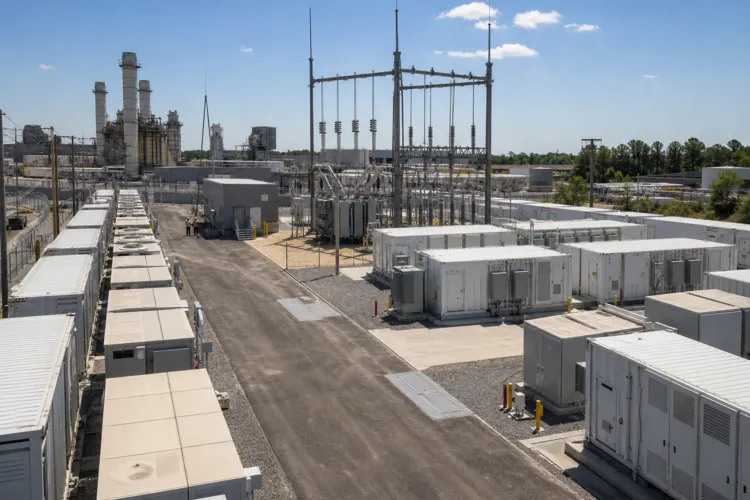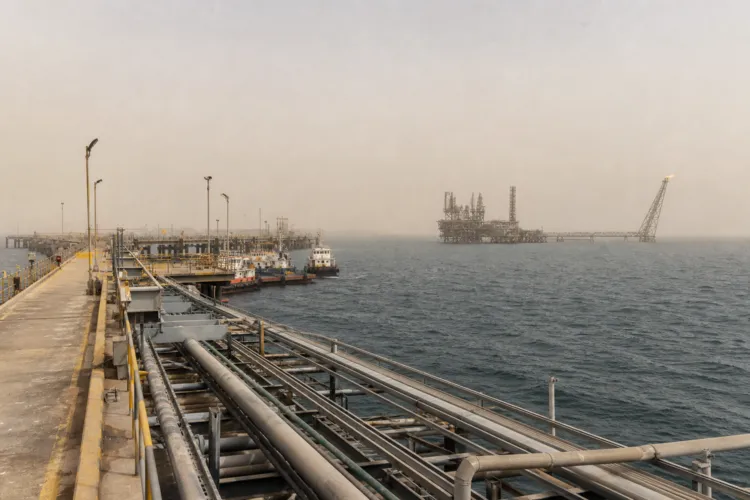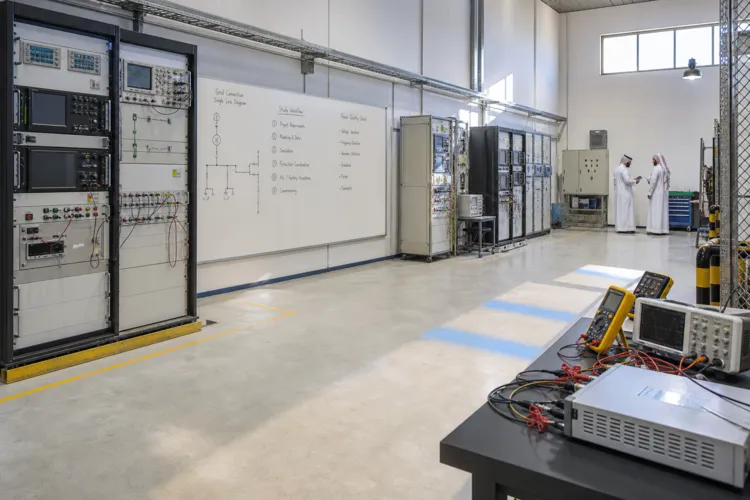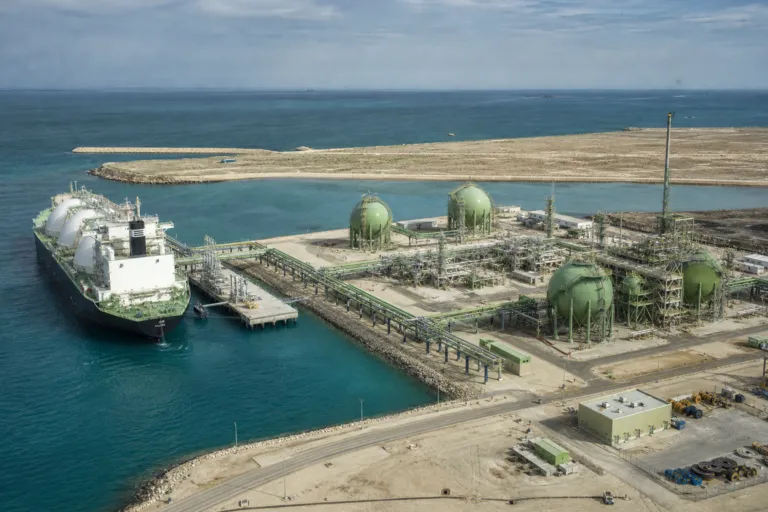
Saudi Arabia’s NEOM Green Hydrogen Project at Oxagon has moved into commissioning following the completion of construction in August 2026, according to ACWA Power and reporting that cites company officials. Several reports frame this phase as the practical gateway to exports, because the complex is designed around exporting green ammonia rather than shipping hydrogen directly. Commercial production is planned for 2027, with first green ammonia availability also expected in 2027. A separate analysis also points to the facility coming online in December 2026, with first export shipments expected in early 2027.
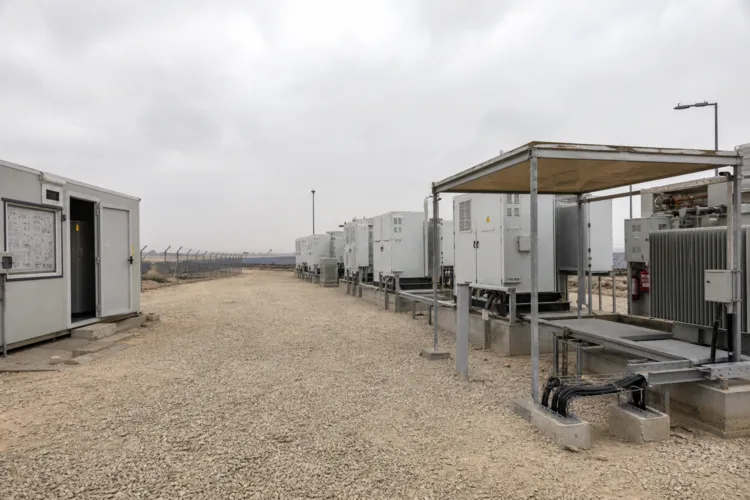
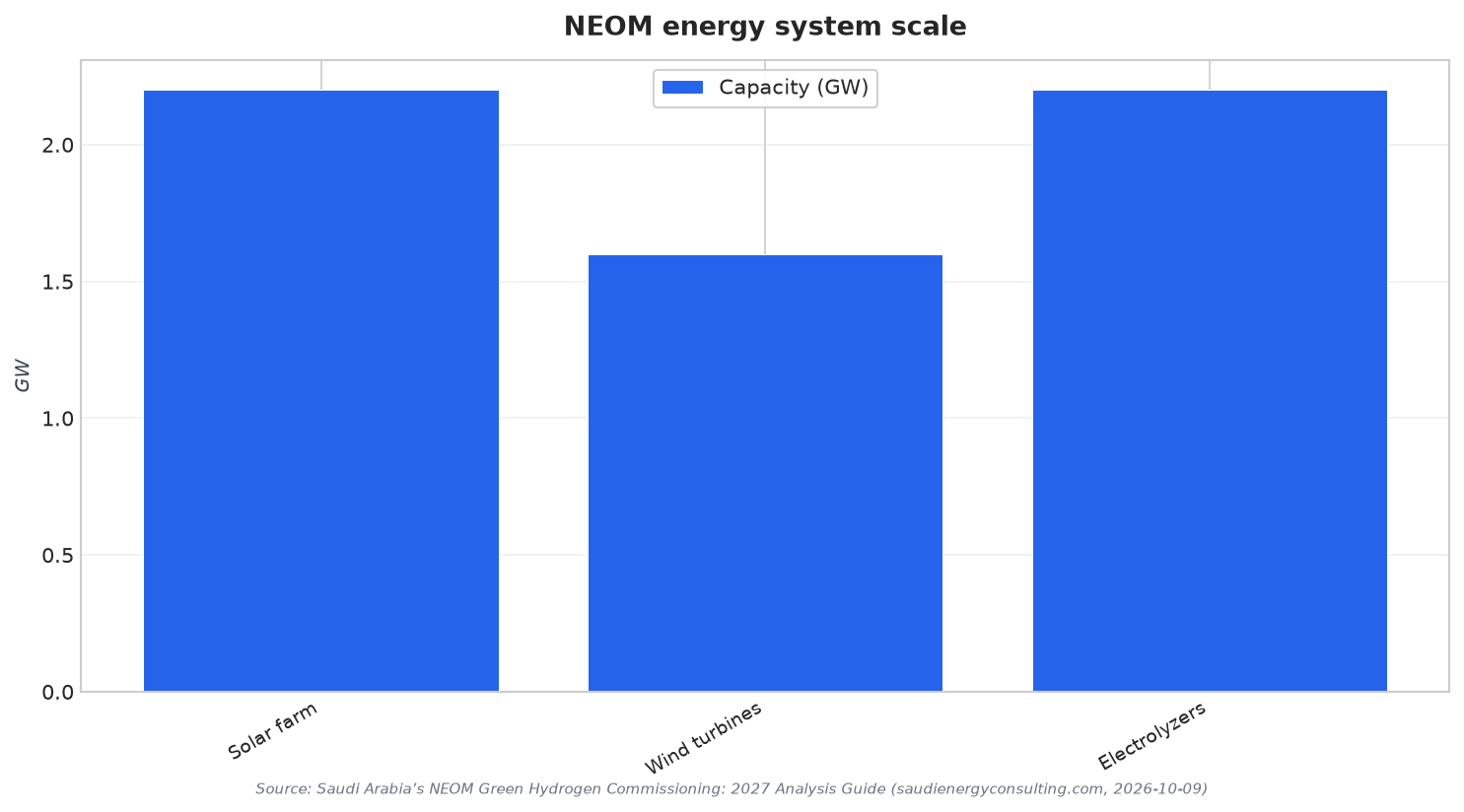
The NEOM Green Hydrogen Company (NGHC) project is structured to tie renewable power, electrolysis, and ammonia synthesis into one export product. Once operational, NGHC says the complex is expected to produce up to 600 tonnes per day of carbon-free hydrogen, which will be converted into green ammonia for global export. Another account frames the export plan as about 1.32 million tons of green ammonia each year, using around 661 tons of carbon-free hydrogen produced daily at Oxagon on the Red Sea coast. The scale is linked to an energy system described as roughly 4 GW of renewables feeding 2.2 GW of electrolyzers.
Why Commissioning Is the Real Countdown to 2027 Exports
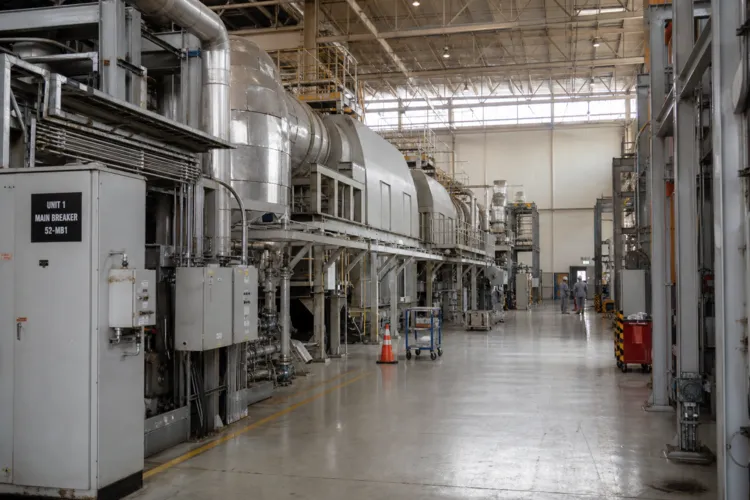
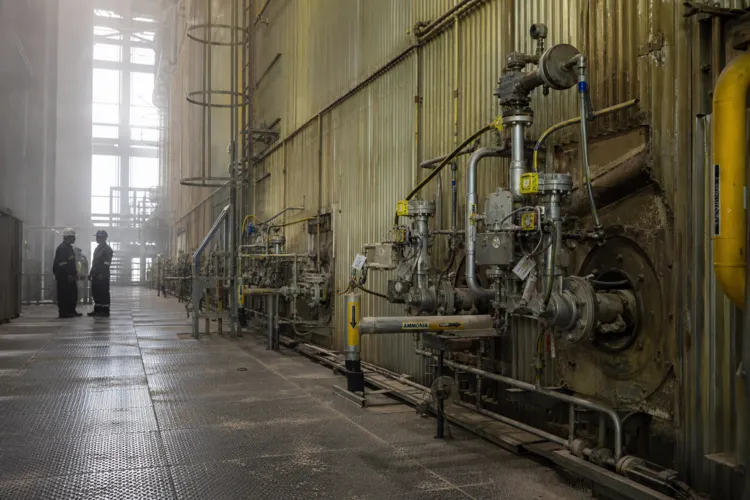
Commissioning is also when integration risk becomes visible. Coverage highlights the complexity of combining a 4 GW wind-and-solar complex, 2.2 GW of electrolyzers, and ammonia synthesis into a stable industrial system, warning that delays can threaten the 2027 target. One report notes that more than 2 GW of alkaline electrolysis has never been commissioned before at a single facility, making performance at scale a key indicator. Another states Air Products expects “a long commissioning process” and anticipates no gain or loss from NEOM in its fiscal 2027 financial year, signaling that ramp-up toward full commercial output extends beyond first ammonia production.
Contracts and financing are positioned as the commercial backbone for the NEOM green hydrogen first ammonia timeline. Air Products holds a 30-year exclusive off-take agreement for the plant’s entire ammonia output, and one account says this helped unlock $6.1 billion in financing from 23 banks. Another source describes total investment at $8.4 billion, with the $6.1 billion structured as non-recourse project financing from 23 local, regional, and international banks. In parallel, Fertilizer Daily reports that Yara International finalized a marketing and distribution agreement to handle up to 1.2 million metric tons per year of renewable ammonia from the plant.
Export logic is reinforced by the fact that ammonia is already a traded commodity with established logistics. One report notes that about 22 million tons of ammonia are traded each year, meaning shipping, port infrastructure, and safety procedures are mostly already in place. Another source frames the plant’s potential volume as context against the wider ammonia market, stating that 1.2M t/yr is 0.7% of a global 180M t/yr ammonia market. Air Products has also outlined a dual-track sales route: it will crack a portion into hydrogen for European customers, including under its deal with TotalEnergies, while the remainder will be sold directly as renewable ammonia through Yara’s distribution network on a commission basis.
When is NEOM expected to reach first green ammonia production and shipments?
What is the planned scale of the NEOM Green Hydrogen Plant at Oxagon?
How are off-take and financing structured for the project?
How does NEOM plan to sell ammonia versus hydrogen?
What does the NEOM green hydrogen first ammonia milestone mean in the global ammonia market?
Talk to us for your needs in:
-
Energy Efficiency Strategy & Feasibility
-
Renewable Energy Strategy & Investment Advisory
-
Digital Energy & Smart Grid Strategy
-
Market Entry Strategy
-
Sustainability & Impact Strategy
-
Energy Project Governance & PMO Advisory
-
Energy Market Research
-
Energy Stakeholder & Customer Research
-
Energy Market Intelligence
-
Energy Feasibility & Investment Assessment
-
Energy Sector Benchmarking & Performance Strategy