In Saudi Arabia, cooling is a baseline need. Summer temperatures can exceed 50°C in parts of the country, and air conditioning is described as “infrastructure,” not optional. One source notes AC systems account for nearly 70% of residential electricity consumption, while another states air conditioning consumes roughly 52% of total national electricity production. This context is why the Saudi Building Code (SBC) and related conservation requirements place so much emphasis on building envelopes, insulation, and performance standards that reduce cooling loads before an HVAC system even turns on.
The push is also happening alongside rapid development. A market report cites over 555,000 new residential units and 275,000 hotel rooms planned under Vision 2030 by 2030, creating a large pipeline of new conditioned floor area. At the same time, the Saudi Energy Efficiency Centre’s Energy Efficiency Action Plan targets reducing power intensity by 30% by 2030, and one report states the Saudi Building Code mandates energy-efficient technologies in all new constructions. Together, these policies frame the Saudi building energy code as both a compliance requirement and a practical response to sustained cooling-driven demand.
What the Code Makes Mandatory: Envelope, Insulation, and Audits
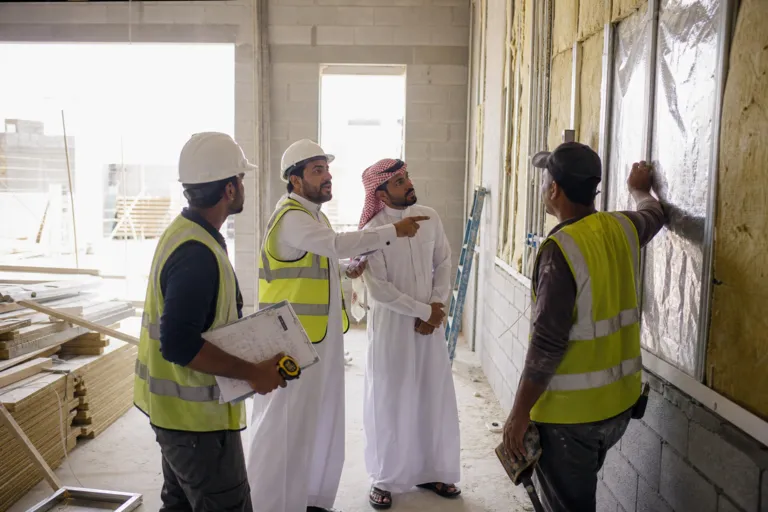
Insulation requirements are a clear example of “mandatory standards” intended to cut cooling demand. A building insulation market source states Saudi Arabia’s mandatory thermal insulation codes under the Saudi Building Code require building envelopes to meet defined energy performance levels, and that SEEC actively audits compliance. The same source explains why the envelope matters in this climate: summer temperatures across large parts of the Kingdom regularly exceed 45°C, and cooling systems can account for over 70% of a building’s total energy consumption. It adds that investing in high-performance polyurethane or mineral wool insulation during construction can reduce cooling energy use by up to 40%.
Research focused on residential thermal performance under Saudi conservation requirements reinforces the magnitude of envelope measures. A study referencing the Saudi energy conservation code (SBC602) notes the country is categorized into three climate zones for tailored insulation strategies. In that work, external insulation systems reduce cooling loads by 59%, and payback periods for insulation investments range from 3.3 to 4.2 years across three climate zones. The same source also states Saudi residential buildings consume 50.36% of total electricity, predominantly for air conditioning, underscoring why code-aligned envelope upgrades can materially affect household demand.
Simulation and long-horizon assessments further connect updated standards to measurable energy outcomes. One ScienceDirect assessment states Saudi Arabia has recently updated its residential building code with stringent standards and assumes future buildings comply with the latest codes. Using REEM optimization, it suggests retrofitting with envelope insulation, more efficient AC units (EER12 or higher), boosting lighting efficiency by 70%, and reducing air infiltration by 70% can achieve a 40% reduction in electricity consumption by 2060, around a 1% reduction annually. Another study on SBC impacts reports reductions that may have reached 20%–25% in CZone-2, highlighting how code-driven performance can vary by climate zone and building typology.
Why does Saudi Arabia emphasize building-envelope rules to cut cooling demand?
What is mandatory under the Saudi Building Code related to insulation?
How much can insulation reduce cooling energy use in Saudi buildings?
What do studies suggest about payback for insulation that complies with Saudi conservation requirements?
How do updated standards in the Saudi building energy code connect to long-term electricity reduction?
Talk to us for your needs in:
-
Energy Efficiency Strategy & Feasibility
-
Renewable Energy Strategy & Investment Advisory
-
Digital Energy & Smart Grid Strategy
-
Market Entry Strategy
-
Sustainability & Impact Strategy
-
Energy Project Governance & PMO Advisory
-
Energy Market Research
-
Energy Stakeholder & Customer Research
-
Energy Market Intelligence
-
Energy Feasibility & Investment Assessment
-
Energy Sector Benchmarking & Performance Strategy