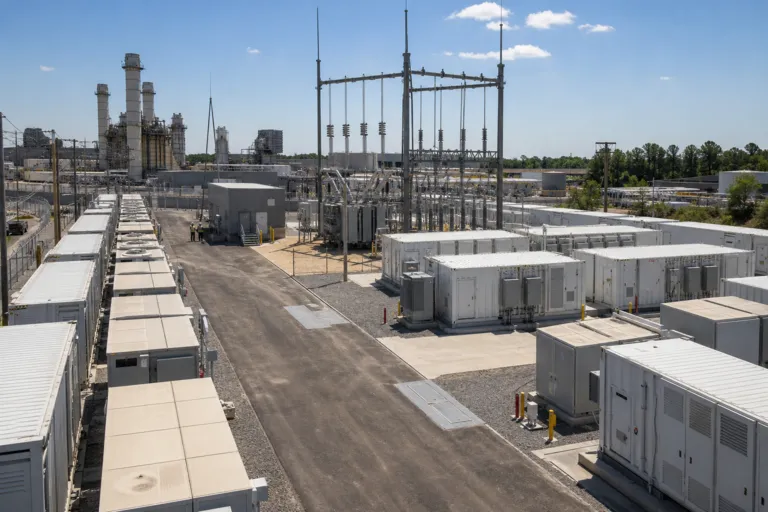
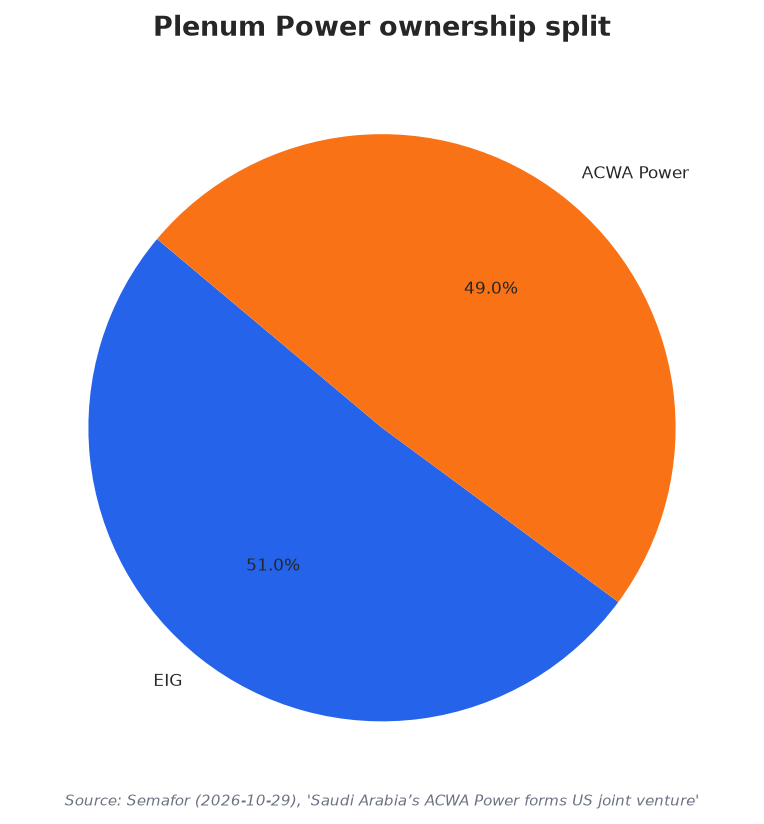
ACWA Power’s step into the US market comes through a new partnership with Washington, DC-based investment firm EIG. The companies agreed to launch Plenum Power with an initial equity commitment of $4 billion, aimed at acquiring existing power assets and developing new power generation and energy storage projects in the United States. Under the ownership structure disclosed in reporting and filings, EIG will hold 51% of the venture while ACWA Power holds 49%. The move is positioned around rising electricity needs linked to data centers, artificial intelligence, and wider electrification.
For ACWA Power, the US joint venture is framed as a first expansion into the United States after building projects across 16 countries in the Middle East, Africa, and Asia. The company’s roots are domestic: it was launched in 2002 by a group of prominent Saudi families to build power and water plants in Saudi Arabia, and it is now part-owned by the kingdom’s sovereign wealth fund. That context matters because it makes this US entry stand out as a relatively rare example of a Saudi firm embarking on an international growth drive, with a dedicated platform and capital earmarked for deployment.
What Plenum Power Suggests About the Next Phase of Saudi Energy Expansion
The structure of Plenum Power highlights how Saudi developers may pursue overseas growth: pair development and operating capabilities with an investment partner that can build platforms and finance assets at scale. EIG has committed more than $14 billion globally across power generation, renewable energy, energy storage, and related energy-transition infrastructure, according to reporting. Plenum Power is explicitly set up to evaluate both acquisitions and “organic development opportunities” in US power infrastructure, combining EIG’s investment, financing, and platform-building experience with ACWA Power’s development knowledge to build new plants and acquire existing ones.
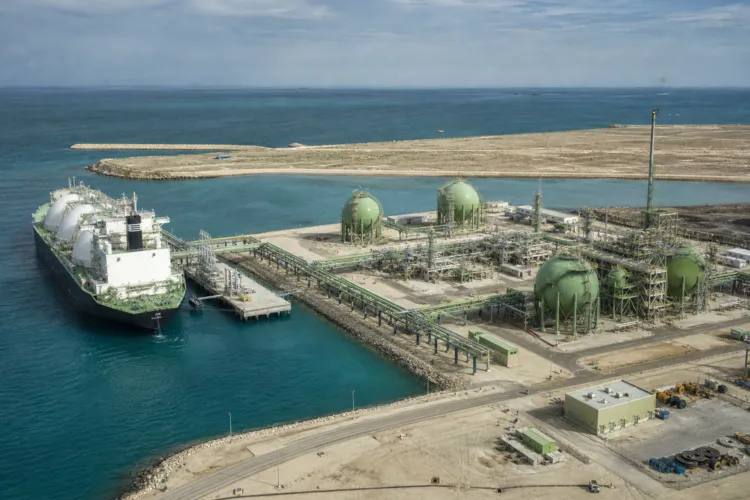
ACWA Power’s current development pipeline also explains why a US platform could be strategically attractive. The company has 32 projects under development, with combined power-generation capacity of 47 GW and water desalination capacity of 2 million cubic metres per day. Another snapshot of its international footprint describes a global portfolio of 111 assets across 16 countries, representing $127 billion in assets under management. In that light, Plenum Power reads less like a one-off transaction and more like a method for exporting a repeatable delivery model into a market described by EIG’s chief executive as being at an “inflection point.”
The venture also sits alongside broader Saudi-US investment messaging described in reporting. In November 2025, Saudi Crown Prince Mohammed bin Salman increased his pledge for investment in the US economy to $1 trillion, from $600 billion committed in January of that year, with funds mainly for energy, defence, aviation, and technology. Separately, an International Energy Agency forecast cited in coverage projects US electricity demand to increase by more than 420 TWh between 2025 and 2030, with data centres expected to account for about half of that growth. Against that backdrop, ACWA Power’s US joint venture with EIG signals a clearer playbook for Saudi energy developers abroad: enter large markets with targeted capital, a local investment partner, and an explicit mandate spanning conventional generation, renewables, and storage.
What is ACWA Power’s US joint venture, and who is the partner?
How much capital is being committed to Plenum Power?
Why are data centers and electrification central to this strategy?
What does this deal signal for Saudi energy developers expanding abroad?
Talk to us for your needs in:
-
Energy Efficiency Strategy & Feasibility
-
Renewable Energy Strategy & Investment Advisory
-
Digital Energy & Smart Grid Strategy
-
Market Entry Strategy
-
Sustainability & Impact Strategy
-
Energy Project Governance & PMO Advisory
-
Energy Market Research
-
Energy Stakeholder & Customer Research
-
Energy Market Intelligence
-
Energy Feasibility & Investment Assessment
-
Energy Sector Benchmarking & Performance Strategy