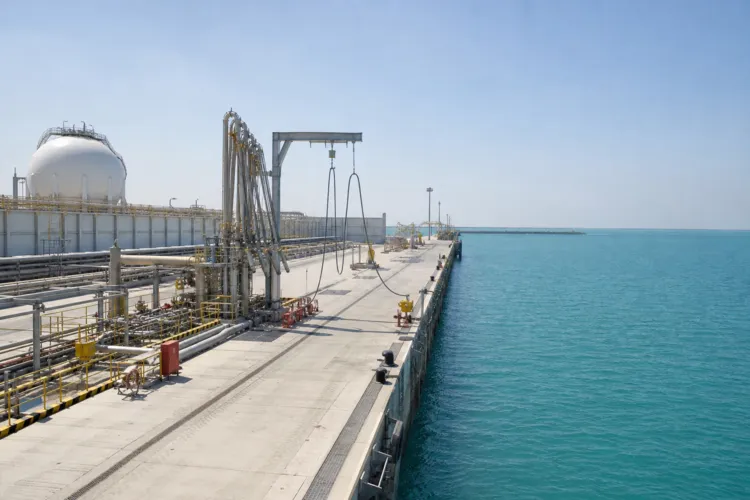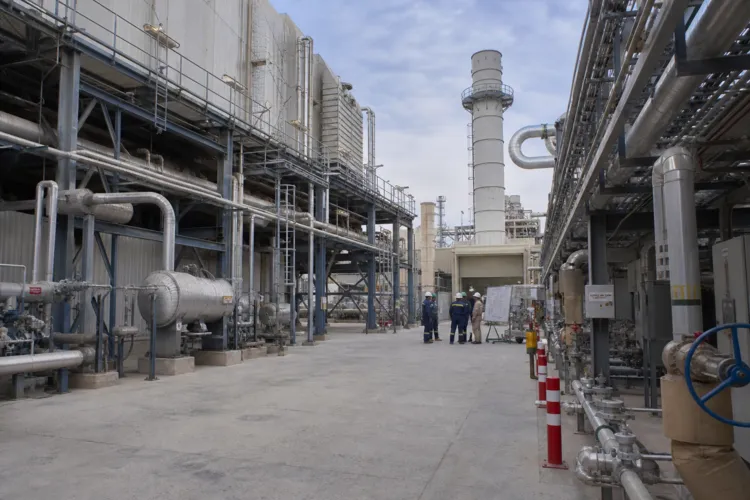
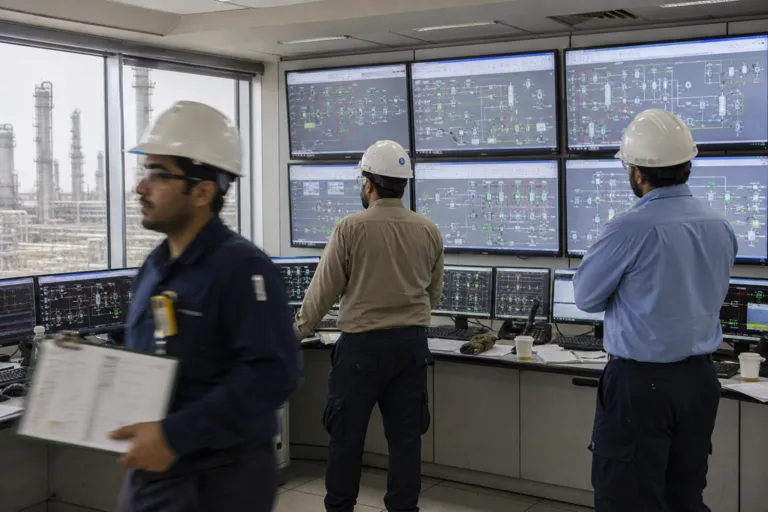
Saudi Arabia’s liquids-to-chemicals story is increasingly tied to how Aramco and SABIC connect upstream resources to downstream chemicals. SABIC is now majority-owned by Saudi Aramco following the 2020 acquisition, and the combined structure is positioned as a vertically integrated hydrocarbons-to-chemicals value chain. That integration sits inside an export-oriented sector: Saudi petrochemical exports reached approximately USD 45-50 billion in 2025, and the sector employs approximately 250,000 workers directly and indirectly. The investment logic also leans on feedstock pricing, with Saudi producers accessing ethane and other gas liquids at administered prices that the source describes as significantly below global market rates, creating a 30-50 percent cost-of-production advantage versus European and Asian competitors for commodity chemicals.
Aramco’s pivot is happening alongside its scale in liquids production and reserves. As of December 31, 2024, Aramco’s reserves under the Concession agreement were 250 billion barrels of oil equivalent, including 190.2 billion barrels of crude oil and condensate, 26.1 billion barrels of NGL, and 209.8 trillion standard cubic feet (tscf) of natural gas. In 2024, Aramco’s total hydrocarbon production was 12.4 million barrels oil equivalent per day, including 10.3 million barrels per day of liquids, largely crude oil. In January 2024, the Saudi government directed Aramco to maintain Maximum Sustainable Capacity at 12.0 mmbpd, and Aramco said this directive would not impact near-term projects including the Dammam development and the Marjan, Berri, and Zuluf crude oil increments.
What “Liquids-to-Chemicals” Means in Practice
Liquids-to-chemicals and crude-to-chemicals strategies aim to shift more of the barrel toward chemical feedstocks and away from traditional refining pathways. One Saudi investment analysis describes Aramco’s crude oil-to-chemicals technology as aiming to convert up to 50 percent of crude barrel output directly into chemical feedstocks. It also states that the planned Ras Al Khair complex alone targets 4 million tonnes per annum of chemicals output. In the broader market context, Grand View Research estimates the global petrochemical market size at USD 641.07 billion in 2024 and projects a 7.3% CAGR from 2025 to 2030, while noting that countries including Saudi Arabia are investing in integrated petrochemical complexes to enhance value addition and reduce dependence on crude oil exports.
Targets around liquids-to-chemicals capacity have also evolved. MEES reports that Aramco’s plans to expand its liquids-to-chemicals capacity to 4 million barrels per day by 2030 have been deferred, with the company saying in its 2025 Annual Report that it is “re-pacing LTC investments” and now describing 4 million b/d as a long-term target. Other sources still describe large ambitions: a Saudi petrochemicals outlook article says Aramco aims to process up to 4 million barrels per day of crude into petrochemicals by 2030, up from a current 1 million barrels per day. A separate petrochemicals market outlook claims Aramco is expanding liquids-to-chemicals capacity from 2 million to 4 million barrels daily, and cites projects and partnerships in both Saudi Arabia and China.
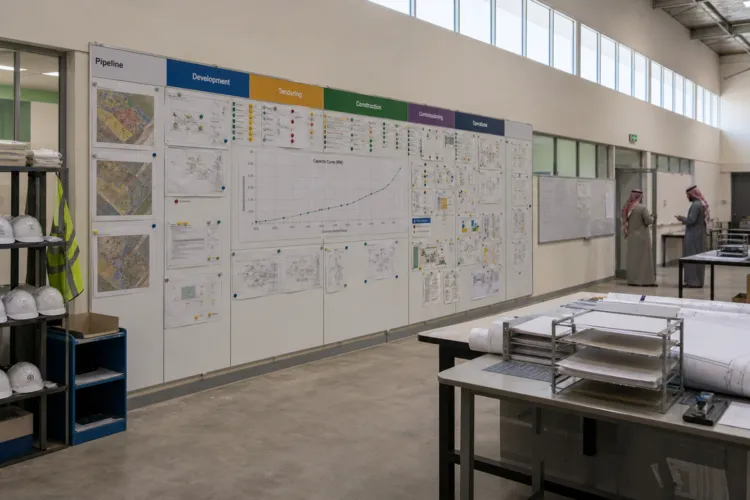
Project execution and industrial clustering are central to how this pivot is built on the ground. The industrial cities of Jubail and Yanbu serve as primary production hubs, and Jubail Industrial City alone hosts over 150 petrochemical and chemical plants connected by an integrated pipeline and utilities network managed by the Royal Commission for Jubail and Yanbu. New builds and partnerships add momentum. A Saudi market outlook article describes the USD 11 billion Amiral Petrochemical Complex as a joint venture between Saudi Aramco and TotalEnergies in Jubail, with commercial operation expected to begin in 2027. It also notes that Saudi producer Tasnee received approval for feedstock allocation for a new Jubail complex targeting a Q4 2030 start date and expected to produce 3.3 million tons per year of high-density polyethylene, linear low-density polyethylene, and MTBE, alongside a thermal cracker for ethylene and other specialized products.
What is driving Saudi Arabia’s liquids-to-chemicals pivot?
What is Aramco’s liquids-to-chemicals capacity target, and has the timeline changed?
How significant are Jubail and Yanbu to this strategy?
What major petrochemical projects are cited in Jubail?
Talk to us for your needs in:
-
Energy Efficiency Strategy & Feasibility
-
Renewable Energy Strategy & Investment Advisory
-
Digital Energy & Smart Grid Strategy
-
Market Entry Strategy
-
Sustainability & Impact Strategy
-
Energy Project Governance & PMO Advisory
-
Energy Market Research
-
Energy Stakeholder & Customer Research
-
Energy Market Intelligence
-
Energy Feasibility & Investment Assessment
-
Energy Sector Benchmarking & Performance Strategy