Saudi Arabia’s first homegrown EV brand has moved from concept to showroom moment as Ceer unveiled the Exobot sedan and SUV. Analysts cited by Arab News say the market is entering a new phase, but turning curiosity into sales will depend on charging, price, and trust. One driver’s concern captures the core issue for daily usability and road trips: if a drive to Makkah requires stopping halfway for about 30 minutes of charging, the journey feels tiring, and limited station availability can suppress demand for Ceer and EVs more broadly. Against that consumer reality, the Ceer EV launch Saudi Arabia watchers are focused on is also a test of how quickly infrastructure can catch up.
Demand growth signals are emerging, yet they run alongside clear constraints. Newzchain reported that in the same year there were more than 11,000 EV sales in Saudi Arabia, more than 10 times the figure in 2023. Even with that jump, charging remains a prominent bottleneck, and Arthur D. Little’s 2026 Global Electric Mobility Readiness Index ranked Saudi Arabia 30th out of 31 markets, describing the sector as nascent but strategically positioned for growth. That combination matters for power planning: more EVs on the road increases the need for reliable, widely distributed charging sites, and it also raises questions about when drivers charge and how fast chargers concentrate load.
What Ceer’s Factory Pipeline Means for Charging and the Grid
Ceer’s manufacturing roadmap makes the charging question more urgent because it points to a large future vehicle pipeline. Vision2030.ai says commercial production is scheduled to start in the fourth quarter of 2026 at the $1.3 billion Ceer Manufacturing Complex in King Abdullah Economic City. The facility spans 1 million square metres, with 530,000 square metres under roof, an 38-vehicle-per-hour production cadence at full capacity, and an annual production ceiling of 240,000 vehicles. Ceer is also positioned to design a portfolio of seven products over the five years from production commencement, with first-vehicle deliveries scheduled before year-end 2026. If supply ramps, charging demand must scale in parallel so that adoption is not capped by wait times and coverage gaps.
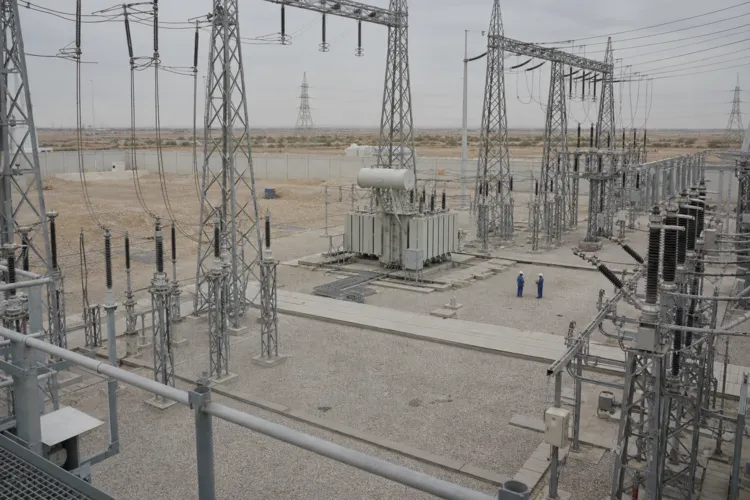
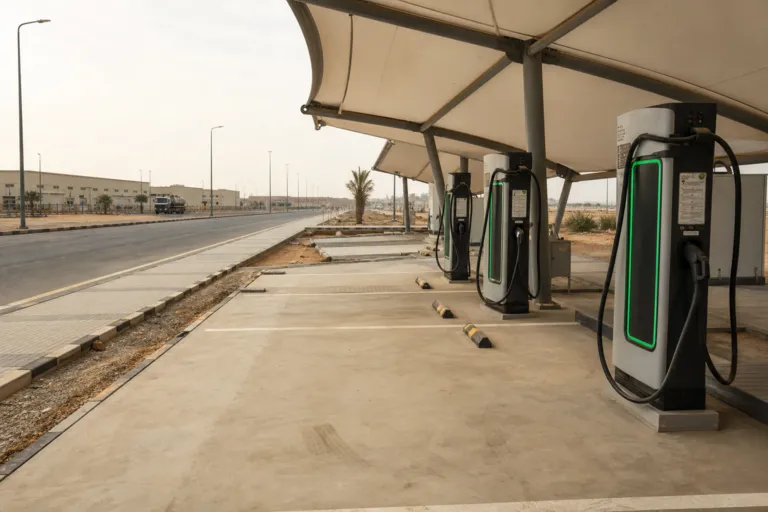
National targets underline how quickly charging networks may need to expand. Arab News reported that under the Saudi Green Initiative, the Kingdom targets 30 percent EV penetration in Riyadh by 2030 and plans to expand public charging to several thousand units, according to Arthur D. Little. Newzchain added that the PIF-backed Saudi Electricity Company said in 2023 that it planned to install more than 5,000 fast chargers by 2030. Those goals are directly tied to power demand patterns: fast chargers can pull significant electricity in short bursts, and thousands of units imply careful siting, grid connections, and operational strategies that match where drivers live, work, and travel.
Ceer is also part of a broader industrial push that could expand EV supply beyond a single brand. Arab News and Streamlinefeed both noted Saudi Arabia is targeting up to 300,000 units of annual EV production capacity by 2030, with Ceer and PIF’s majority stake in US electric carmaker Lucid central to that plan. On the localization side, Vision2030.ai said Ceer had signed 16 commercial agreements worth more than SAR 3.7 billion by February 2026, building on SAR 5.5 billion in supply chain partnerships from the previous year’s forum, and aims to source 45 percent of materials and components from Saudi suppliers by 2034. Local manufacturing can ease long-standing concerns about spare parts and servicing, but the adoption flywheel still depends on practical charging availability that makes EV ownership feel routine, not risky.
What models debuted at Ceer’s EV launch in Saudi Arabia?
How many EVs were sold in Saudi Arabia in the year cited by the sources?
What are Saudi Arabia’s charging rollout plans mentioned in the sources?
How big is Ceer’s manufacturing complex and what output is cited?
How does Saudi Arabia rank in Arthur D. Little’s 2026 EV readiness index?
Talk to us for your needs in:
-
Energy Efficiency Strategy & Feasibility
-
Renewable Energy Strategy & Investment Advisory
-
Digital Energy & Smart Grid Strategy
-
Market Entry Strategy
-
Sustainability & Impact Strategy
-
Energy Project Governance & PMO Advisory
-
Energy Market Research
-
Energy Stakeholder & Customer Research
-
Energy Market Intelligence
-
Energy Feasibility & Investment Assessment
-
Energy Sector Benchmarking & Performance Strategy