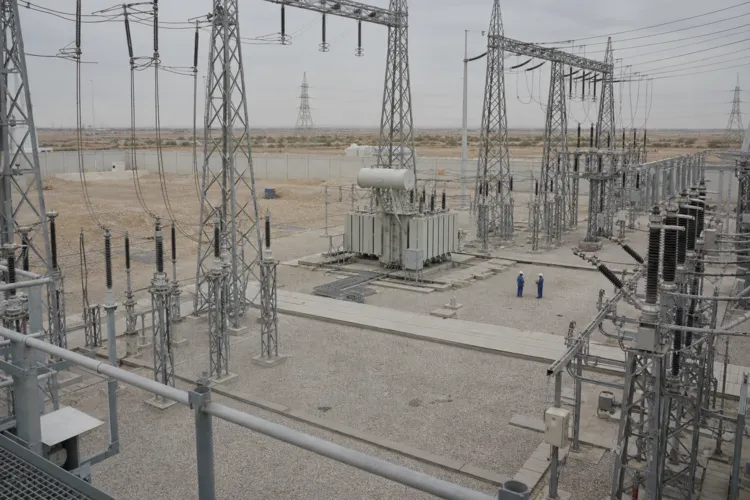

Cross-border electricity trading is becoming more important across the GCC as renewable capacity expands and system balancing gets harder to manage country by country. West Asia Watch notes that the GCC Electricity Interconnection reduces the need to build power plants only for reserve capacity, because reserve power can be shared across the regional network. The interconnection is managed by the GCC Interconnection Authority (GCCIA), headquartered in Dammam, Saudi Arabia, and established in 2001. It enables exchanges during emergencies, seasonal demand peaks, maintenance outages, and periods of surplus generation, while each country still operates its own electricity market.
Saudi Arabia’s domestic power growth is one reason its regional role is expanding. In Saudi Arabia, peak demand hit 82 GW in 2023 and is expanding 3–4% yearly, with cooling loads creating 70% of summer peaks; in Riyadh, that share exceeds 80% when temperatures top 45 °C. Installed base in the Saudi power market is expected to grow from 100.60 GW in 2025 to 147.45 GW by 2030. At the same time, renewables held 6.5 GW (6.8%) of installed capacity in 2024, are forecast to add 12.7 GW by 2025, and exceed 40 GW by 2030, lifting renewables to more than one-quarter of installed capacity within the outlook period.

Why Grid Expansion and Market Rules Matter as Trading Scales
More interconnection value depends on more than wires. West Asia Watch highlights that electricity markets across GCC countries still operate under different regulatory frameworks and pricing systems, and that expanding cross-border trade will require greater regulatory harmonization, improved market mechanisms, and continued investment in transmission infrastructure. Saudi Arabia is also investing heavily in its own grid. The U.S. Department of Commerce notes that SEC’s capex program reached USD 10.9 billion in 2023, a 51.8% increase from 2022. In 2024, SEC deployed USD 16 billion into generation, transmission, distribution, and general projects, a 43.8% increase on the previous year, with directly owned capacity at 56.4 GW (61% of total capacity) and 2% year-on-year growth.
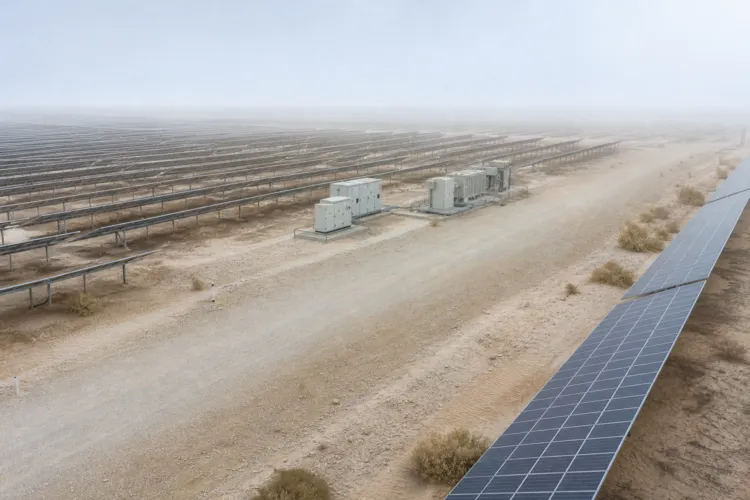
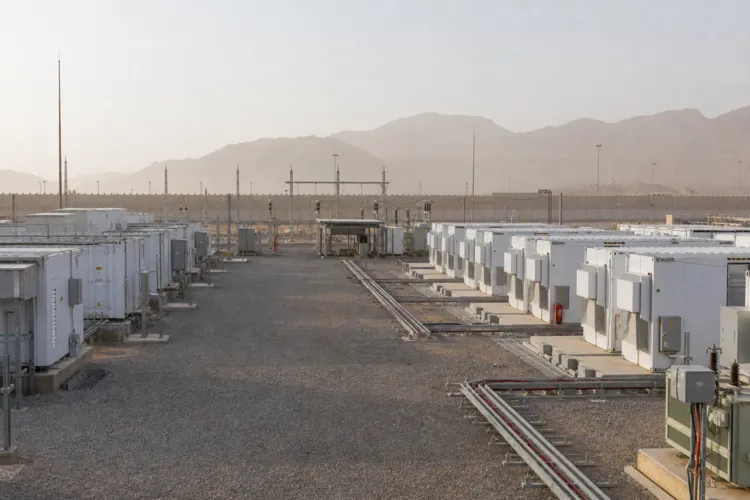
Renewables growth adds both opportunity and operational pressure that cross-border trading can help address. Saudi Arabia’s Vision 2030 renewable target is 100–130 GW by 2030, and Mordor Intelligence states this pace requires more than 20 GW of fresh capacity each year, compared with cumulative 6.55 GW installed before 2025. It also reports record solar bids of USD 0.0129 per kWh at the 2 GW Al-Sadawi plant. But integration challenges are real: curtailment exceeded 12% in Northern Borders during spring 2025 mid-day peaks, and legacy transmission was designed for centralized oil plants. Saudi Electricity Company is also set to deploy 3 GW of battery storage by 2030 to shift excess solar output into evening ramps.
Saudi Arabia’s expanding role in the gcc electricity trading market is also shaped by how fast its broader power build-out is moving. Mordor Intelligence estimates the Saudi Arabia power EPC market to grow from USD 13.49 billion in 2025 to USD 14.20 billion in 2026 and reach USD 17.84 billion by 2031, at a 4.67% CAGR over 2026–2031. In 2025, power generation EPC accounted for 51.96% of that market, and plants above 500 MW captured 61.5% of power generation EPC share. As Saudi Arabia expands generation, strengthens internal transmission, and sits at the operational center of the GCCIA in Dammam, it is positioned to help turn interconnection from an emergency backstop into more routine, efficiency-driven cross-border exchanges.
What does the GCC Electricity Interconnection enable today?
Why is Saudi Arabia central to regional cross-border electricity trading?
How fast is Saudi Arabia’s installed power base expected to grow?
What renewable milestones are highlighted for Saudi Arabia through 2030?
What is changing in the GCC electricity trading market to scale cross-border trade?
Talk to us for your needs in:
-
Energy Efficiency Strategy & Feasibility
-
Renewable Energy Strategy & Investment Advisory
-
Digital Energy & Smart Grid Strategy
-
Market Entry Strategy
-
Sustainability & Impact Strategy
-
Energy Project Governance & PMO Advisory
-
Energy Market Research
-
Energy Stakeholder & Customer Research
-
Energy Market Intelligence
-
Energy Feasibility & Investment Assessment
-
Energy Sector Benchmarking & Performance Strategy