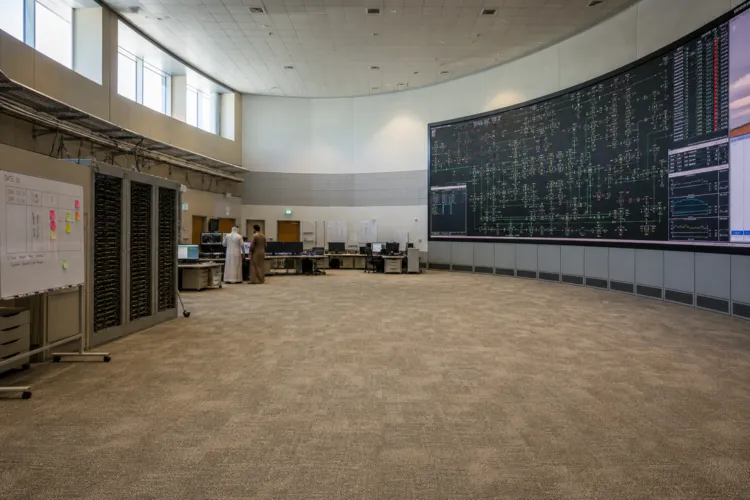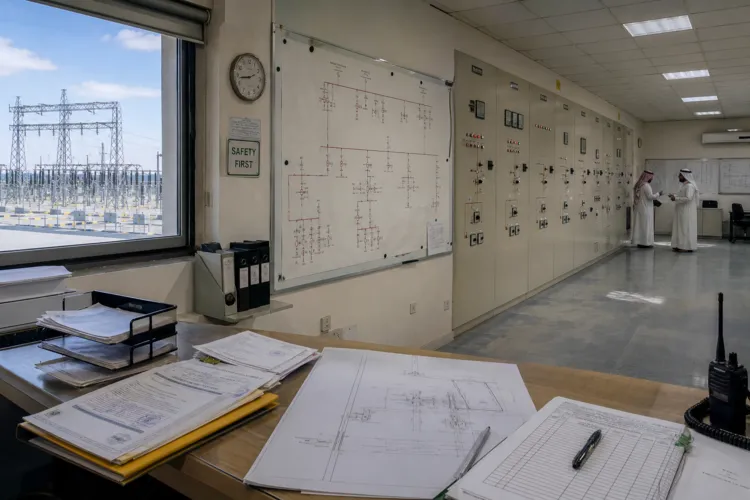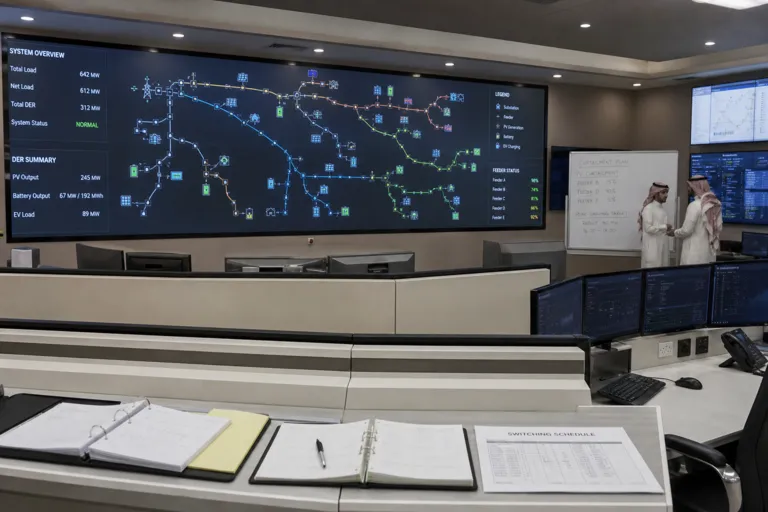
DERMS platforms are built to aggregate, monitor, forecast, and control distributed energy resources such as rooftop solar PV, battery energy storage systems, EV chargers, and demand response assets. In practical terms, this means a distribution operator can coordinate many small assets as one flexible portfolio, improving reliability and operational efficiency while managing volatility from variable generation and fast-changing loads. For DERMS distributed energy Saudi Arabia strategies, that orchestration matters because PV and storage are expanding across both utility and customer sites, and EV charging introduces new peaks that need real-time optimization.
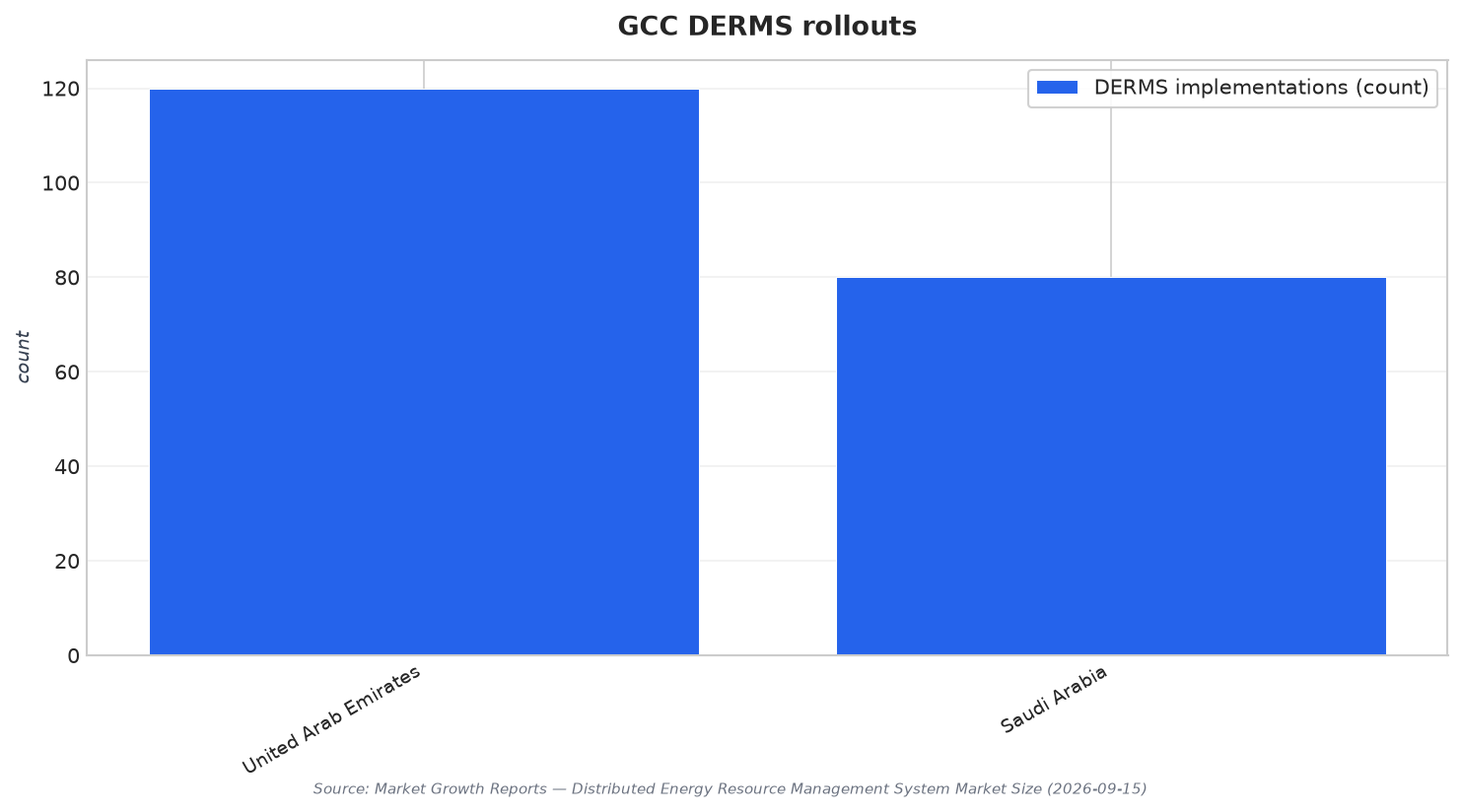
Regional rollout data also points to real activity on the ground. One market report states that Saudi Arabia followed the United Arab Emirates in DERMS deployments, with 80 implementations, described as 25% of a regional total, and with those systems integrating 950 MWh of thermal energy storage in industrial zones. The same source describes the UAE as leading with 120 DERMS rollouts (38% of the regional total) and managing 1,500 MW of solar PV fleet under a centralized control platform, which serves as a useful comparison point rather than a local Saudi figure. Together, these figures help frame why DERMS capabilities like automated dispatch and centralized visibility are becoming more relevant for distribution operators and large industrial networks.
What DERMS Must Manage on Saudi Distribution Feeders
In Saudi Arabia, storage and renewable integration themes show up in adjacent management layers, especially battery energy management systems (BEMS). An IMARC-cited estimate puts the Saudi Arabia battery energy management systems market at USD 92.0 million in 2025, projected to reach USD 344.2 million by 2034, with a CAGR of 15.79% during 2026–2034. The same source links Vision 2030 goals to a commitment of 130 GW of renewable capacity, including 58.7 GW from solar and 40 GW from wind, and notes Saudi Electricity Company contracts for 15.1 GWh of grid-scale battery storage, within a nationwide deployment target of 48 GWh by 2030. These are the types of assets that, once connected closer to load, raise the need for coordinated distribution-level control rather than isolated site optimization.
Solar growth adds another layer of operational complexity. A Saudi Arabia solar market analysis notes that off-grid systems, while starting from a small base, are projected to register a 36.1% CAGR to 2031, driven by giga-projects such as NEOM and large mines outside main grid corridors. It also states that NEOM’s northwest location will stack more than 4 GW of PV for hydrogen export. Even when some systems are off-grid or microgrid-based, DERMS-style functions still matter for operators coordinating hybrid portfolios that combine PV with batteries and, in some cases, small wind turbines. As these systems proliferate, distribution grids that serve industrial and commercial clusters can benefit from DERMS features that simplify aggregation and enable grid-aware optimization.
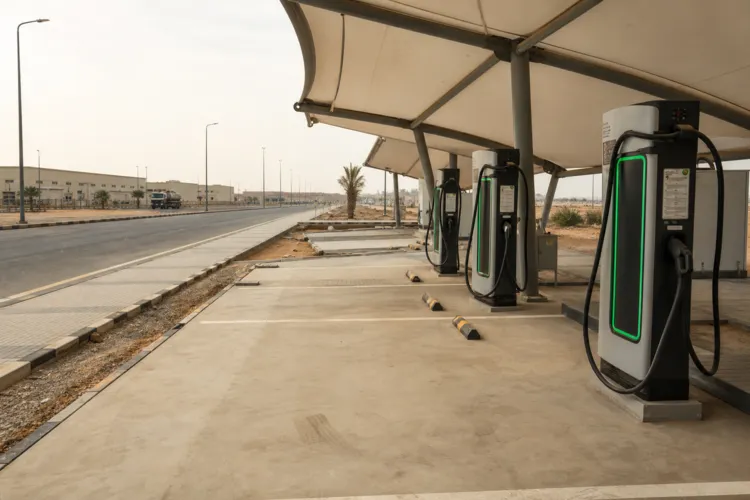
EV charging is increasingly part of the DERMS scope because unmanaged charging can create sharp, localized demand spikes. One market source describes the EV segment as the fastest-growing area within the DERMS market, projected to grow at approximately 23% during 2024–2029, driven by the need to manage grid impacts from EV charging loads and expanding charging infrastructure. Globally, DERMS adoption is scaling in parallel: one report values the global DERMS market at USD 791.92 million in 2025 and projects USD 2,809.57 million by 2035, with a CAGR of 13.5% during 2026–2035, while another estimates USD 0.98 billion in 2024 with a 17.94% CAGR during 2025–2032. For Saudi distribution planners, these global trends reinforce a practical takeaway: DERMS is increasingly treated as core grid software, but cybersecurity and data security risks also rise as more assets connect through digital networks.
What does DERMS do for distributed energy on the grid in Saudi Arabia?
How many DERMS implementations have been reported in Saudi Arabia, and what did they integrate?
Which energy assets are most likely to drive DERMS needs on Saudi distribution networks?
Why is EV charging a growing DERMS use case?
Talk to us for your needs in:
-
Energy Efficiency Strategy & Feasibility
-
Renewable Energy Strategy & Investment Advisory
-
Digital Energy & Smart Grid Strategy
-
Market Entry Strategy
-
Sustainability & Impact Strategy
-
Energy Project Governance & PMO Advisory
-
Energy Market Research
-
Energy Stakeholder & Customer Research
-
Energy Market Intelligence
-
Energy Feasibility & Investment Assessment
-
Energy Sector Benchmarking & Performance Strategy