For operators exploring a digital twin power plant strategy in Saudi Arabia, the headline story is momentum and scale. According to IMARC Group research cited by Vocal Media Futurism, the Saudi Arabia digital twin market size reached USD 349.7 million in 2025 and is projected to reach USD 21,394.9 million by 2034, with a CAGR of 57.95% during 2026–2034. The same source links adoption to Industry 4.0, real-time simulation, and predictive analytics. It also highlights Vision 2030-era programs where digital replicas are used to plan, monitor, and optimize infrastructure in real time.
Saudi projects discussed in the sources show how “at scale” can look in practice, even when they are not power-plant specific. Vocal Media Futurism reports that NEOM’s AI urban engine fuses satellite imagery, weather models, and LIDAR scans into real-time digital twins, letting planners simulate thousands of city layout permutations daily and reducing simulation runtimes from hours to seconds. It also states that Naver completed platforms covering 6,800 square kilometers and over 920,000 buildings across Mecca, Medina, and Jeddah. For energy leaders, these examples set expectations for data volumes, model orchestration, and cross-team collaboration needed when digital twins expand beyond a single site.
What Predictive Operations at Scale Require in Power Plants
Power-plant digital twins have their own operational realities, especially cost and staffing. Energy Solutions Intelligence reports annual operational costs ranging from USD 280,000 to 850,000, including software maintenance (15%–22% of license cost), cloud computing (USD 40,000–180,000), external data subscriptions such as weather and fuel markets (USD 25,000–80,000), and personnel. The same source says effective operation requires 2–5 FTEs spanning data scientists, reliability engineers, and IT/OT specialists. It also notes that smaller operators running 50–200 MW plants can face per-MW costs of USD 15,000–40,000 versus USD 4,000–10,000 per MW for large facilities that benefit from economies of scale.
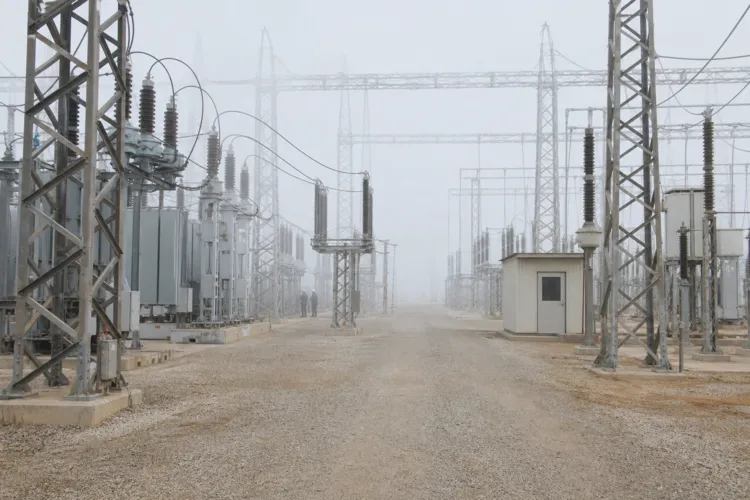
Deployment architecture matters when plants need secure, low-latency control and also want cloud-scale analytics. GM Insights states that hybrid deployment captured 19% of market revenue in 2025 and grows at a CAGR of 13.9%. It describes hybrid as a compromise: on-premises environments for real-time control, paired with cloud layers for historical analytics, predictive model training, and scenario simulation. It also cites a validated deployment at the Badra Oil Field substation showing a 28% reduction in unplanned outages and a 22% reduction in maintenance costs over a multi-year evaluation horizon after digital twin integration. GM Insights further references validated results including fault prediction accuracy at 99% and operational cost reductions of 15% in digital twin deployments, positioning predictive maintenance as a practical, measurable driver.
Global market signals reinforce the shift from experimentation to scaled rollouts. DataIntelo reports the global digital twin for power systems market was valued at $6.8 billion in 2025 and is projected to reach $28.4 billion by 2034, a CAGR of 17.2% from 2026–2034, and it notes more than 340 utility-scale contracts signed globally in 2025 alone. In parallel, Grand View Research highlights that large enterprises dominated revenue share in 2025, driven by operational efficiency, predictive maintenance, and decision-making needs across complex operations. For Saudi power plants, the sources together point to a pragmatic path: target high-value predictive use cases, budget for the ongoing operating model, and design for hybrid data flows that can scale as digital twin programs expand.
What does the Saudi Arabia digital twin market forecast suggest for power operators?
What annual operating costs should a power-plant digital twin program plan for?
Which deployment model is often used for secure control plus cloud analytics?
What results have been reported from a validated digital twin deployment in substations?
How can a digital twin power plant program in Saudi Arabia scale beyond a single site?
Talk to us for your needs in:
-
Energy Efficiency Strategy & Feasibility
-
Renewable Energy Strategy & Investment Advisory
-
Digital Energy & Smart Grid Strategy
-
Market Entry Strategy
-
Sustainability & Impact Strategy
-
Energy Project Governance & PMO Advisory
-
Energy Market Research
-
Energy Stakeholder & Customer Research
-
Energy Market Intelligence
-
Energy Feasibility & Investment Assessment
-
Energy Sector Benchmarking & Performance Strategy