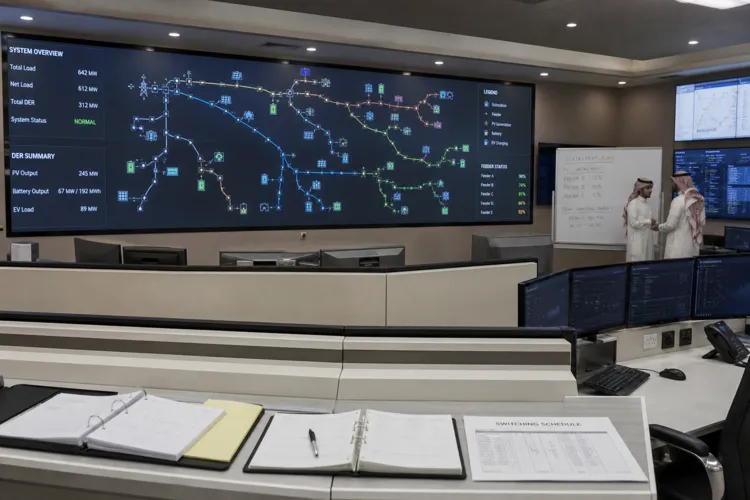
Localizing battery storage manufacturing in Saudi Arabia is being pulled forward by deployment demand, not by legacy industrial depth. IndexBox links the battery capacity outlook to the Kingdom’s renewable target of 58.7 GW by 2030 and an ambition to deploy grid-scale storage to firm solar and wind generation. Between 2026 and 2035, cumulative installed battery capacity is projected to grow at a compound annual rate in the range of 25–35%. Yet, the same outlook highlights a constraint: the market remains heavily import-dependent for lithium-ion cells, power conversion systems, and balance-of-plant components, while local value addition is concentrated in system integration, assembly, and project engineering rather than cell or module manufacturing.
In 2026, IndexBox estimates utility-scale and renewable-integration uses account for about 65–75% of total battery capacity demand in Saudi Arabia. Procurement is also shifting toward longer durations of 4–8 hours, and new tenders are pushing average system sizes above 100 MWh per project. At the same time, utility-scale system-level pricing is described as declining by an estimated 15–25% between 2023 and 2026, amid global cell oversupply and manufacturing scale effects. This mix—bigger projects, longer duration, and price pressure—raises the stakes for localization, because landed-cost volatility and long lead times can decide whether schedules and guarantees hold.
Where Localization Is Happening Fastest—and Where It Isn’t
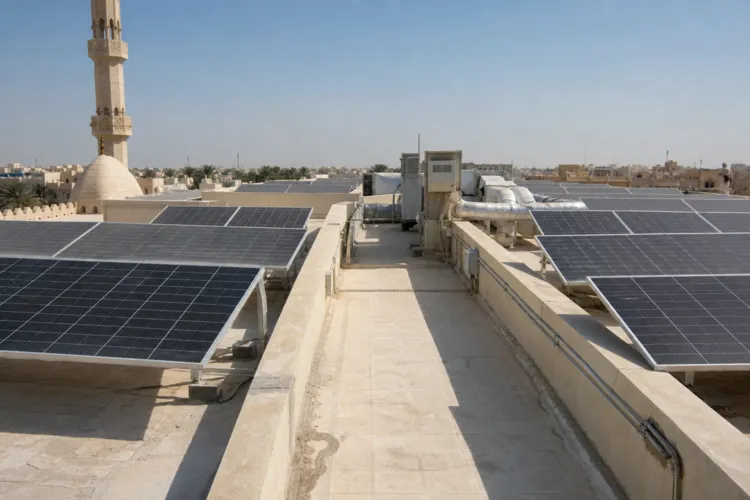
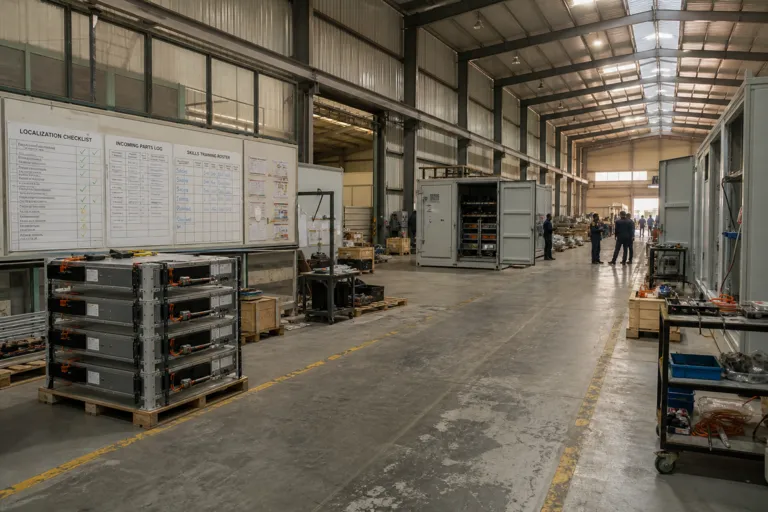
Behind-the-meter demand shows why local assembly and integration matter, even when cells are imported. IndexBox projects the behind-the-meter stationary battery storage market in Saudi Arabia to grow from an estimated USD 180–250 million in 2026 to over USD 1.2–1.8 billion by 2035. Commercial and industrial applications are expected to represent more than 55% of deployed capacity through the forecast period, and solar-plus-storage pairing is already dominant, with over 60% of new behind-the-meter systems installed alongside PV. Even so, over 70% of battery cells and power conversion equipment are currently imported, mainly from China, South Korea, and the United States, while local assembly and system integration are expanding through joint ventures and Vision 2030 industrial programs.
Cost structure reinforces the logic for localization steps that reduce friction rather than reinvent cell supply overnight. For “Bean Cell Batteries,” IndexBox notes lithium carbonate, cobalt sulfate, and nickel sulfate together account for 50–60% of cell production costs and have seen annual volatility of 15–25% in global markets since 2022. Import logistics from East Asia add 8–12% to total costs, and local regulatory costs—SASO certification, product registration, and conformity assessment—add another 5–8% for imported units. In micro battery systems, import duties and logistics add 5–10% to hardware costs, and IndexBox states there is no major cell or module manufacturing in the Kingdom, meaning players source hardware from global supply chains.
The operational bottlenecks are as important as the bill of materials. IndexBox describes lead times of 6–12 months for key components for non-committed orders, which creates scheduling risk for developers. It also notes that grid interconnection, safety certification, and performance guarantee frameworks are still maturing, with inconsistent technical requirements across offtakers and grid operators. Skills are another constraint: local labor and engineering expertise in system design, commissioning, and maintenance are described as scarce, increasing reliance on expatriate teams and international service providers. In that context, “battery storage manufacturing saudi arabia” becomes less about immediate cell localization and more about building predictable qualification, integration, and delivery capability that can scale with demand.
What is driving battery deployment demand in Saudi Arabia?
How fast is Saudi Arabia’s battery capacity expected to grow through 2035?
Where is localization strongest today in Saudi energy storage supply chains?
What are the biggest barriers to localizing battery storage manufacturing in Saudi Arabia?
How large could behind-the-meter storage become in Saudi Arabia by 2035?
Talk to us for your needs in:
-
Energy Efficiency Strategy & Feasibility
-
Renewable Energy Strategy & Investment Advisory
-
Digital Energy & Smart Grid Strategy
-
Market Entry Strategy
-
Sustainability & Impact Strategy
-
Energy Project Governance & PMO Advisory
-
Energy Market Research
-
Energy Stakeholder & Customer Research
-
Energy Market Intelligence
-
Energy Feasibility & Investment Assessment
-
Energy Sector Benchmarking & Performance Strategy