Saudi Arabia is scaling temperature-controlled logistics as a practical backbone for food security and modern healthcare distribution. Multiple market trackers describe strong growth: IMARC Group research cited in a Saudi-focused overview values the Saudi Arabia cold chain market at USD 3.5 billion in 2025 and projects USD 15.9 billion by 2034, at a CAGR of 18.31% from 2026–2034. A separate cold chain logistics view from Mordor Intelligence estimates the market at USD 2.17 billion in 2025, USD 2.26 billion in 2026, and USD 2.76 billion by 2031, at 4.12% CAGR (2026–2031). Across these forecasts, the direction is consistent: more cold storage, more controlled transport, and more pressure to keep energy use under control as networks expand.
Vision 2030 frames the infrastructure pathway that makes efficient cold chains easier to deploy at scale. Sources cite USD 133 billion earmarked for new roads, ports, airports, and 59 logistics centers spanning 100 million square meters, with 21 already under construction and integrated with the Fasah customs portal to reduce import dwell times. The same logistics analysis references a 5,500 km rail network and says multimodal corridors can lower long-haul costs by 15% versus road-only freight, improving reliability for temperature-sensitive cargo. For food security, government targets such as achieving 80% poultry self-sufficiency by 2025 are linked to temperature-controlled investment that can handle 950,000 MT of chicken production while also supporting imported protein flows.
What Energy Efficiency Means for Saudi Cold Chains
Energy is not a side issue in cold logistics; it is central to operating economics and sustainability positioning. One industry brief notes that energy can represent 25–35% of operating expenses, while also highlighting that Grade-A cold-storage costs can exceed USD 50 million, which raises the stakes for efficiency upgrades. In pilots referenced by both a market report summary and a cold chain logistics analysis, AI/ML-enabled energy optimization is associated with a 20% reduction in refrigeration energy usage. Another Saudi market overview adds that AI-powered IoT sensors provide real-time monitoring and can cut product spoilage by up to 40% across pharmaceutical and food distribution networks in the Kingdom, aligning energy-aware operations with product integrity and compliance needs.
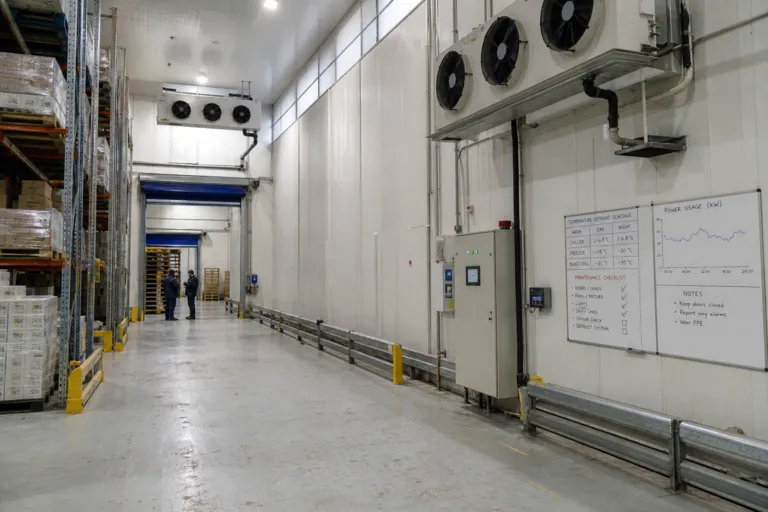
Warehousing is a major focal point because refrigeration loads sit there continuously. IMARC Group reports the Saudi Arabia cold chain warehousing market size at USD 2.5 billion in 2025 and notes that sustainability initiatives, including energy-efficient refrigeration systems and low global warming potential refrigerants, increasingly influence competitive positioning. It also reports that private warehouses held a 60% share of the total Saudi Arabia cold chain warehousing market in 2025. Service mix data underscores the same emphasis: Mordor Intelligence reports refrigerated storage led with 46.35% of the Saudi Arabia cold chain logistics market share in 2025, and that frozen applications captured a 30.55% share, both of which intensify the importance of efficient cooling designs.
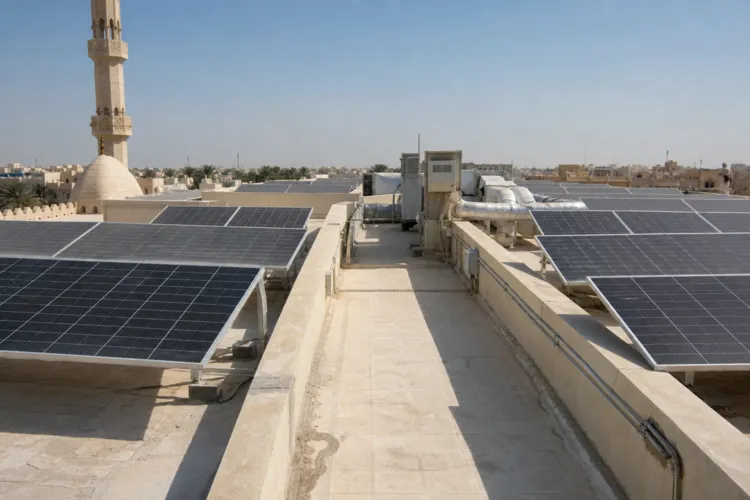
Technology choices are increasingly connected to measurable performance outcomes. A Saudi integrated cold chain logistics market overview describes automation integration as the most significant trend and links it to a 35% improvement in operational efficiency, citing robotics for inventory management, automated guided vehicles, and AI-powered temperature optimization. Another market view highlights opportunities from advanced refrigeration technologies, including solar-powered systems, stating they can reduce energy consumption by up to 35%, according to industry reports. Put together, cold chain energy efficiency in Saudi Arabia is becoming a combined strategy: infrastructure buildout to reduce delays, automation to improve throughput, and smarter refrigeration to manage costs while meeting stricter Saudi Food and Drug Authority requirements for biologics, vaccines, and other temperature-sensitive products.
How is Saudi Arabia improving cold chain energy efficiency?
Why does Vision 2030 matter for efficient cold chains?
What do sources say about energy costs in Saudi cold storage operations?
Which parts of the cold chain dominate the market mix in Saudi Arabia?
How can AI and monitoring reduce food and pharma losses in Saudi cold chains?
Talk to us for your needs in:
-
Energy Efficiency Strategy & Feasibility
-
Renewable Energy Strategy & Investment Advisory
-
Digital Energy & Smart Grid Strategy
-
Market Entry Strategy
-
Sustainability & Impact Strategy
-
Energy Project Governance & PMO Advisory
-
Energy Market Research
-
Energy Stakeholder & Customer Research
-
Energy Market Intelligence
-
Energy Feasibility & Investment Assessment
-
Energy Sector Benchmarking & Performance Strategy