Saudi Arabia’s energy transition is increasingly focused on displacing liquid fuels in the power sector. Multiple policy and investment tracks point in the same direction: use more natural gas and renewables so less crude oil and other liquids are burned for electricity, and more oil can be available for export. Rystad Energy puts domestic electricity demand at around 171 TWh, a scale that historically drove large volumes of oil burn. At the same time, Mordor Intelligence notes that cooling loads create 70% of summer peaks, which keeps the system under pressure even as procurement and grid upgrades accelerate.
New gas supply is central to the shift. Rystad Energy says the Jafurah shale gas field is set to start production in 2025 and could help displace up to 350,000 barrels per day of crude burn by 2030, rising from an expected 35,000 barrels per day in 2025. The same analysis links the move to Vision 2030, including an aim to boost gas production by 60% from 2021 levels, and describes Jafurah as planned across three phases with more than USD 100 billion in investment over the next decade. The project’s location near Aramco’s Uthmaniyah gas-processing plant is also highlighted as a logistical advantage for processing output and separating NGL, ethane, and condensate.
What’s Driving the Switch: Policy, Prices, and a Faster Renewables Build
Policy direction reinforces the economics of gas substitution. AGSI reports that oil used in power generation has averaged more than 1 million barrels per day in recent years, though it has been declining since 2022 as natural gas displaces oil. It also states gas accounts for around 50% of power generation in Saudi Arabia and notes Aramco plans to increase gas production capacity to around 15 billion cubic feet per day by 2030 as part of the Liquids Displacement Program. Meanwhile, Grand View Research estimates the Saudi Arabia natural gas fired electricity generation market generated USD 2,485.7 million in revenue in 2019 and is expected to reach USD 4,620.0 million by 2027, with a CAGR of 8.1% from 2020 to 2027; combined-cycle held a 76.31% revenue share in 2024.
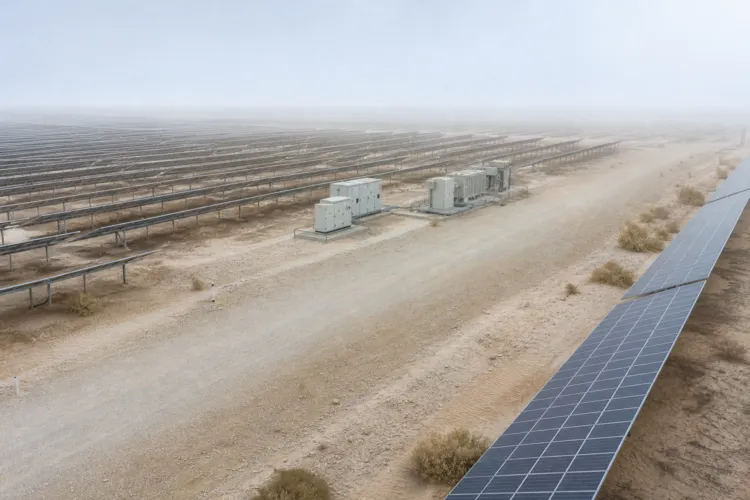
Renewables growth is moving in parallel and directly affects the role of gas plants. Mordor Intelligence says the National Renewable Energy Program has awarded 21 projects totaling 19 GW, with seven plants (4.1 GW) operating by late 2024. It also reports grid-connected renewables reached 6.5 GW in 2024 and are scheduled to rise to 12.7 GW in 2025, and that renewables already displace 50,000 barrels per day of crude burn. Separately, a ScienceDirect analysis notes installed renewable electricity capacity in Saudi Arabia is envisaged to be over 100 GW by 2030. Taken together, this creates a system where gas-fired generation can increasingly serve as efficient thermal capacity alongside a larger renewable fleet rather than as a primary destination for crude.
Market reforms and infrastructure timelines also shape how quickly gas-fired power generation in Saudi Arabia can replace liquids. Mordor Intelligence describes 2018 electricity rate restructuring that moved residential prices to a 5–32 halala/kWh tier and industrial tariffs to 18 halala/kWh, linking quarterly adjustments to Brent and Henry Hub benchmarks. It also notes licensing improvements that can clear projects in six months for plants below 500 MW, described as a quarter of the previous timeline. Grid readiness remains part of the story, with a USD 20 billion modernization plan mentioned, anchored in HVDC links and smart meters to integrate more renewables. These changes collectively support the operational and commercial conditions needed to displace liquid fuels at scale.
What is the goal of Saudi Arabia’s liquids displacement efforts in the power sector?
How much crude burn could Jafurah help displace, and by when?
What do the sources say about renewables capacity growth in Saudi Arabia?
How do price reforms connect to the shift toward gas and renewables?
What does the outlook suggest for gas fired power generation Saudi Arabia market growth?
Talk to us for your needs in:
-
Energy Efficiency Strategy & Feasibility
-
Renewable Energy Strategy & Investment Advisory
-
Digital Energy & Smart Grid Strategy
-
Market Entry Strategy
-
Sustainability & Impact Strategy
-
Energy Project Governance & PMO Advisory
-
Energy Market Research
-
Energy Stakeholder & Customer Research
-
Energy Market Intelligence
-
Energy Feasibility & Investment Assessment
-
Energy Sector Benchmarking & Performance Strategy