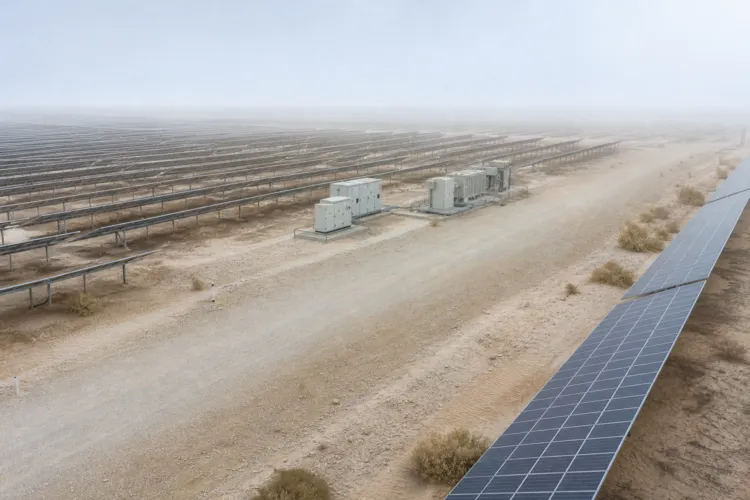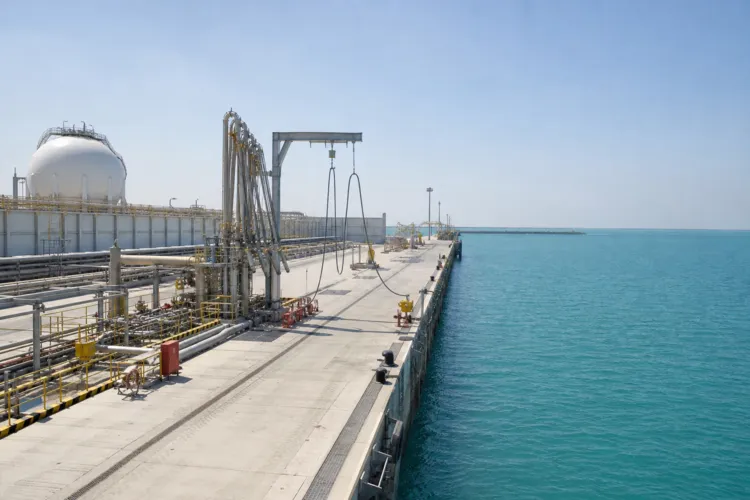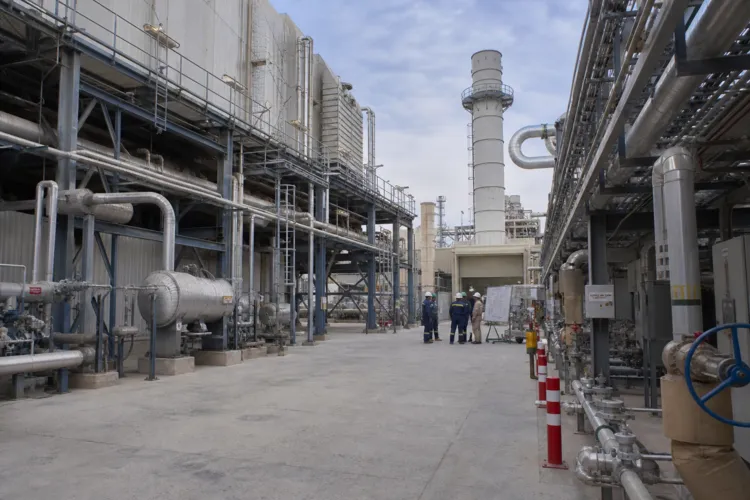
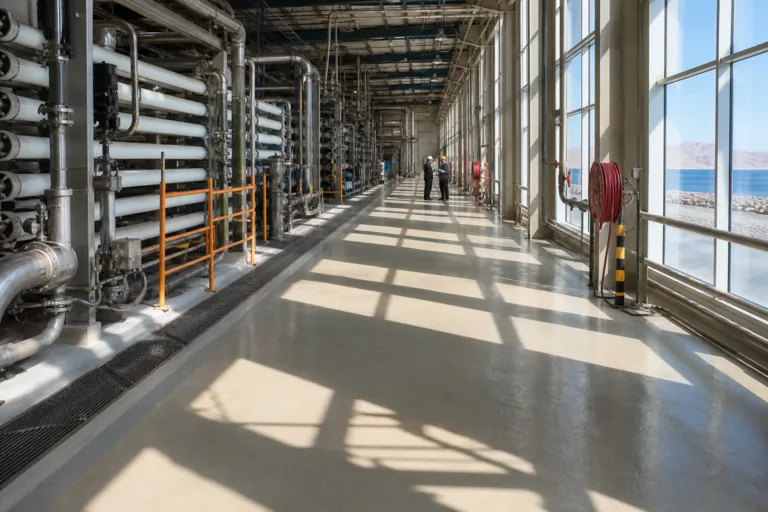
Saudi Arabia’s desalination buildout is increasingly tied to renewables. One market report calls out an emerging national trend: integrating renewable energy, particularly solar power, into desalination operations to reduce costs and carbon emissions. In the wider region, Gulf Cooperation Council (GCC) nations represent over 45% of global desalination capacity, with Saudi Arabia contributing around 20%. Saudi plants also set scale benchmarks. Large facilities such as Ras Al Khair and Rabigh 3 are described as producing more than 1 million cubic meters per day, serving refineries, industrial parks, and power stations that need reliable water for cooling and processing.
Policy and investment signals reinforce the shift. Ken Research values the Saudi Arabia Water Desalination Tech & Services Market at USD 6 billion and links growth to expanding demand and technology upgrades that improve efficiency and reduce operational costs. The same source says the National Water Strategy aims to increase desalinated water to 50% of national supply by 2030, alongside targets tied to capacity expansion, water reuse, and efficiency standards. Separately, Research Nester reports that Saudi Arabia plans to invest over USD 75 billion in related projects over the next ten years, noting the country’s large-scale desalination footprint and the expected boost from abundant sunlight.
Al Khafji Shows What Solar-Linked RO Can Deliver
For a concrete example of solar powered desalination in Saudi Arabia, Al Khafji is repeatedly cited as a flagship. GM Insights describes the Al Khafji Solar Water Desalination Plant as capable of generating 60,000 cubic meters of fresh water each day. Fanack Water adds community and climate context, stating the Al Khafji solar desalination plant delivers water to 150,000 people and cuts emissions by 91%. The same source says more than 7 million cubic meters of fresh water have been delivered since launch. Together, these details position Al Khafji as proof that solar-integrated seawater reverse osmosis can scale beyond pilots while also lowering emissions.
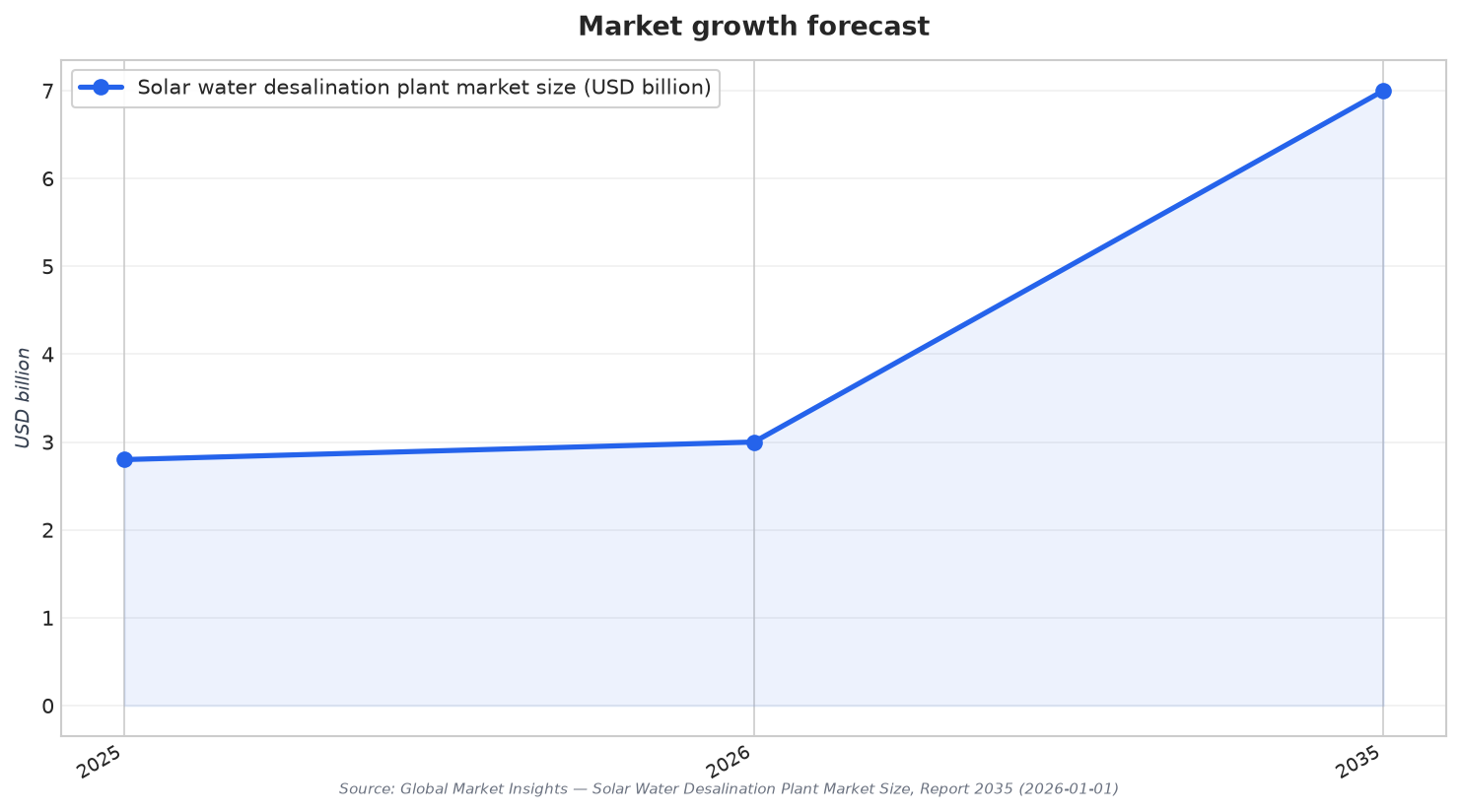
Costs and environmental tradeoffs are central to the case for solar integration. GM Insights notes that actual costs of solar desalination plants can range from USD 900 to USD 4,800 per cubic meter, depending on technology, plant size, and regional variables. Research Nester outlines why lowering fossil energy dependence matters, pointing to desalination’s brine byproduct and the high energy consumption that can drive CO2 emissions. In this framing, the push to pair desalination with solar is not only about expanding supply, but also about reducing the emissions and environmental pressures associated with energy-intensive water production.
Researchers are also evaluating how decentralized systems could work in practice for coastal communities. A 2025 ScienceDirect study analyzes standalone solar, wind, and hybrid solar-wind energy systems with battery or pumped hydro storage to power reverse osmosis (RO) desalination plants designed to meet the freshwater requirements of 1,000 homes in Yanbu, Jeddah, and Jazan. It specifies daily freshwater demands of 0.311 m³/day for Yanbu, 0.246 m³/day for Jeddah, and 0.182 m³/day for Jazan. By comparing six configurations and modeling pumped hydro storage in HOMER, the study focuses on cost-effectiveness, technical sizing, and water-cost outcomes for off-grid RO.
What is a real example of solar-powered desalination in Saudi Arabia?
How much water can the Al Khafji solar desalination plant produce each day?
What does Saudi Arabia’s National Water Strategy target for desalinated water by 2030?
What range of costs is reported for solar desalination plants?
Which Saudi coastal cities were modeled for off-grid renewable-powered RO desalination?
Talk to us for your needs in:
-
Energy Efficiency Strategy & Feasibility
-
Renewable Energy Strategy & Investment Advisory
-
Digital Energy & Smart Grid Strategy
-
Market Entry Strategy
-
Sustainability & Impact Strategy
-
Energy Project Governance & PMO Advisory
-
Energy Market Research
-
Energy Stakeholder & Customer Research
-
Energy Market Intelligence
-
Energy Feasibility & Investment Assessment
-
Energy Sector Benchmarking & Performance Strategy