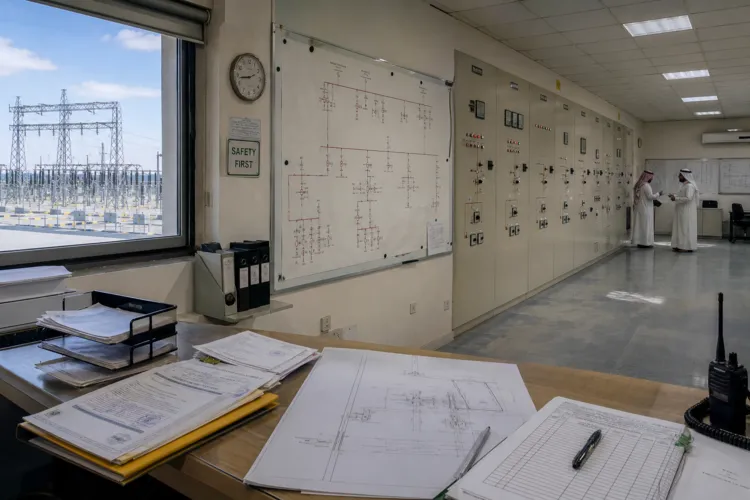
Saudi Arabia’s energy-sector modernization is creating a strong runway for grid automation and SCADA adoption. Under Vision 2030, the country is prioritizing smart grid modernization and broader digital transformation, with a focus on improving grid efficiency and reliability while supporting renewable energy integration. This momentum shows up in multiple, adjacent market forecasts. For example, Saudi Arabia’s smart grid market is projected to grow from USD 1,617.7 million in 2024 to USD 3,199.1 million by 2029, reflecting a 14.6% CAGR. That trajectory matters because smart grid programs tend to pull through investments in monitoring, automation, and control across generation, transmission, and distribution.
At the distribution layer, Saudi Arabia’s distribution automation market is valued at USD 288.8 million in 2025 and projected to reach USD 801.4 million by 2030, representing a 22.6% CAGR. The same source notes this growth significantly exceeds the global average of 14.5%, framing Saudi Arabia as a faster-moving market within this category. The narrative behind the numbers is consistent: government mandates for grid modernization and renewable energy integration, plus investment activity across urban and industrial sectors. The report also links momentum to IoT integration, real-time monitoring systems, and advanced control technologies designed to enhance efficiency and reliability.
Where SCADA Fits in Saudi Arabia’s Automation Roadmap
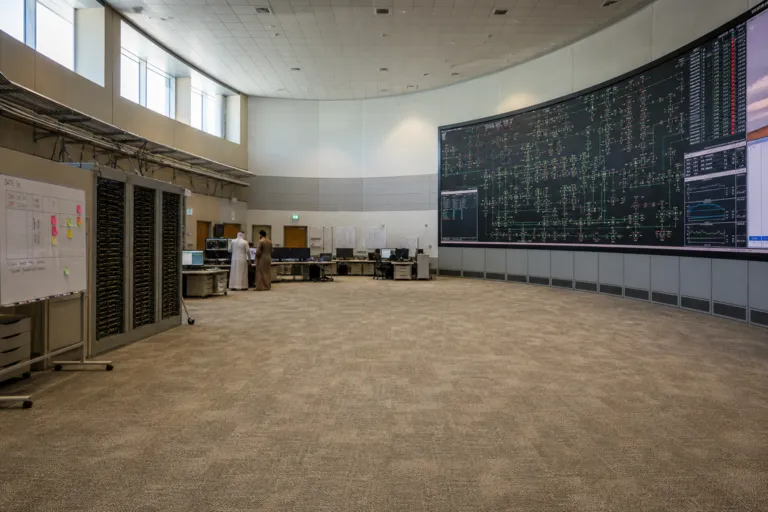
SCADA is a core operational layer in this modernization push, supporting real-time visibility and control across power assets. Saudi Arabia’s power SCADA market was valued at USD 80.1 million in 2023 and is projected to reach USD 109.7 million by 2028, a 6.5% CAGR. The same market outlook highlights that Saudi utilities are prioritizing SCADA implementations to reduce transmission losses, optimize load management, and enhance operational efficiency across generation, transmission, and distribution networks. It also points to increased adoption of cloud-based SCADA platforms, AI-powered analytics, cybersecurity-integrated systems, and IoT-enabled real-time monitoring solutions—capabilities that align directly with the operational demands of more automated grids.
Recent project activity adds practical context for grid automation in Saudi Arabia. In April 2025, SEC launched Phase 2 of its battery energy storage system (BESS) development, investing over SAR 6.73 billion. That phase includes 2.5 GW of capacity across five sites, and the same source states it supports Saudi Arabia’s grid automation efforts by boosting efficiency and enabling the integration of 50% renewable energy by 2030. Other cited initiatives include major projects such as the Rumah 2 and Nairyah 2 power plants and the expansion of GEMTEC in Dammam, described as contributing to enhanced grid efficiency and supporting the Kingdom’s Vision 2030 goals for sustainable energy.
Industrial control investment trends reinforce the broader automation direction around grid operations. Saudi Arabia’s distributed control system (DCS) market is valued at USD 1,179.8 million in 2025 and is expected to reach USD 1,543.4 million by 2030 at a 5.5% CAGR, driven by energy-sector modernization and Vision 2030 initiatives. Separately, the Saudi Arabia industrial automation market is expected to reach USD 3.72 billion by 2032, with a projected CAGR of 10.40% from 2025 to 2032. Together, these signals support a single theme: grid automation, SCADA, and Saudi Arabia’s modernization programs are evolving in parallel, with real-time monitoring and advanced control as common requirements across power and industrial infrastructure.
How large is Saudi Arabia’s smart grid market expected to become?
What is the forecast for distribution automation in Saudi Arabia?
What is the projected growth of the Saudi Arabia power SCADA market?
Which SEC project is explicitly linked to supporting grid automation efforts?
How do grid automation, SCADA, and Saudi Arabia’s Vision 2030 priorities connect?
Talk to us for your needs in:
-
Energy Efficiency Strategy & Feasibility
-
Renewable Energy Strategy & Investment Advisory
-
Digital Energy & Smart Grid Strategy
-
Market Entry Strategy
-
Sustainability & Impact Strategy
-
Energy Project Governance & PMO Advisory
-
Energy Market Research
-
Energy Stakeholder & Customer Research
-
Energy Market Intelligence
-
Energy Feasibility & Investment Assessment
-
Energy Sector Benchmarking & Performance Strategy