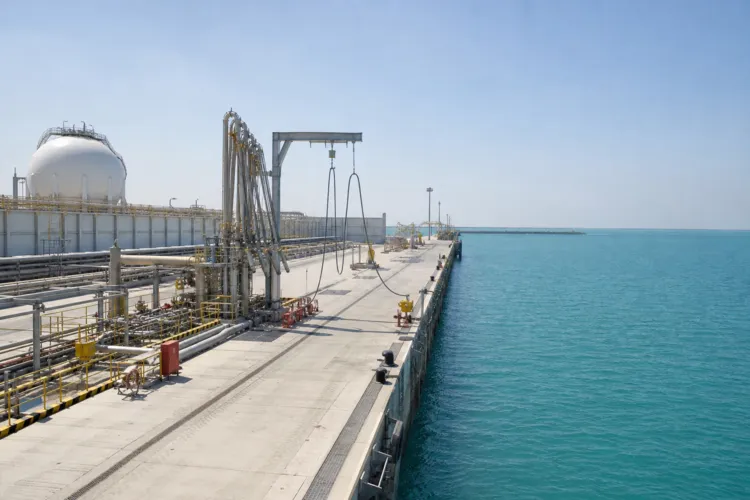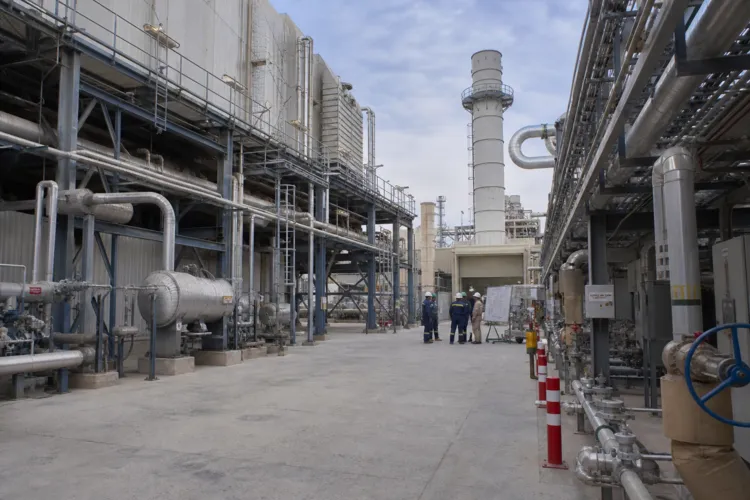
HUMAIN is a PIF-owned AI infrastructure company launched on 13 May 2025, built to convert land, power, chips, and sovereign capital into a compute platform. Its plan includes a 6.6 GW AI compute pipeline by 2034, supported by 211 land plots and claimed access to 14 GW of power. This is why the debate around humain data center power Saudi Arabia quickly becomes a timeline question. Announcing gigawatts is easy. Energising them requires generation, transmission, substations, and signed grid connections that turn plans into operating capacity.
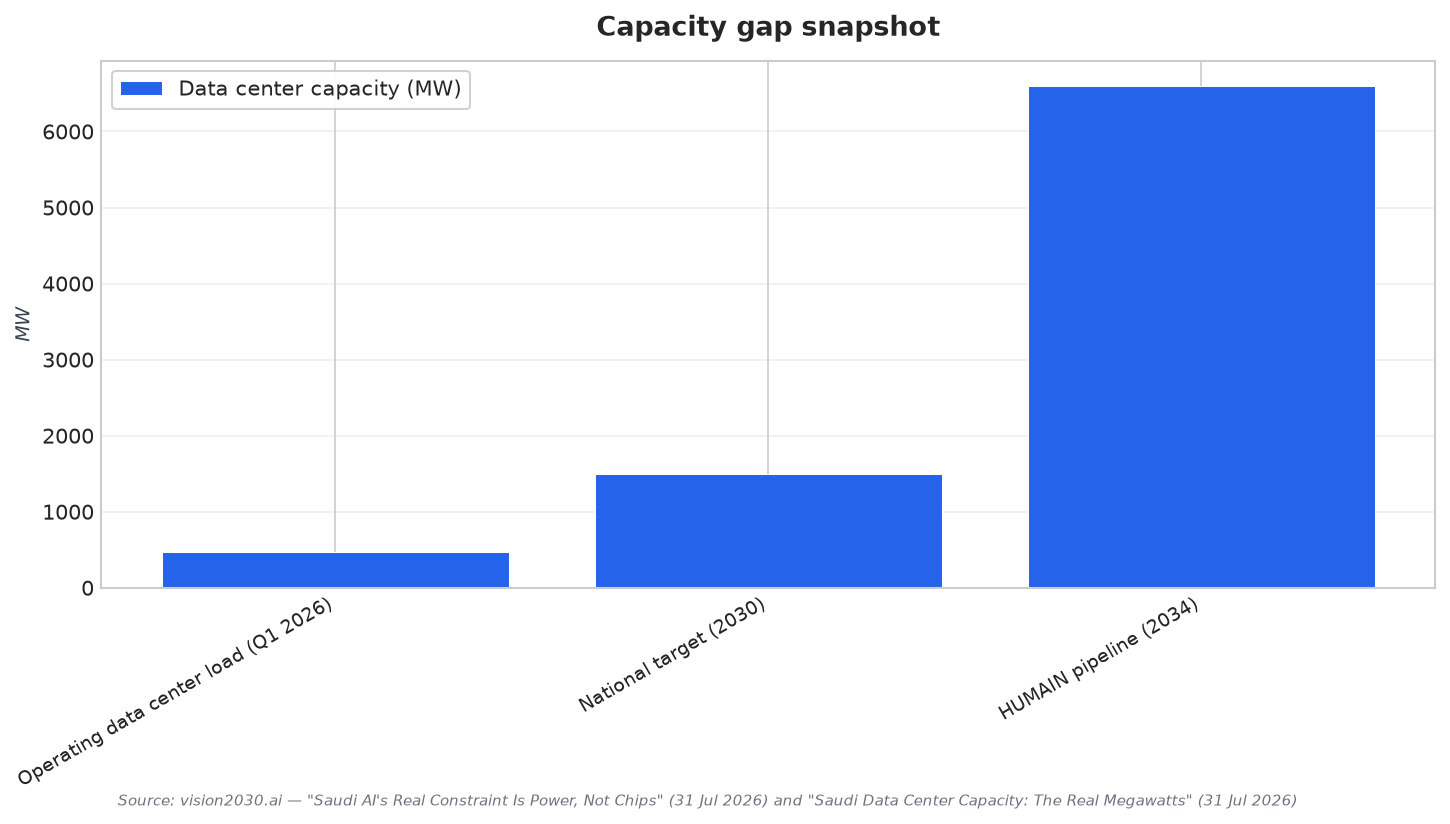
The gap between what is live and what is planned is already measurable. Saudi Arabia operated 467 MW of data center load in Q1 2026, up from 440 MW at end-2025 and 68 MW in 2021, across more than 60 facilities, based on MCIT figures. Set that against HUMAIN’s 6.6 GW pipeline by 2034 and the scale difference is stark: the ratio is described as roughly 14 times. A separate 6 GW by 2034 figure also appears in an AMD–Cisco–HUMAIN joint venture framing from November 2025, but it is not the same claim as HUMAIN’s 6.6 GW infrastructure pipeline.
Grid Delivery, Not Announcements, Sets the Real Schedule
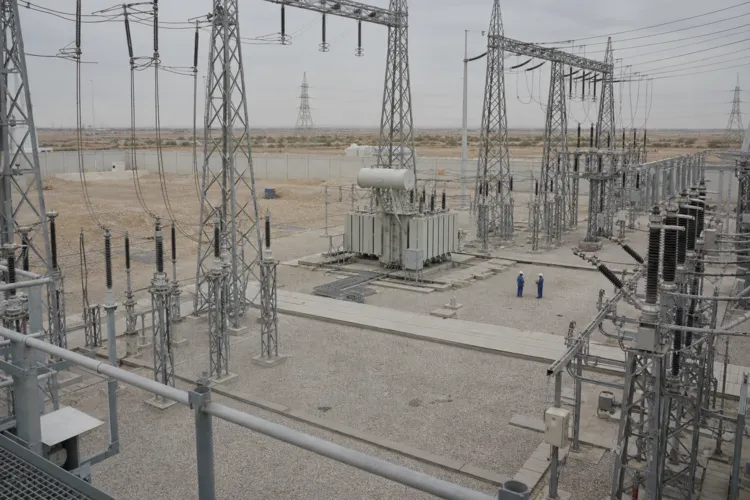
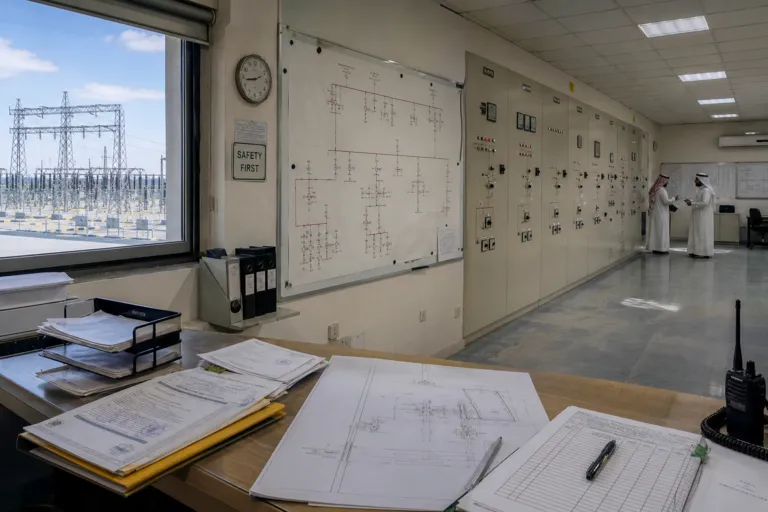
Multiple sources converge on the same constraint: grid interconnection sets the timeline. One tracker notes HUMAIN’s twin 100 MW campuses in Riyadh and Dammam were expected to go live in Q2 2026, yet public verification focuses on energisation gates rather than fit-out progress. The same analysis argues that adding 200 MW of dense AI load is “a grid event, not a fit-out,” and points to tenders in the first half of 2026 for a 2,000 MVA bulk supply point and two substations as evidence that the bottleneck is electrical infrastructure. Transformers can carry two-to-four-year lead times, and utility commitments to firm capacity are location-specific.
Saudi Arabia does have system-level context that can support big loads, but it still has to be allocated and built. A facility-by-facility ledger notes an official national target of 1.5 GW of data center capacity by 2030, distinct from HUMAIN’s corporate pipeline figures. On the power system side, the same source reports 160.5 TWh delivered to grid customers in the first half of 2025, an annualised rate near 321 TWh. It frames the 1.5 GW target as about 3.7% of current grid deliveries, while the 6.6 GW pipeline is described as about 16%—a share that implies dedicated generation and connection work rather than relying on spare capacity.
Development momentum is real, but definitions matter. S&P Global reports planned HUMAIN data centers near Riyadh and Dammam could deliver 6.6 GW by 2034 and cites sector load growth projected at a 29% CAGR through the 2024 to 2030 forecast period. Another market note says Saudi disclosures state center3 is developing AI-ready capacity starting at 250 MW, and it highlights how projects become “economically useful” only when they reach grid delivery and customer consumption stages. That same note also cautions that longer-term figures such as “up to 1 GW” should not be presented as existing operating capacity, reinforcing why the grid connection date is the decisive milestone.
How much data center capacity was operating in Saudi Arabia in Q1 2026?
What is HUMAIN targeting for AI compute capacity by 2034?
Why is grid connection treated as the key constraint for HUMAIN’s buildout?
What is Saudi Arabia’s official national data center target for 2030?
What does the “HUMAIN data center power in Saudi Arabia” question really come down to?
Talk to us for your needs in:
-
Energy Efficiency Strategy & Feasibility
-
Renewable Energy Strategy & Investment Advisory
-
Digital Energy & Smart Grid Strategy
-
Market Entry Strategy
-
Sustainability & Impact Strategy
-
Energy Project Governance & PMO Advisory
-
Energy Market Research
-
Energy Stakeholder & Customer Research
-
Energy Market Intelligence
-
Energy Feasibility & Investment Assessment
-
Energy Sector Benchmarking & Performance Strategy