Saudi Arabia’s power market is being reshaped around a clearer split between planning, grid operations, and competitive supply. The direction aligns with Vision 2030, including a pledge that 50% of the country’s electricity will come from renewable sources by 2030. On the system side, rising demand and grid constraints are pushing investment in transmission, smart grid, and operational discipline, while procurement mechanisms bring more projects to market. Market growth expectations add urgency: one outlook expects Saudi Arabia’s power generation market to grow from 87.81 GW in 2024 to 116.41 GW by 2029, a 5.80% CAGR for 2024–2029.
These reforms also show up in who builds and finances new capacity. Independent power producer participation is described as expanding rapidly because streamlined licensing can clear projects in six months for plants below 500 MW, which is said to be a quarter of the previous timeline. Tariff reforms are another lever. A 2018 rate restructuring moved residential prices to a 5–32 halala/kWh tier and industrial tariffs to 18 halala/kWh, linking quarterly adjustments to Brent and Henry Hub benchmarks. The same sources note that large factories in Jubail and Yanbu have signed behind-the-meter solar PPAs over 100 MW each, with delivered costs below two cents/kWh, while commercial retrofits can cut cooling consumption by 20% with payback periods under four years.
Why Grid Modernization and Renewables Are Forcing Market Redesign
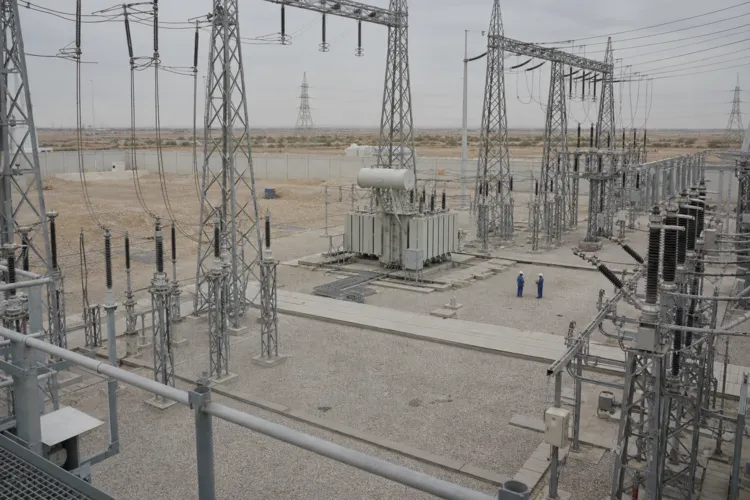
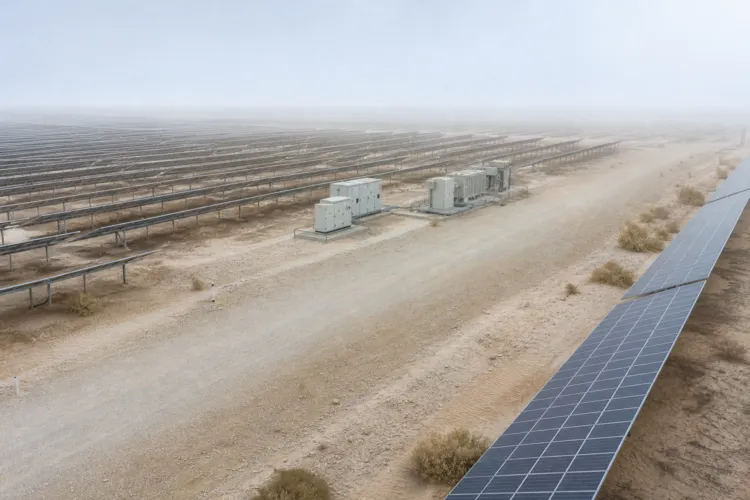
Renewables procurement is moving from targets to commissioned assets, which increases the need for stronger system operations and grid access rules. Saudi Arabia’s National Renewable Energy Program has awarded 21 projects totaling 19 GW, and seven of these plants, equal to 4.1 GW, were operating by late 2024. Grid-connected renewables reached 6.5 GW in 2024 and are scheduled to double to 12.7 GW in 2025. With this ramp, grid bottlenecks matter more, and a USD 20 billion modernization plan anchored in HVDC links and smart meters is described as underway to integrate the growing renewable fleet.
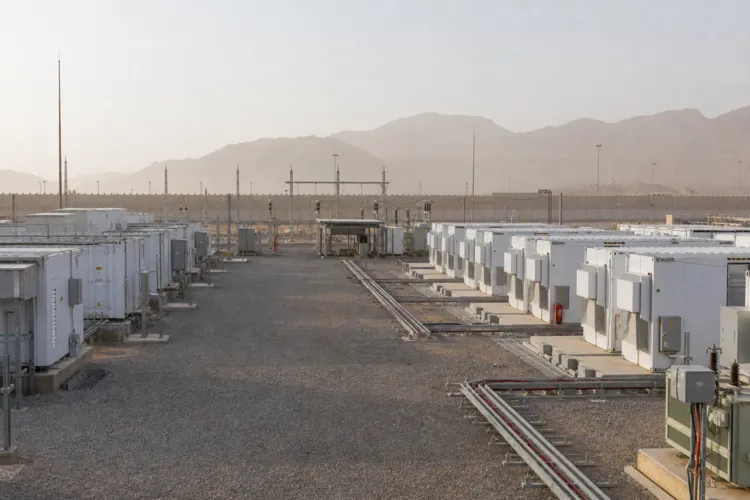
Competitive outcomes in renewables underline why dispatch, balancing, and transparent access become more critical as the market restructures. Reported project pricing includes Sakaka Solar closing at 2.32 cents/kWh and Dumat Al Jandal Wind at 2.13 cents/kWh. Resource mapping campaigns covering 850,000 km² confirmed annual solar irradiation above 2,200 kWh/m² in the Eastern Province and class-II wind speeds across Northern Border and Tabuk, guiding developers to bankable sites. Renewables are also described as displacing 50,000 barrels per day of crude burn. Alongside utility-scale buildout, distributed models are emerging too: the Red Sea Development Company operates a 400 MW microgrid with 1.3 GWh of batteries.
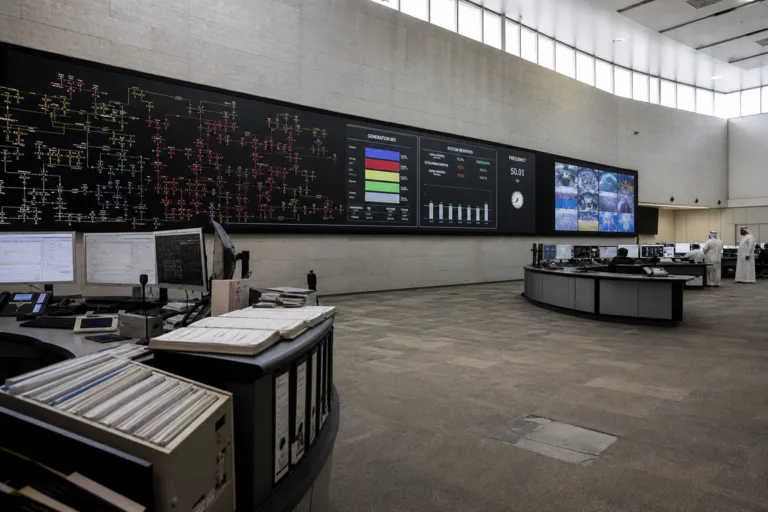
The evolving role of system operation is also visible in the dominant position of Saudi Electricity Company (SEC) and the market’s push toward unbundling and wider private participation. SEC is described as a vertically integrated utility involved in generation, transmission, and distribution, and in 2024 its directly owned capacity stood at 56.4 GW, representing 61% of the Kingdom’s total capacity and 2% year-on-year growth. SEC’s grid spending is also rising, with capex of $10.9 billion in 2023, a 51.8% increase from 2022, and $16 billion deployed in 2024 across generation, transmission, distribution, and general projects, up 43.8% on the previous year. In the EPC view of liberalization, regulated utilities accounted for 56.8% of 2025 spending, while IPPs are forecast to expand 5.7% annually to 2031. Together, these shifts frame what an independent system operator in Saudi Arabia would need to manage: faster interconnection, fair access, and reliability as the supply mix diversifies.
How is Saudi Arabia’s power market restructuring connected to an independent system operator model?
What renewable capacity milestones are already visible in Saudi Arabia?
What grid investment figures are cited for modernization and expansion?
How did tariff reforms change customer behavior in the power market?
What does the EPC market data suggest about utilities versus IPPs?
Talk to us for your needs in:
-
Energy Efficiency Strategy & Feasibility
-
Renewable Energy Strategy & Investment Advisory
-
Digital Energy & Smart Grid Strategy
-
Market Entry Strategy
-
Sustainability & Impact Strategy
-
Energy Project Governance & PMO Advisory
-
Energy Market Research
-
Energy Stakeholder & Customer Research
-
Energy Market Intelligence
-
Energy Feasibility & Investment Assessment
-
Energy Sector Benchmarking & Performance Strategy