Saudi Arabia’s grid is building a larger role for energy storage as renewable additions rise and the system needs more balancing and flexibility. Mobility Foresights projects the Saudi Arabia Grid Energy Storage Market will grow from USD 14.2 billion in 2025 to USD 52.7 billion by 2032, at a CAGR of 20.6% over 2026–2032. In that same framing, grid energy storage is defined broadly and explicitly includes pumped hydropower alongside battery energy storage systems, compressed air, flywheels, and other long-duration options. This matters for pumped hydro because it positions the technology inside a broader planning conversation about multi-service grid applications, not as a standalone idea.
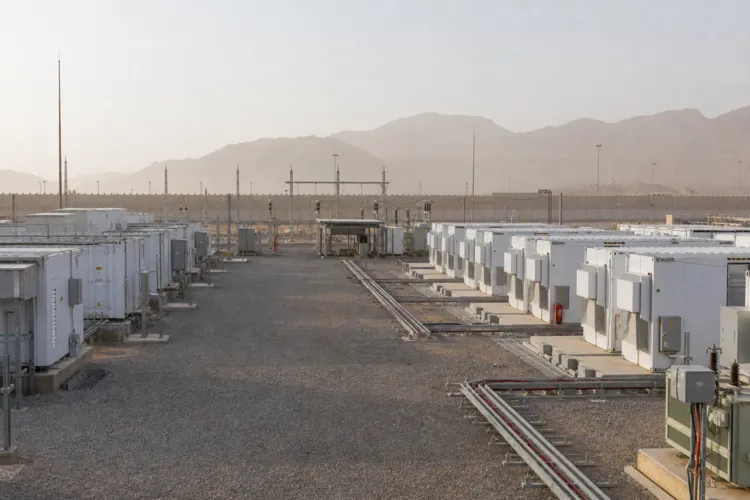
The immediate driver is the need to shift energy across hours and stabilize operations as renewable output changes. Ken Research states Saudi Arabia targets 50% renewable energy contribution to total electricity generation by 2030, and highlights 48 GWh of battery storage planned by 2030. The same source adds that storage projects totaling 26 GWh have been tendered and are progressing through different development stages. Those figures are about batteries and broader storage momentum, but they frame the operational gap that long-duration solutions are meant to address: moving surplus electricity and supporting reliability when the grid needs it most.
Why Pumped Storage Fits Long-Duration Needs—And Why It’s Hard
Pumped hydro storage is designed for large-scale, long-duration grid balancing, using two reservoirs at different elevations to store energy and generate electricity during demand peaks. Intel Market Research values the global pumped hydro storage market at USD 10.2 billion in 2025 and projects growth to USD 14.7 billion by 2034, with a CAGR of 3.9%. It also notes that wind and solar accounted for over 45% of new generation installed in 2025 (global context), and that pumped hydro can provide ancillary services such as frequency regulation and spinning reserve. For Saudi Arabia, these capabilities align with long-duration shifting needs described in local storage market coverage, but they do not remove local site and water constraints.
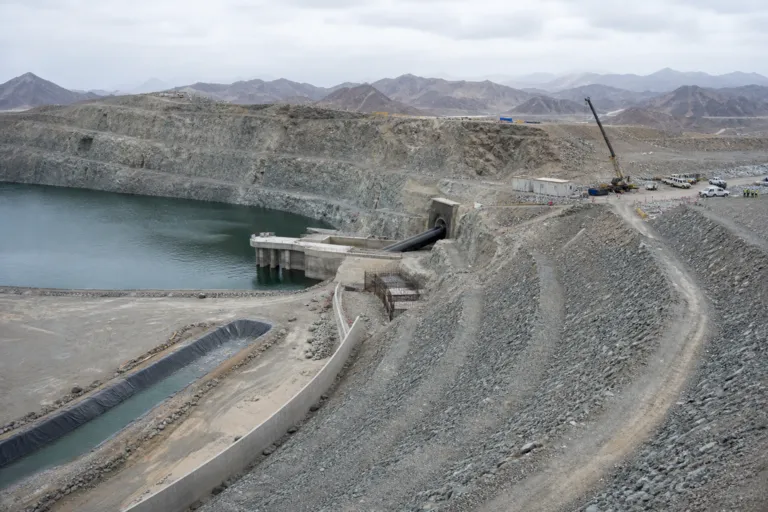
Those constraints are clearly acknowledged by Saudi-focused sources. Bonafide Research says pumped-storage hydroelectricity (PSH) holds “immense potential” for the Saudi Arabian energy storage systems market, while also warning that scarcity of freshwater resources and geographic limitations for suitable pumped-storage facilities pose challenges. The same source points to government initiatives exploring alternative sites such as abandoned mines and the use of seawater as concepts that could unlock more viability over time. In parallel, a Saudi storage case study from Saudi Market Research Consulting notes that pumped hydro was evaluated as a complementary option, but described as limited by geography and water, reinforcing that this is an opportunity shaped by practical development barriers.
In the near term, Saudi Arabia’s storage conversation is not limited to pumped hydro versus batteries; it is increasingly about a portfolio. Mobility Foresights explicitly places pumped hydropower within the grid storage toolkit, and emphasizes demand for long-duration storage that can deliver multi-hour and overnight shifting. Bonafide Research also describes hybrid energy storage solutions that combine Li-ion with other technologies like pumped hydro for long-duration applications. Meanwhile, IndexBox forecasts stationary hydrogen storage deployments via electrolyzers rising from 15–30 MW in 2026 to 200–350 MW by 2030 and 500–800 MW by 2035 (base case), with cumulative electrolyzer capacity reaching 1.5–2.0 GW by 2035 supporting 8–12 GWh of hydrogen storage equivalent. In this landscape, pumped hydro storage in Saudi Arabia can be treated as an underused grid asset: valuable where sites work, and complemented elsewhere by batteries and hydrogen as the system scales.
How fast is Saudi Arabia’s grid energy storage market expected to grow?
Why consider pumped hydro storage for Saudi Arabia’s grid?
What limits pumped-storage development in Saudi Arabia?
Are there ideas to expand pumped storage feasibility in the Kingdom?
How does pumped hydro compare with other long-duration storage pathways discussed for Saudi Arabia?
Talk to us for your needs in:
-
Energy Efficiency Strategy & Feasibility
-
Renewable Energy Strategy & Investment Advisory
-
Digital Energy & Smart Grid Strategy
-
Market Entry Strategy
-
Sustainability & Impact Strategy
-
Energy Project Governance & PMO Advisory
-
Energy Market Research
-
Energy Stakeholder & Customer Research
-
Energy Market Intelligence
-
Energy Feasibility & Investment Assessment
-
Energy Sector Benchmarking & Performance Strategy