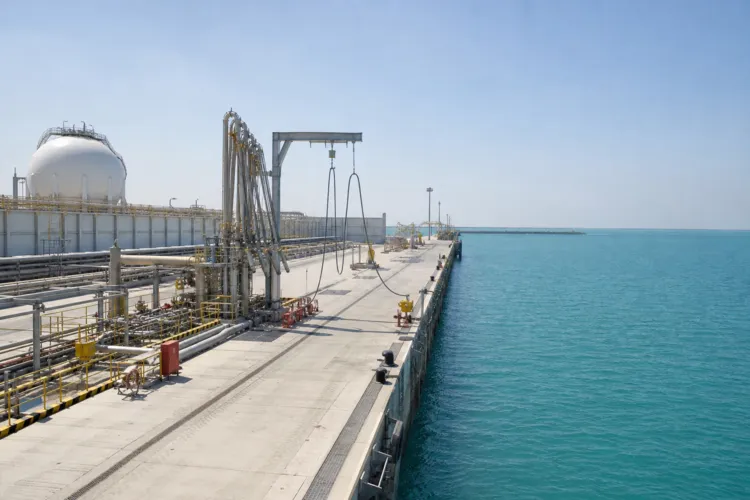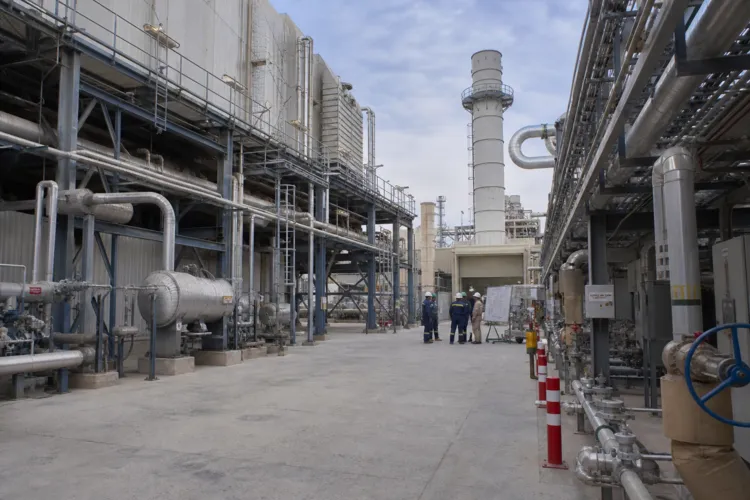
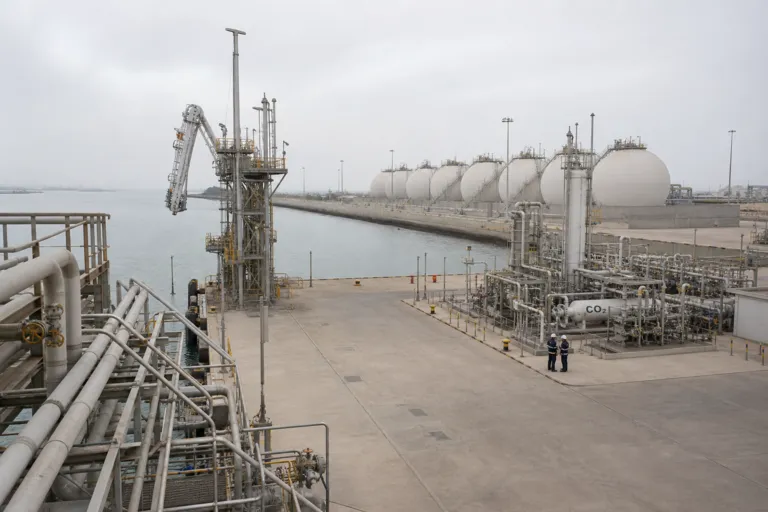
Blue ammonia is often described as ammonia produced from low-carbon hydrogen and nitrogen, with CO2 emissions captured and either used in other industrial processes or stored underground. That carbon-capture step is central to the export story because it ties a familiar gas-based pathway to decarbonization expectations in key importing markets. In this context, the phrase blue ammonia Saudi Arabia signals a strategy: monetize natural gas reserves while reducing the emissions profile of the resulting product. Industry reports also frame government, industry, and investor collaboration as important for the wider adoption of blue ammonia, especially as post-pandemic recovery renewed focus on sustainable energy.
Saudi Arabia’s fertilizer and export footprint gives this transition a commercial starting point. In a Saudi-focused fertilizer market report, cargoes to the United States reached SAR 3 billion (USD 800 million) in 2024, making up 35% of non-oil shipments. The same source argues that blue-ammonia pathways can unlock premium lanes to Japan and South Korea, aligning with decarbonization preferences. It also states that government incentives for carbon capture projects improve the financial viability of blue ammonia production, helping Saudi Arabia compete versus traditional fertilizer exporters while processing natural gas into higher-value products.
Where the Cost Advantage Can Come From
Production economics and logistics shape whether export growth is scalable. An ammonia industry overview notes that SABIC and ADNOC leverage blue-ammonia cost leadership of under USD 300 per ton by pairing steam-methane reforming with carbon capture, positioning the Middle East as a low-cost export hub that undercuts European output. The same report adds that Europe faced restricted capacity in 2024–2025 as gas prices breached EUR 50 per MWh, reinforcing reliance on imports from North Africa and the Middle East. It also stresses that delivered costs depend on shipping capacity and specialized handling, including materials compatibility, vapor recovery, and safety systems.
Company moves described in market research underline how Saudi players are tying upstream gas to downstream export products. One blue ammonia market report states that in 2025 Saudi Aramco acquired a 50% stake in Blue Hydrogen Industrial Gases (BHIG) in Jubail, strengthening a focus on commercially scalable blue hydrogen and blue ammonia solutions. Broader market snapshots list Saudi Aramco and SABIC among major players and describe the Middle East—particularly Saudi Arabia and the UAE—as becoming a significant exporter by leveraging low-cost natural gas reserves alongside decarbonization plans.
Global demand expectations provide additional context, but forecasts vary sharply by source. One report values the global blue ammonia market at USD 577.03 million in 2025 and projects USD 51,101.52 million by 2035 at a 56.7% CAGR for 2026–2035. Another estimates USD 206.94 million in 2025 growing to USD 27,263.18 million by 2035 at a 62.96% CAGR. A separate forecast places the global market at USD 22.12 million in 2025 with USD 35.20 million by 2034 at a 5.3% CAGR. For Saudi exporters, the takeaway is directional: interest in CCS-enabled ammonia is rising, but commercialization will still hinge on credible carbon capture, export logistics, and buyer requirements.
What does blue ammonia mean in the context of Saudi exports?
What recent export figure shows Saudi Arabia’s non-oil shipment strength?
How is the Middle East described in terms of blue-ammonia cost positioning?
What Saudi Aramco move is linked to scaling blue hydrogen and blue ammonia?
How should readers interpret global blue ammonia market forecasts when assessing Saudi Arabia’s opportunity?
Talk to us for your needs in:
-
Energy Efficiency Strategy & Feasibility
-
Renewable Energy Strategy & Investment Advisory
-
Digital Energy & Smart Grid Strategy
-
Market Entry Strategy
-
Sustainability & Impact Strategy
-
Energy Project Governance & PMO Advisory
-
Energy Market Research
-
Energy Stakeholder & Customer Research
-
Energy Market Intelligence
-
Energy Feasibility & Investment Assessment
-
Energy Sector Benchmarking & Performance Strategy