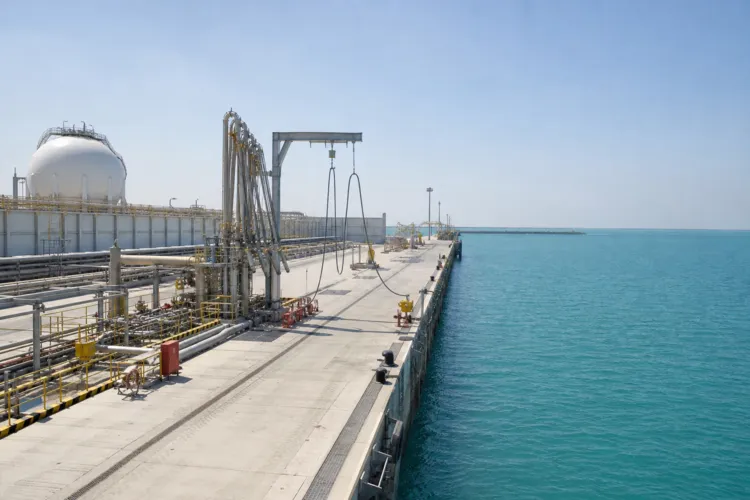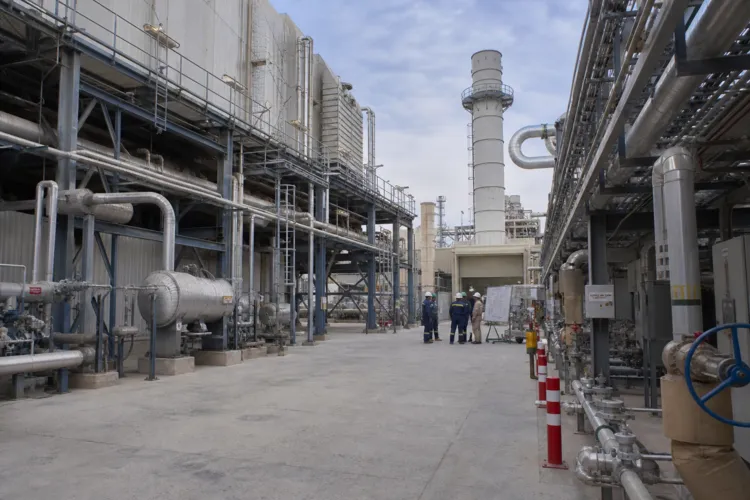
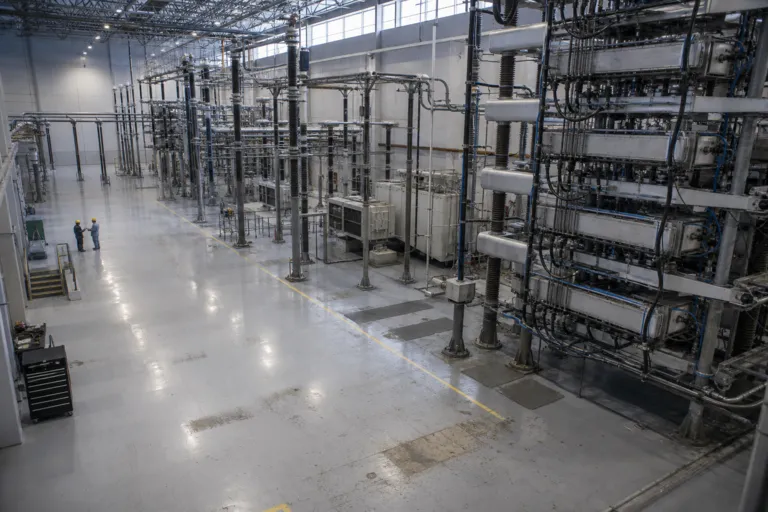
The idea of a Saudi-Europe green energy corridor is gaining clarity as European import policy, Middle East project pipelines, and port-based demand start to connect. In Europe, REPowerEU set goals to import 10 million tons of green hydrogen and add another 10 million tons from domestic production by 2030. At the end of 2023, 512 hydrogen producer facilities were in use across the EU, with total capacity of approximately 11.23 million tons of domestic hydrogen production, though that figure is not specified as green hydrogen. The same EU reporting cited 207 clean hydrogen production and consumption projects, with 141 already in operation, showing that the market is moving but still needs new supply routes.
On the Saudi side, export readiness is being anchored by large projects and early commercial positioning with Europe. Market Research Future states that Saudi Arabia’s NEOM Green Hydrogen Company, a joint venture between ACWA Power, Air Products, and NEOM, targets 600 tonnes of hydrogen per day by 2026 for conversion to green ammonia and export to global markets. RMI also notes that companies in Saudi Arabia are already constructing an export-oriented project and have partnered with European off-takers and owners of existing ammonia export infrastructure. This matters because Europe’s early import volumes are likely to rely on shippable hydrogen derivatives and established export terminals, not just new-to-build pipelines.
Why Europe’s Rules and Costs Push the Corridor Forward
European regulation is shaping what can move through this corridor and how it will be evaluated at the border. Mitsui reports that the EU is introducing a green hydrogen-only certification system, and that transport schemes are being designed to comply with the EU definition of “renewable fuels of non-biological origin (RFNBO).” Market Research Future adds that the EU Carbon Border Adjustment Mechanism (CBAM) began its transitional phase in 2023 and will require full certificate purchases from 2026, covering hydrogen, steel, aluminum, cement, and fertilizer imports. It also states that an effective carbon penalty of EUR 70–90/tonne CO₂ adds USD 1.80–2.30/kg to the hydrogen-equivalent cost for refiners importing gray-hydrogen-intensive products into Europe, changing the import economics that end buyers use when choosing supply.
Logistics and shipping routes are another practical layer of the Saudi-to-EU corridor story. RMI explains that storage, ammonia (NH3) conversion, transportation, offloading, and re-conversion costs stack with production costs into a “landed cost” for renewable hydrogen arriving in EU ports, and that economies of scale across ammonia transport, synthesis, and cracking can reduce those costs. Discovery Alert highlights Yanbu’s location on the Red Sea coast as providing direct maritime access to the Suez Canal route, described as a primary shipping corridor for energy commodities moving between the Gulf region and European ports. The same analysis says European industrial markets are the primary demand destination, and notes that a commitment of 200,000 tonnes of green hydrogen per year by 2030 from Saudi Arabia is a meaningful component of Germany’s import-dependent hydrogen supply strategy.
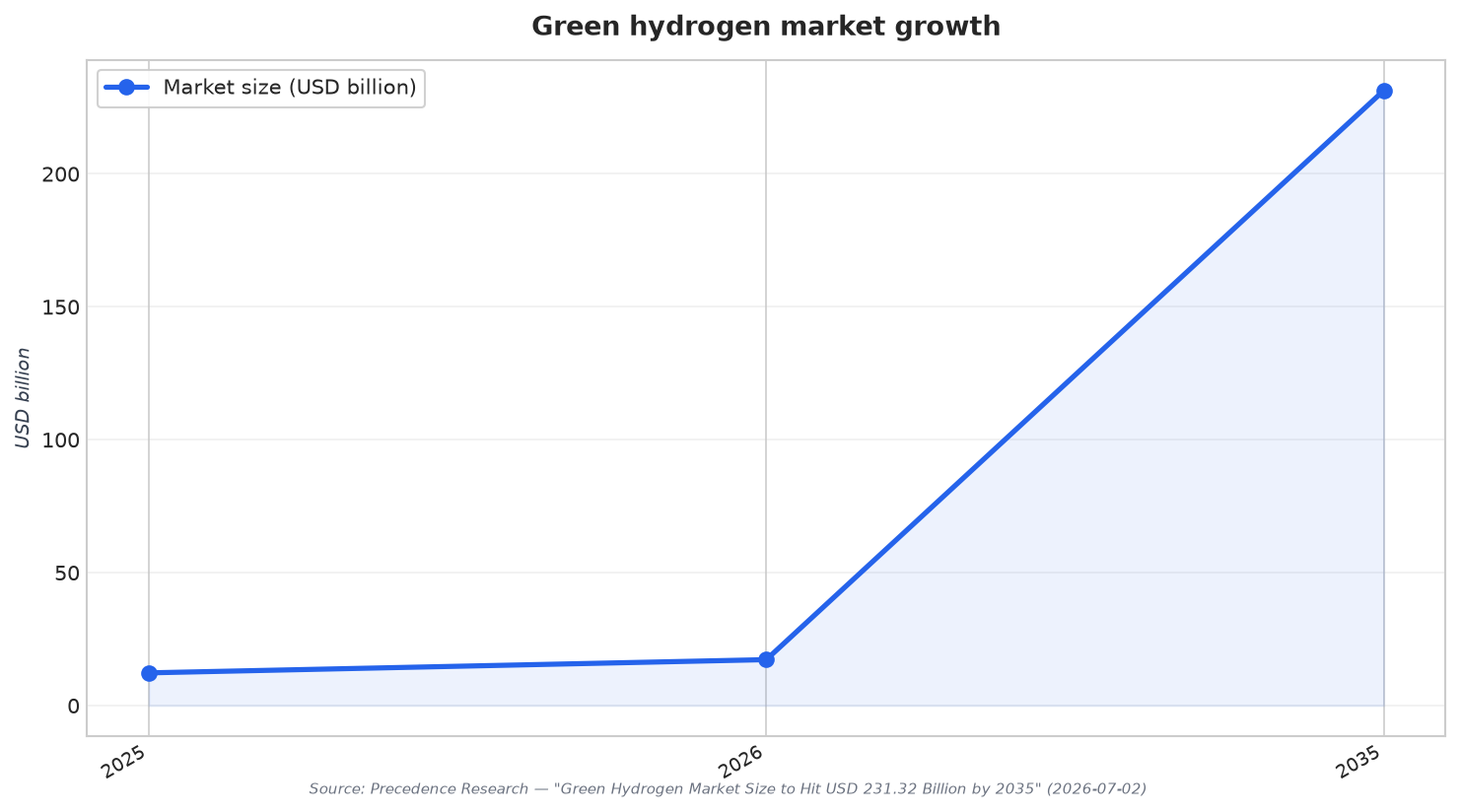
Zooming out, the corridor also sits inside a fast-expanding global market for green hydrogen, where scale and competition will shape long-term pricing. Precedence Research calculates the global green hydrogen market at USD 12.31 billion in 2025 and predicts growth from USD 17.28 billion in 2026 to approximately USD 231.32 billion by 2035, expanding at a CAGR of 34.09% from 2026 to 2035. In that same 2025 snapshot, Asia Pacific contributed a revenue share of over 47.40%, and wind captured over 47.75% by source. For Europe, RMI notes that imports will continue to represent a reliable green fuel supply for industrial hubs clustered around ports in Northern Europe, where land constraints create competition for renewable power—an energy-system reality that makes a Saudi-Europe green energy corridor strategically relevant.
What is driving the Saudi-Europe green energy corridor concept?
What target is cited for Saudi NEOM hydrogen output?
Why does CBAM matter for hydrogen and hydrogen-linked imports into the EU?
What costs shape the landed cost of renewable hydrogen arriving at EU ports?
What Germany-related supply figure is mentioned in connection with Saudi exports?
Talk to us for your needs in:
-
Energy Efficiency Strategy & Feasibility
-
Renewable Energy Strategy & Investment Advisory
-
Digital Energy & Smart Grid Strategy
-
Market Entry Strategy
-
Sustainability & Impact Strategy
-
Energy Project Governance & PMO Advisory
-
Energy Market Research
-
Energy Stakeholder & Customer Research
-
Energy Market Intelligence
-
Energy Feasibility & Investment Assessment
-
Energy Sector Benchmarking & Performance Strategy