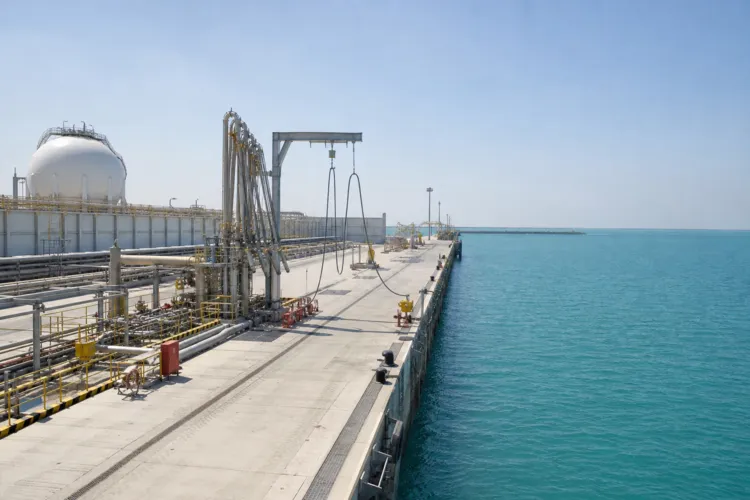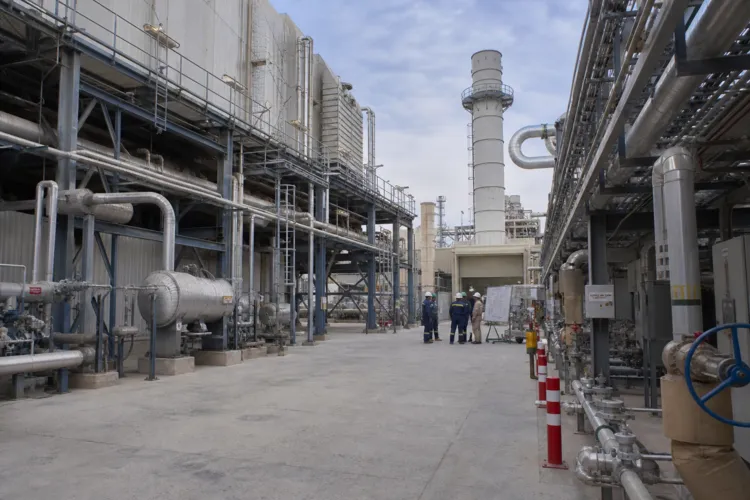

Cross-border power connections in the Gulf and wider Middle East sit inside a bigger story about energy security and trade resilience. Recent analysis on shipping stress highlights how quickly external shocks can disrupt energy flows and trade values. A UN news report citing International Trade Centre analysis says that, for a group of Hormuz-dependent economies—Bahrain, Iran, Iraq, Kuwait, Qatar, Saudi Arabia and the United Arab Emirates—combined merchandise exports across all products fell by 21% in value in April, and exports of natural gas dropped by 95%. In that context, a Saudi Arabia–Iraq grid link can be framed as one more route to move energy value across borders, but through wires rather than tankers.
Maritime chokepoints matter for Gulf producers because so much trade is seaborne and concentrated through a few corridors. CSIS notes that six Persian Gulf countries—Oman, Saudi Arabia, the UAE, Qatar, Kuwait, and Iraq—relied on the Malacca Strait for at least 40% of their exports in 2024. Another chokepoint is the Strait of Hormuz. The same UN report says the Strait is responsible for around one quarter of global seaborne oil trade. These figures do not describe electricity, but they do show why policymakers and system planners look for diversification, redundancy, and alternatives. The Saudi-Iraq electricity interconnection fits that logic by supporting a form of regional energy trade that is less exposed to shipping disruptions.
Why Grid Interconnection Matters for Security and Stability
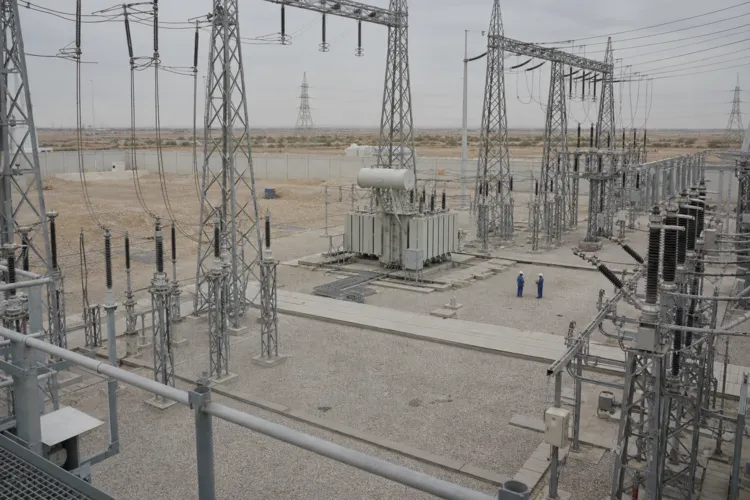
The grid side of the equation is also changing. The IEA’s work on the future of electricity in the Middle East and North Africa emphasizes that ensuring electricity security relies on grids, storage, and flexible thermal power. It also notes that nuclear generation is gaining momentum regionally, with five reactors operational in the region, including four in the UAE commissioned in the past five years. Construction is underway on five additional reactors—four in Egypt and one in Iran—and nuclear capacity in the region is projected to triple by 2035 to reach 19 GW. These developments increase the value of robust transmission planning because larger, more diverse power systems benefit from stronger balancing and flexibility options.
Interconnection is also a hedge when fuel supply chains and prices move abruptly. IFPRI notes that if the Strait of Hormuz remains effectively closed to shipping, other Persian Gulf countries would need alternative import corridors, and it adds that crude oil futures for May 2026 delivery were up more than $10/barrel, or 15%, after conflict-related disruption. The same source notes European gas-market stress, reporting Dutch TTF topped 65 euros/megawatt-hour early March 3 and was trading more than 50% higher than before the conflict began. Electricity links do not eliminate fuel-price volatility, but they can help systems share available generation and manage tight periods through coordinated operations and cross-border exchange.
Energy diplomacy and infrastructure coordination are already visible across the wider region, reinforcing why power trade is often discussed alongside pipelines, ports, and new cooperation platforms. A Jerusalem Post analysis describes the launch of the East Med Energy Center by Israel, Greece, Cyprus, and the United States as a platform focused on energy security, cybersecurity, innovation, and critical infrastructure. Separately, Carnegie reports that in 2025 the United States had more than 600 treaties in force with MENA states, and that China has nine judicial assistance treaties in MENA, including with Saudi Arabia. Against this backdrop, a Saudi-Iraq grid connection can be understood not as a standalone asset, but as part of a broader push for more connected, more resilient energy systems and trade relationships.
Why is a Saudi Arabia–Iraq electricity connection discussed as a trade enabler?
What do the sources say about recent trade impacts linked to Hormuz disruption?
How dependent are Gulf exporters on the Malacca Strait, according to CSIS?
What electricity-system trends in MENA increase the importance of stronger grids?
How can fuel-market volatility shape the case for interconnection?
Talk to us for your needs in:
-
Energy Efficiency Strategy & Feasibility
-
Renewable Energy Strategy & Investment Advisory
-
Digital Energy & Smart Grid Strategy
-
Market Entry Strategy
-
Sustainability & Impact Strategy
-
Energy Project Governance & PMO Advisory
-
Energy Market Research
-
Energy Stakeholder & Customer Research
-
Energy Market Intelligence
-
Energy Feasibility & Investment Assessment
-
Energy Sector Benchmarking & Performance Strategy